
Timur Turlov’s Freedom Holding Corp: From a niche broker to a global fintech player


Who is Timur Turlov? Where did his billions come from? And how did he turn a small brokerage firm into a transnational financial ecosystem?
Freedom Holding Corp. is a Kazakhstan-born international fintech company listed on the Nasdaq and valued at nearly $9 billion. In recent years, the company - whose founder and majority shareholder, Timur Turlov, renounced his Russian citizenship in 2022 - has been expanding internationally, from the United States to Europe and the Middle East. Turlov’s companies are investing hundreds of millions of dollars in this expansion, having made the growth of Freedom’s own digital ecosystem the group’s strategic priority. By the age of 38, the entrepreneur had become one of the richest people in Kazakhstan and had been included on Forbes’ international list of selfmade billionaires under 40.
So, who is Mr. Turlov?
From a kebab stand to Wall Street
Timur Turlov was born in Lobnya, near Moscow, into an ordinary Russian family. Even in school, Turlov set himself the goal of “making money,” though he had not yet decided whether he was more drawn to politics or economics. In the end, pragmatism won out, and Turlov became interested in the world of Wall Street. He began building his own securities portfolio and made his first investments before even starting university, using the $800 his grandfather had left him.
However, success in the stock market did not come right away: he lost the inheritance on unsuccessful trades.
Yet the setback only fuelled the would-be investor’s interest in securities trading. He gained his first professional experience in 2003, when he joined the Moscow office of the American investment company World Capital Investments, or WCI, as a trader. Money was tight at the time; sometimes he could not even afford a kebab from a stall near Timiryazevskaya station, whose “amazing smell” he later remembered so vividly.
Nevertheless, the knowledge and skills Turlov acquired were enough for him to join the brokerage Utrade.ru two years later, at the age of 18. The company was a subsidiary of Russia’s Uniastrum Bank. The young employee balanced his economics studies at MATI, the Moscow State Aviation Technological University, with his office job, helping the bank give its clients access to the U.S. stock market. The project came together just before the 2008 financial crisis. Unfortunately, neither the bank nor its brokerage arm survived the crisis unchanged: both came under new ownership, while Turlov and his colleagues found themselves out of work, albeit with severance packages.
Turlov did not stay idle for long. Determined to reconnect clients with Wall Street, he founded his own brokerage firm, Freedom Finance, together with former colleagues. Turlov later recalled that clients were almost impossible to find in the first months: former Uniastrum clients did not support the venture because they had no spare capital, while prospective clients looked warily at the young team, who could speak with great enthusiasm about Apple, Google, and Microsoft - and explain why that was exactly the right moment to buy their shares.
Turlov told journalists that he personally held nearly a hundred cold meetings with prospective clients, but none led to a deal. Still, persistence paid off: the company began to attract attention, and its first investors gradually came on board. The post-crisis recovery of U.S. stock indices also helped, as they entered one of the strongest stock market rallies in history in March 2009.
Unconventional marketing helped too, including an “Open Letter to Elon Musk” and a “Tesla vs. Ferrari” test drive for the brokerage’s clients.
“At that moment, I was following a beautiful dream more than money,” Turlov recalled. “It was easier to make money in other niches. I was lucky: I had essentially spotted the trend early. We focused exclusively on the U.S. market at a time when everyone else saw it as opaque and too risky.”
In Russia, Freedom remained a solid mid-sized player with a narrow focus on international markets.
But Freedom’s Kazakhstan chapter, which began in the 2010s, would later prove to be perhaps the most important in the company’s history. Turlov first visited Kazakhstan in 2011 and was struck by the state of the local stock market: despite enormous potential, the local capital market was still in its infancy.
While competition in Russia was quite fierce, Kazakhstan looked more like a blue ocean of almost limitless opportunity.
After opening in 2012, the brokerage office soon became the country’s leading provider of access to local and international stock markets, as well as a leader in the underwriting segment. Few major stock or bond placements in the country took place without Freedom Finance’s direct involvement.
For many years, the company was a key broker on KASE, the country’s largest exchange, and a leader in trading volume and client count on the exchange.
Freedom’s business in Kazakhstan grew so rapidly that Turlov moved his family there and made Almaty, the country’s largest city, his second home. Russia, however, remained the main source of revenue. By that time, the brokerage business had also expanded into banking, along with the online investment platform Freedom24, all of which were brought together under the umbrella of Freedom Holding Corporation.
On October 15, 2019, Timur Turlov and his colleagues rang the Nasdaq opening bell, marking the start of trading in the company’s shares on the U.S. stock exchange under the ticker FRHC. It was considered the first public listing of a brokerage business from the post-Soviet region, although, strictly speaking, it was not an initial public offering. Turlov took his company public through a so-called reverse merger.
To do this, he acquired BMB Munai, a former oil producer with no active operating business but listed on a U.S. exchange. After the deal, which was completed in 2017, the businessman renamed
the acquired asset and moved it to a higher Nasdaq listing tier. Although such transactions were relatively common in the United States at the time, Turlov later admitted in interviews that he would have preferred to take the business public through a traditional IPO.
However, this did not appear to hurt the stock price. The company’s shares began trading at $14.42 and rose by more than 80% in their first year. By February 2022, they were worth about $60 per share, allowing Turlov, as the company’s main shareholder, to enter the global and Russian Forbes lists with a fortune exceeding $2.1 billion.
The great pivot
The year 2022 proved decisive for the company: Turlov decided to close the business in Russia and focus on Kazakhstan, where he had already been living with his family for 10 years. The Russian company and brokerage operations were sold to local management, while the entrepreneur himself renounced his Russian and Saint Kitts and Nevis citizenships and became a Kazakhstani citizen.
He then accelerated the development of his business in Kazakhstan, making major acquisitions in segments that were strategically important for the group. Some of these assets had already been acquired before 2022, such as Kassa Nova Bank, which was transformed into Freedom Bank; Ticketon, the country’s largest online ticketing service; and the payment system Freedom Pay, formerly PayBox.money.
After the shift to Kazakhstan, the group added the ticket-booking services Aviata and Chocotravel, the online supermarket Arbuz.kz, and a number of telecommunications companies.
These acquisitions across different areas of e-commerce and finance served a single goal: building a digital ecosystem for consumers and businesses. Turlov sees the creation of a single access point for clients as an inevitable step for Freedom in the face of both local and global competition. “In recent years it has become absolutely obvious that companies that are not part of some ecosystem, some clear process of interaction, are beginning to lose the competition,” he noted.
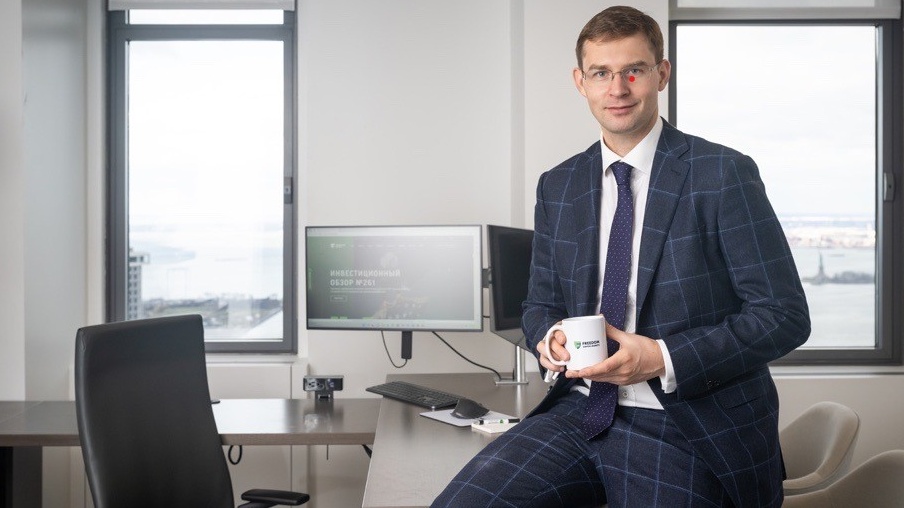
Timur Turlov says he hopes for 8mn users of the Freedom SuperApp by the end of this year. The first two years after launch attracted 5mn (Credit: Courtesy photo).
In 2024, the company took its biggest step toward uniting all services under a single Freedom brand: the group released the Freedom SuperApp for clients in Kazakhstan, where users could access and manage banking, insurance, investment, and lifestyle products. Freedom Bank cards also offered higher cashback on every purchase, paid in the form of ETNs linked to the group’s own shares. In this way, clients effectively gained exposure to the company’s shares and could additionally benefit from growth in the value of its securities.
The positive effect of the SuperApp soon became clear. According to the company’s fiscal 2024 financial statements, revenue for the year ended March 2024, before the app’s launch, was $1.64 billion; in the following fiscal year, it rose to $2.05 billion. “We have learned to monetize trust and the client base fantastically efficiently,” Turlov said at the end of last year. “Previously, we spent money to attract a client to a brokerage account. Now a client comes to us for a digital mortgage or car loan because the process is fast and convenient - approval takes seconds - and then we seamlessly offer insurance, investment products, or lifestyle services.”
After the launch of the super app, the need to develop a large branch network or lease thousands of square metres of office space largely fell away. Moving products and services online became Freedom’s main priority for the coming years. Within two years, the total number of SuperApp users had reached 5 million, and Turlov estimates that it could reach 8 million by the end of 2026.
Overall, the number of clients of companies within the group’s ecosystem is estimated at more than 11 million users.
AI and telecoms
Two years ago, media reports began to suggest that the group was launching a new business line: telecommunications services. Turlov later confirmed plans to build a national communications and broadband internet operator. Such an operator would allow the company to expand its client base and significantly reduce the cost of attracting new users to Freedom’s ecosystem.
The new company was named Freedom Telecom. To develop the business, the group began raising additional financing through dollar-denominated bonds and reinvesting accumulated net profit. The funds went toward laying thousands of kilometres of fibre-optic cable across Kazakhstan, installing urban base stations for wireless internet, and building data centres. In May 2025, construction began on a data centre for Freedom Cloud with a capacity of 13 MW and total investment of 175 billion tenge or roughly $340 million. The acquisition of Transtelcom in late 2025 also added several modern data centres to the group.
To accelerate the company’s growth, Freedom needs additional funding. In this context, Turlov announced a new bond issue of up to $800 million aimed at U.S. investors. Up to $300 million of this amount will be spent on the development of Freedom Telecom. In addition, the businessman is exploring the possibility of launching a secondary share offering on the Hong Kong Stock Exchange.
The group has also partnered with the Kazakh government on digitizing the national economy and adopting artificial intelligence technologies. In November 2025, NVIDIA, Freedom Holding, and the Ministry of Artificial Intelligence and Digital Development signed an agreement to create a $2 billion sovereign AI hub with a capacity of 100 MW. The company also has partnership agreements with major players including Amazon Web Services, Vodafone, SpaceX - through Astel, a company owned by the group - and OpenAI. From OpenAI, the group also acquired 165,000 ChatGPT Edu licences for Kazakh teachers.
Under fire
As the business grew, so did public scrutiny of the group and its owner. At times, the similarity and hostile tone of articles appearing online led Turlov and the company to view them as part of a coordinated negative PR campaign. Turlov himself has said that such coverage intensified after the company became public and listed its shares on the Nasdaq. Since then, the number of critical articles published each year has continued to grow. According to the online publication Kursiv, the company’s competitors may have spent up to $50 million on such efforts over several years.
The most significant criticism to date came in 2023, when two American investment firms, Citron Research and Hindenburg Research, released reports on the company. Both firms were known on Wall Street for activist short selling - a strategy that involves profiting from declines in the share prices of companies targeted in negative reports. Typically, short sellers open short positions before publishing allegations of misconduct against a target company. If the report unsettles investors, the shares can sell off sharply and lose significant value in a short period. The sharper the decline, the greater the potential profit for the activist investors.
In Freedom’s case, the strategy did not appear to work. Citron Research and Hindenburg Research published their reports on the company several months apart, but the market did not appear to accept their arguments. The shares recovered within days and continued to rise. The company also moved to challenge the allegations. Independent members of the board of directors hired lawyers from Morgan, Lewis & Bockius, as well as the forensic accounting firm Forensic Risk Alliance, to conduct a review. Both firms concluded that Hindenburg’s allegations were inaccurate. Deloitte, the auditor that signed off on the corporation’s financial statements, also found no material violations.
Both research firms later faced troubles of their own. Citron’s founder was accused by U.S. regulators of securities fraud and misleading investors. The criminal trial in the case began in Los Angeles on May 12, 2026. The company’s founder, Andrew Left, faces up to 25 years in prison if convicted. Hindenburg Research shut down voluntarily in January 2025. It is not entirely clear why Hindenburg founder Nathan Anderson decided to do this. In his farewell letter, he said he had decided to wind down the firm, although some experts believe the main reason may have been a perceived decline in the quality of its research.
Finance without borders
Today, Freedom Holding Corp. is a fintech ecosystem with more than 200 offices in 21 countries, including the United States, Europe, the Middle East and Central Asia.
Freedom Holding made its first major moves onto the international stage back in 2020, when it acquired the American broker-dealer Prime Executions, which at the time was a member of the NYSE and Nasdaq, as well as FINRA and SIPC. The following year, the group’s Cyprus-based subsidiary, Freedom Finance Europe, obtained direct membership in Euroclear, a leading international central securities depository. By early 2026, the company had offices in Germany, France, Austria, Bulgaria, Italy, the Netherlands, Lithuania, Poland, and a number of other European countries. The company has obtained brokerage licences in the UAE and Turkey; a banking licence in Georgia is in the final stage of the approval process; and in Tajikistan, a fully digital subsidiary bank was launched in just a year and a half. At the beginning of 2026, the company announced that it had acquired Turkish Bank; together with a local brokerage, the bank will serve as the basis for building Freedom Holding’s ecosystem in Turkey, a country with a population of nearly 90 million.
Turlov has not ruled out expanding to a broader U.S. audience. “I am interested in offering the SuperApp as a digital ecosystem in the U.S. market, and we are looking for the right ways. We are thinking either about obtaining a fintech licence or about partnering with a local bank,” Turlov told Bloomberg.
Creating social mobility
After officially becoming a Kazakhstani citizen, Turlov almost immediately launched charitable projects in the country.
In 2023, Freedom’s founder became president of the Kazakhstan Chess Federation, and six months later, the country hosted a FIDE World Championship match for the first time in its history. Under Turlov’s leadership, hundreds of children’s chess clubs began opening in schools across the country, and the Asian Youth Championship, along with team rapid and blitz championships, were held. “I am not a professional chess player, but my main contribution is that, as a professional organiser, I was able to assemble a team, secure resources, and apply business expertise. And today our investments are bearing fruit!” he said on the podcast “101+ Friends of Ruslan Shaekin.”
Football is another major focus. On Turlov’s initiative, the semi-professional QJ League was created, and it has already organised several national championships for youth teams. At the end of 2025, the businessman became the owner of Shakhter Karagandy, the first Kazakh club to play in the group stage of the UEFA Europa League. Restructuring the club is expected to cost 16 billion tenge, or about $30 million.
To bring all the group’s social projects under one umbrella, the Freedom Shapagat charitable foundation was established. In total, almost $58 million was allocated to social investment and regional development in the 2025 fiscal year.
Turlov has also received recognition for his role in Kazakhstani sports. In 2023, he received the “Üzdik” award from the Ministry of Tourism and Sports in the “Best President of an Accredited Sports Federation” category for his contribution to the development of chess in the country. Two years later, Freedom Holding Corp. was recognised as the country’s leading sports patron.
The entrepreneur has also been named “Sports Manager of the Year” at the national MetaRatings Top Awards, while the Freedom QJ League, which he founded, was named “Best Sports Organisation.”
Where is the money?
In early 2024, Turlov gave an interview to Victoria Novichkova for the YouTube project “Business Without Embellishment.” At the end of the conversation, Victoria asked the businessman to show his Freedom brokerage account. His portfolio turned out to include securities of KazMunayGas, Kcell, KazTransOil, as well as Kazakh government bonds and a number of other assets. Seeing the portfolio’s daily performance, the host exclaimed: “Today’s result is minus 247 million [tenge — ed.]! Horrible!” However, after sorting the results by all-time performance, Victoria added: “But overall, you are up 13 billion [or about $28 million].”
“I hope that is the correct figure,” Turlov replied modestly and somewhat embarrassed.
Of course, the main source of the entrepreneur’s wealth is neither cash nor the profit in his brokerage account, but the controlling stake in Freedom Holding Corp., the company he created.
According to Forbes, his fortune was valued at $6.2 billion as of May 19, 2026. Turlov himself has never seen a billion dollars sitting in his account and sincerely admits that, for him, the worst possible outcome would be to cash out and do nothing. He also opposes passing the business on to his children, hoping that they will follow their own path.
Since Freedom Holding went public in the fall of 2019, its shares have risen almost tenfold. During this time, the company entered the broad U.S. Russell 3000 Index, as well as the Moneyball portfolio run by the popular investment website The Motley Fool. The company’s shareholders include BlackRock, JPMorgan, and Morgan Stanley, some of which increased their stakes last year.
The sharp rise in the share price reflects the company’s business growth. A publicly available 2018 Freedom investment memorandum shows how quickly the company grew. Revenue rose from $7.4 million in fiscal 2018 to $29.2 million in fiscal 2020, $211 million in fiscal 2022, and $2.05 billion by fiscal 2025.
The 38-year-old businessman has plans to turn Freedom into a truly international corporation, however, he and the company he built may still be only getting started. That means there may be many more chapters ahead in the story of Kazakhstan’s most successful tech entrepreneur.
Unlock premium news, Start your free trial today.


.jpg)