
Ukraine’s budget comes under strain as defence financing pressures build - KSE


Ukraine’s fiscal position remained broadly stable on the revenue side in the first quarter of 2026, but rising defence needs and delays in external financing increased pressure on public finances as the quarter progressed, according to the Ukraine’s first quarter fiscal digest from the Kyiv School of Economics (KSE).
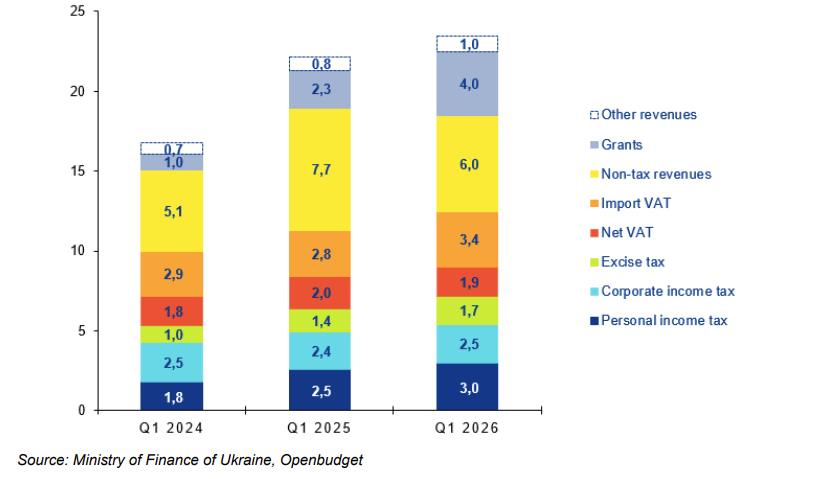
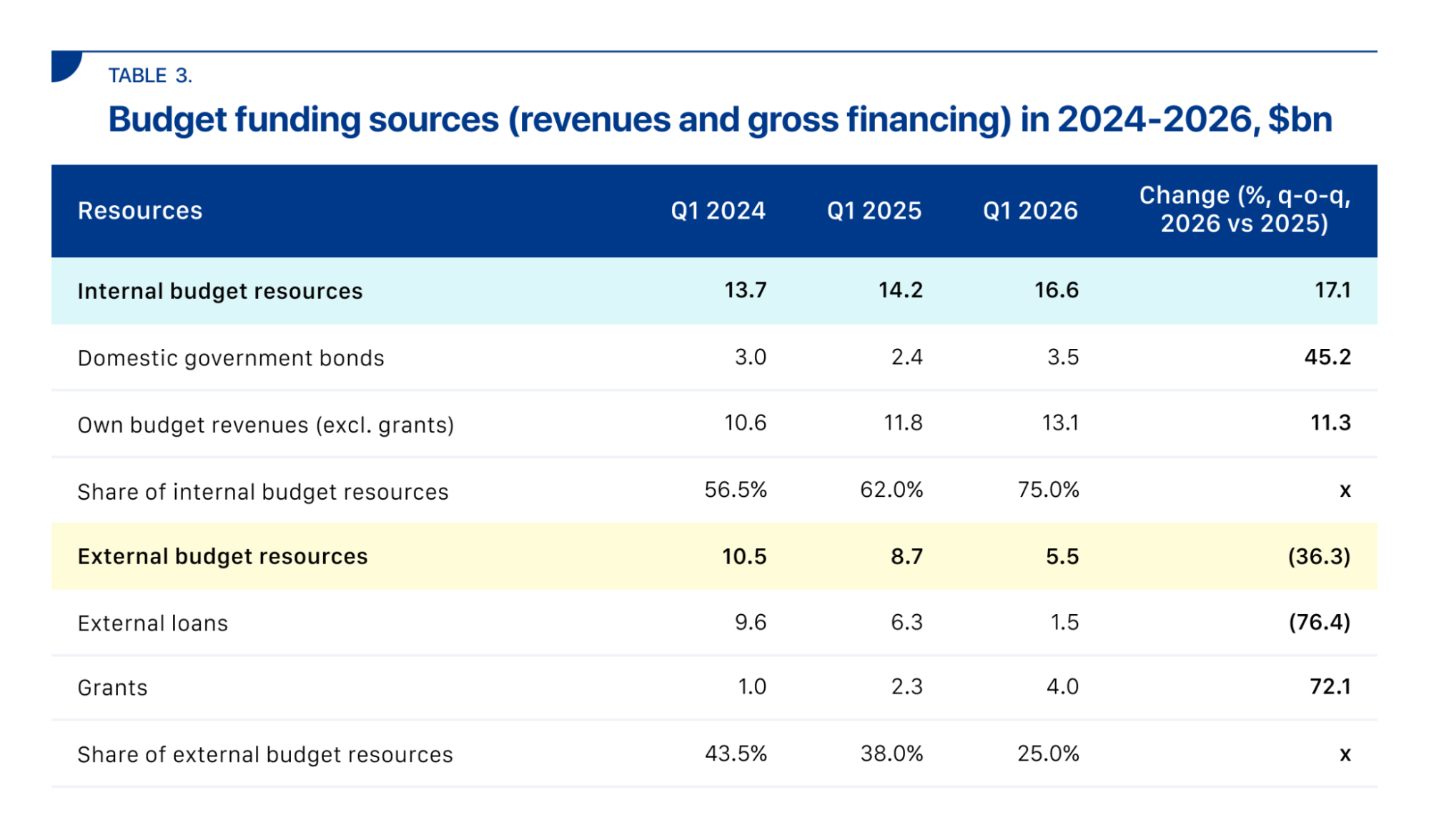
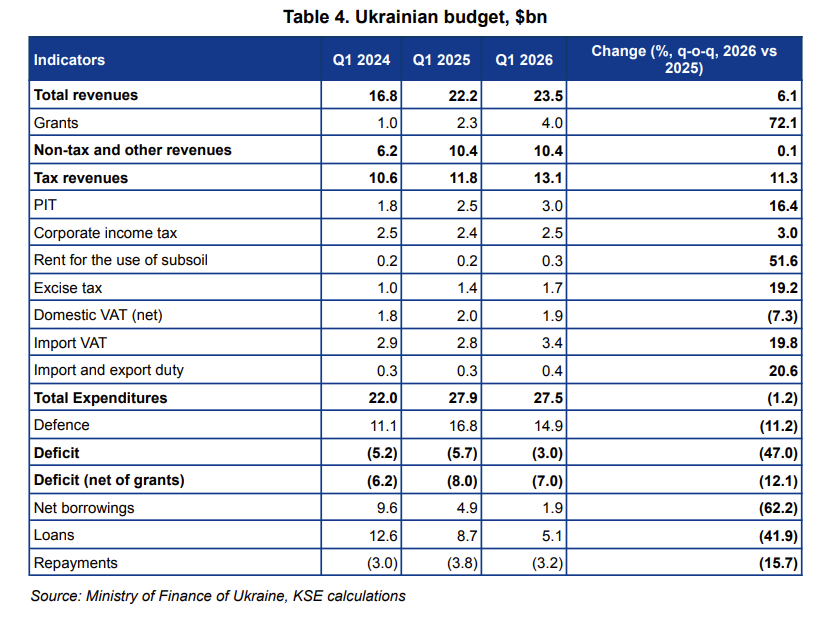
State budget revenues rose 6.1% year-on-year to $23.5bn, supported by a sharp increase in international grants, which climbed 72.1% to $4bn.
Tax receipts remained the main source of budget financing, increasing 11.3% to $13.1bn. Growth was led by import VAT, up 19.8%, excise taxes, up 19.2%, and personal income tax together with the military levy, which rose 16.4%. Domestic VAT receipts, however, fell 7.3%, reflecting the impact of energy disruptions, security risks and weaker economic activity.
Most grant funding came through the Extraordinary Revenue Acceleration (ERA) mechanism, which provided $3.8bn, while Norway contributed a further $0.2bn through the World Bank.
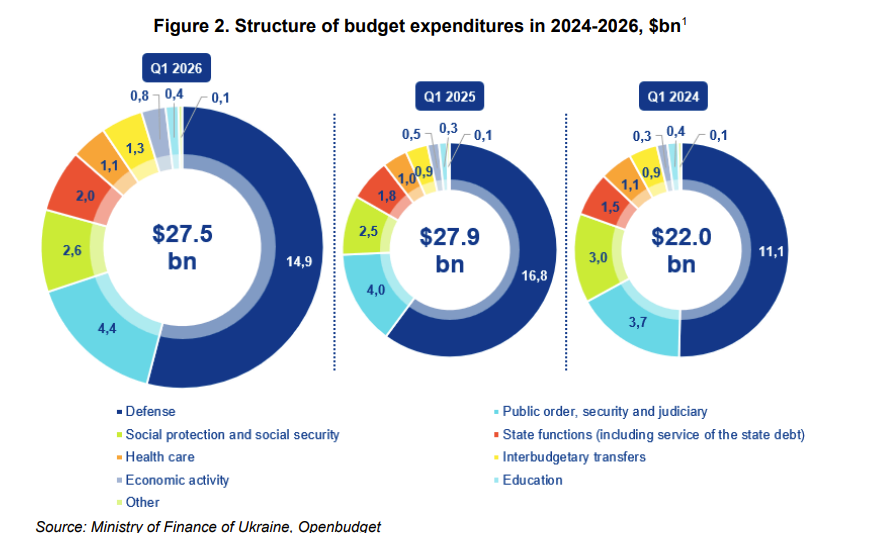
State budget expenditure totalled $27.5bn during the quarter, 1.2% lower than a year earlier. Defence spending fell 11.2% to $14.9bn, largely because of reduced volumes of international military assistance. Even so, defence and security spending accounted for 69.9% of total expenditure, or $19.3bn, underscoring the continued demands of the war. Security sector spending increased 10.4% to $4.4bn.
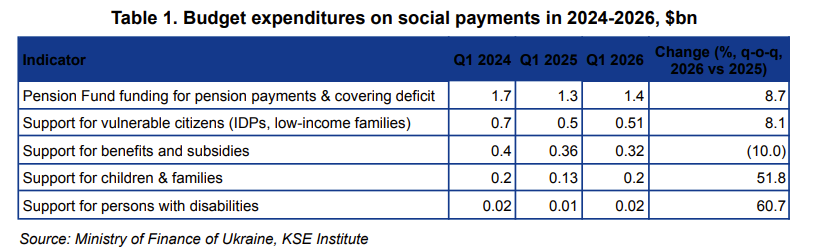
Social spending rose 8.4% to $2.4bn following increases in social standards. Pensions for 9.5mn recipients were indexed by 12.1% from March 1, while spending on support for families with children jumped 51.8% to $200mn.
The budget deficit, including grants, narrowed to $3bn. Without grant support it would have reached $7bn. The International Monetary Fund was Ukraine’s only external creditor during the quarter, disbursing $1.5bn under its 48-month Extended Fund Facility programme worth about $8.1bn.
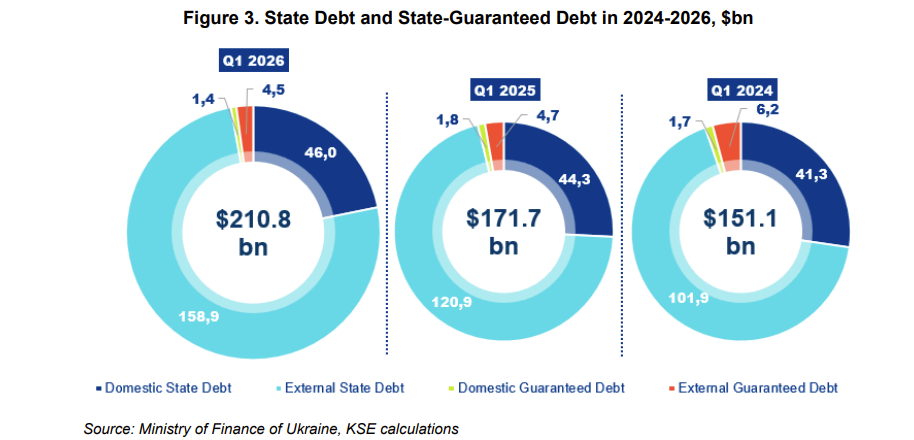
KSE said risks remained elevated. Ukraine received no disbursements under the EU’s Ukraine Facility because reform targets had not been fully implemented, while delays to a €90bn ($102.1bn) Ukraine Support Loan added uncertainty. By the end of March, 95.5% of the reserve fund had been depleted and the finance ministry had brought forward $5.1bn of defence spending originally planned for the fourth quarter, creating a potential financing gap of about $5bn later in the year. Public and publicly guaranteed debt stood at $210.8bn at the end of the quarter.
Unlock premium news, Start your free trial today.


.jpg)