
Russia’s ruble best performing currency in the world in 1Q26


The Russian ruble has become the world’s best-performing currency for a second consecutive year, buoyed by high oil revenues, capital controls and tight monetary policy that analysts say have entrenched structural imbalances in the country’s financial system.
The currency has strengthened 12% against the dollar since the start of 2026, according to Bloomberg calculations cited by independent Russian outlet The Bell. On the over-the-counter market, the exchange rate briefly reached RUB71 to the dollar, its strongest level since early 2023.
The gains follow an even sharper rally in 2025, when the ruble appreciated 45% over the year, climbing from RUB113 per dollar in January to RUB78 by December. Analysts had expected the rally to fade amid forecasts that Brent crude would fall to about $50 a barrel, weakening Russia’s export earnings and putting pressure on the currency. The opposite happened. Oil prices remained elevated following the closure of the Strait of Hormuz in March.
Economists said the ruble’s resilience has also been supported by Russia’s high interest rates, weak import demand and restrictions on capital outflows imposed after western sanctions. The Central Bank of Russia has reduced its benchmark rate by only 1.5 percentage points over the first four-and-a-half months of the year to the current 14.5%, while imports are forecast to grow by just 1% in 2026.
The share of ruble-denominated international settlements also continued to rise, increasing from 58.6% to 64.9% between January and April, according to the report.
Bloomberg reported that exporters tripled foreign currency sales on the domestic market in April to $7.3bn as oil revenues increased. Although Russia’s finance ministry resumed foreign currency purchases for the National Wealth Fund in May, planned purchases amount to just RUB110bn, far below exporter inflows.
“There is a sort of ‘overhang’ hanging over our currency market, suggesting that any weakening of the exchange rate will most likely be dampened by this overhang,” Economic Development Minister Maxim Reshetnikov said last month.
“A strong ruble increasingly appears to be a natural feature of the current Russian economy — the result of sanctions-induced imbalances in the financial market and a tight monetary policy designed to offset massive state spending on the war,” Bloomberg noted.
Russia’s Ministry of Economic Development last week revised its macroeconomic forecasts to reflect a stronger currency outlook, projecting an average exchange rate of RUB81.5 per dollar in 2026, compared with an earlier estimate of RUB92.2. Analysts surveyed by Bloomberg said the ruble could strengthen further to between RUB65 and RUB70 per dollar.
The strong ruble is a headache for the Kremlin as it will reduce its oil and gas budget revenues: the budget assumes oil and gas prices in dollars, but spending is in rubles, so the stronger the ruble, the few rubles the government has to spend.
The strong ruble also will reduce the population’s spending power by driving up the cost of imports at a time when the economy is already sliding towards stagnation, as IntelliNews reported this week.
|
Russia official economic forecasts |
|||
|
Indicator |
September 2025 Forecast |
May 2026 Forecast |
Change |
|
GDP growth 2026,% |
1.3 |
0.4 |
-0.9 pp |
|
GDP growth 2027,% |
2.8 |
1.4 |
-1.4 pp |
|
GDP growth 2028,% |
2.5 |
1.9 |
-0.6 pp |
|
Urals price 2026, $/bbl |
59 |
59 |
0 |
|
Urals price 2027, $/bbl |
>60 |
50 |
-10 |
|
Exchange rate 2026, RUB/$ |
92.2 |
81.5 |
-12% |
|
Exchange rate 2027, RUB/$ |
95.8 |
87.4 |
-9% |
|
Ruble-denominated Urals price 2027, RUB/bbl |
5,844 |
4,370 |
-25.20% |
|
Investment growth 2026,% |
-0.5 |
-1.5 |
-1.0 pp |
|
Investment growth 2027,% |
3.8 |
2 |
-1.8 pp |
|
Real wage growth 2027,% |
3.9 |
2.5 |
-1.4 pp |
|
Retail sales growth 2027,% |
3.9 |
2.3 |
-1.6 pp |
|
Inflation, end-2026,% |
4 |
5.2 |
+1.2 pp |
|
Key interest rate 2026,% |
12.0–13.0 |
14.0–14.5 |
+1.5–2.0 pp |
|
Source: Ministry of Economic Development / The Bell |
|||
CBR macroeconomic survey
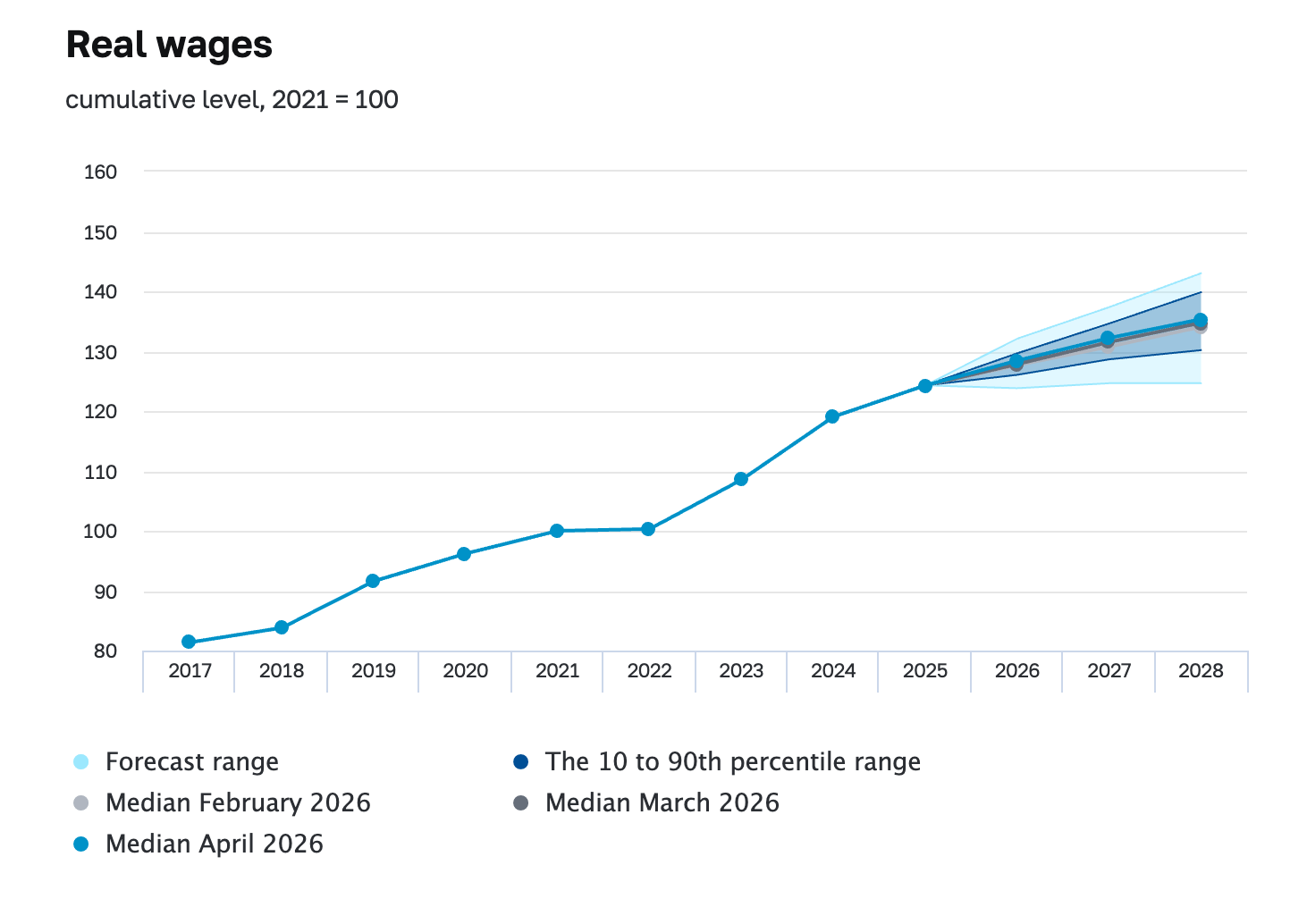
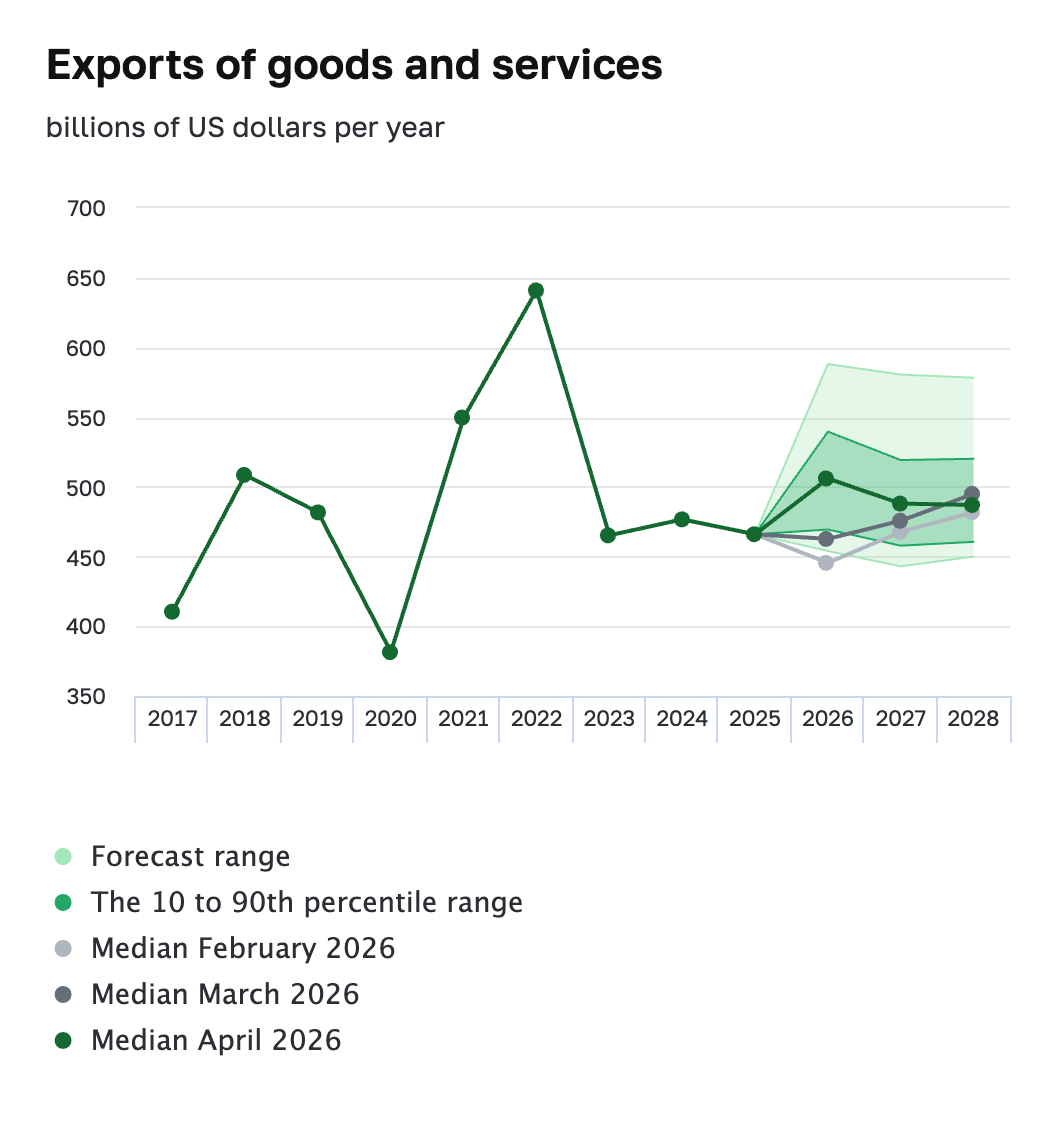
According to the April macroeconomic survey of professional analysts by the Central Bank of Russia they upgraded their outlook for the ruble while raising inflation expectations over the medium term, highlighting the persistence of price pressures despite tighter monetary policy and a stronger currency.
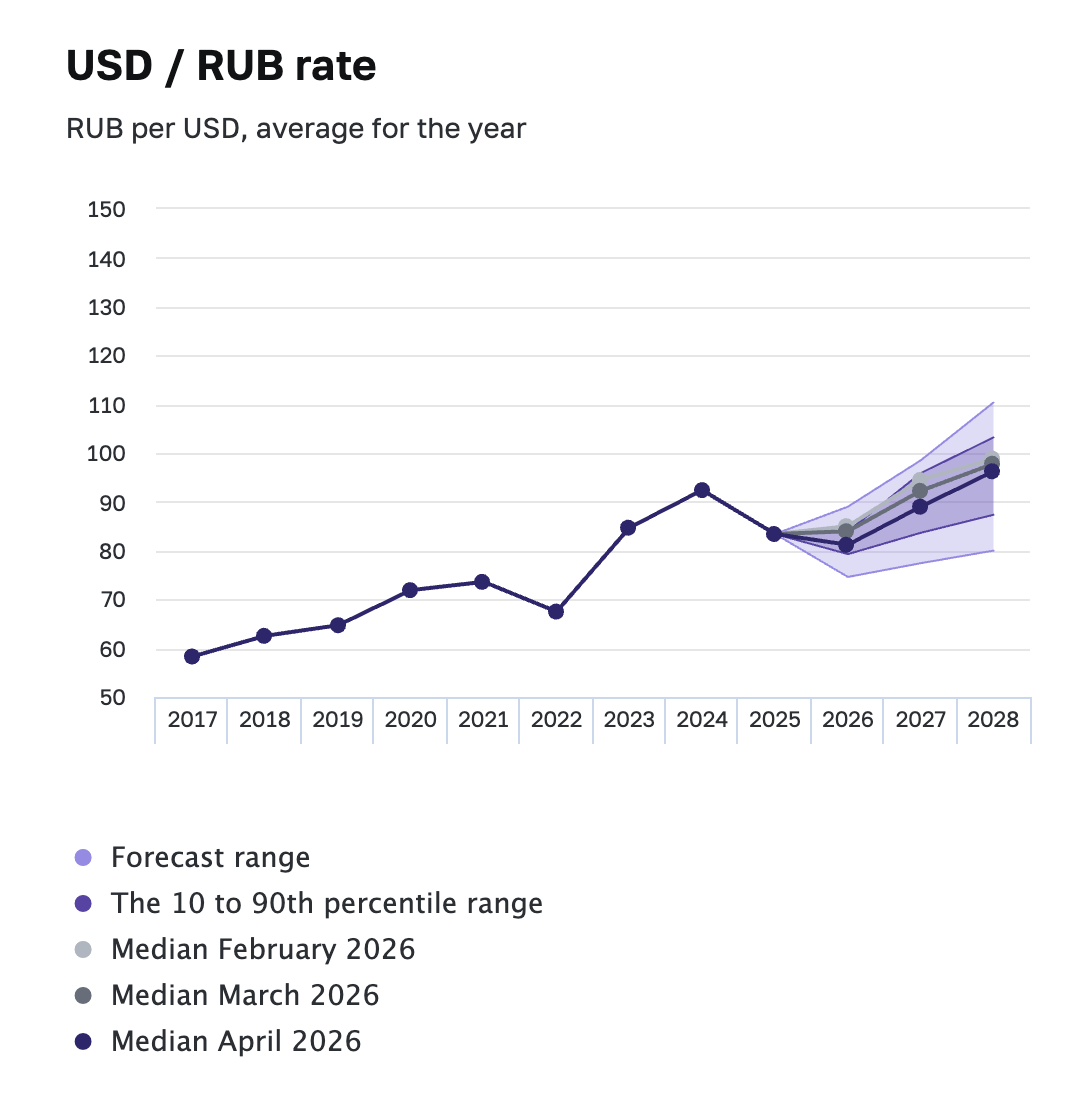
Analysts now expect the average exchange rate to stand at RUB81.2 per dollar in 2026, strengthening from previous forecasts made in March. The ruble is projected to weaken gradually thereafter, averaging RUB89.0 per dollar in 2027 and RUB96.3 in 2028, although the currency is still expected to remain 1.6% to 3.5% stronger across the forecast horizon than previously anticipated.
At the same time, inflation forecasts were revised higher. Analysts now expect consumer price inflation to reach 5.5% in 2026, up 0.2 percentage points from the previous survey, and 4.4% in 2027, an increase of 0.3 percentage points. Inflation is not expected to return to the central bank’s 4% target until 2028, underlining the challenge facing policymakers as wartime fiscal spending continues to feed domestic demand.
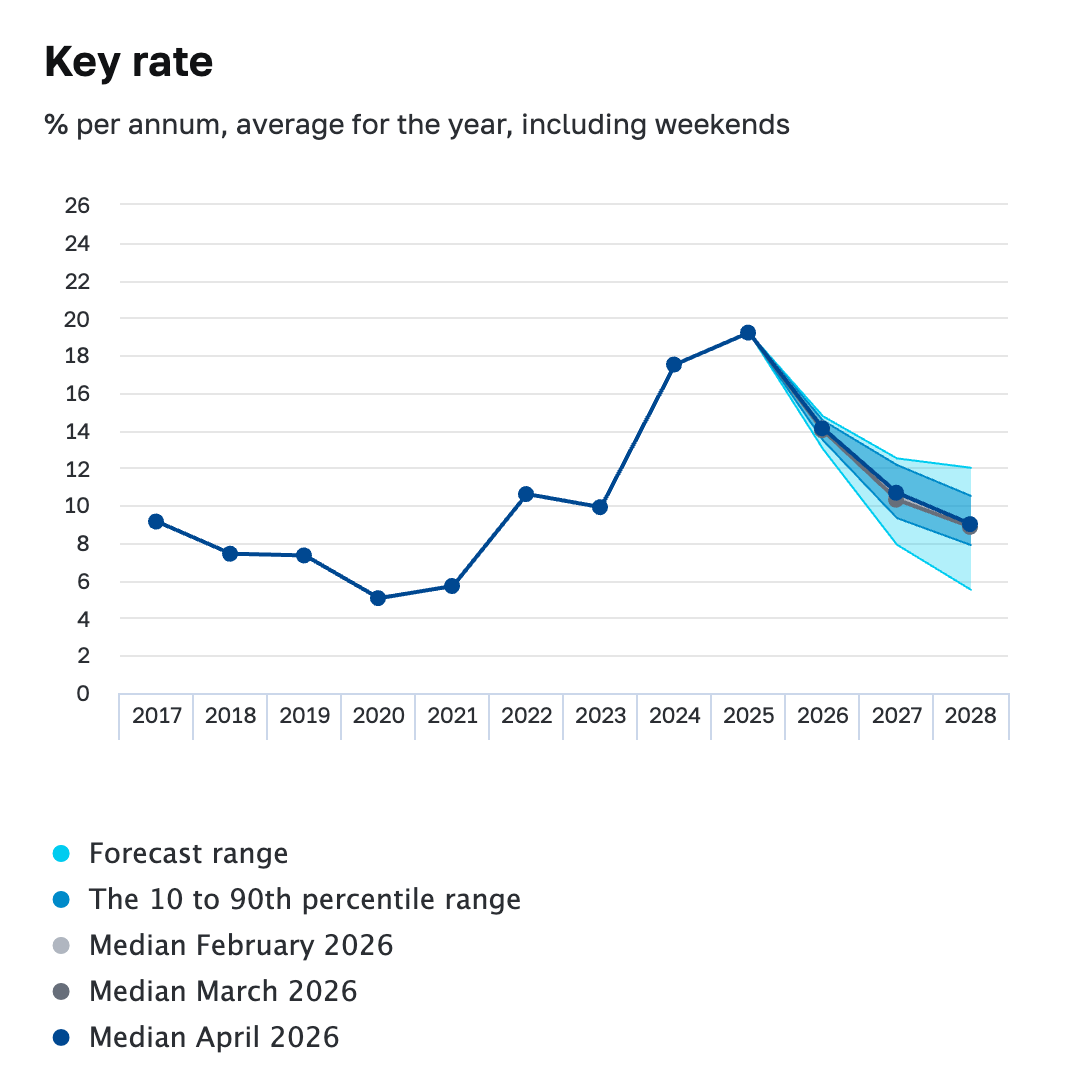
The survey also pointed to expectations that interest rates will remain elevated for several years. Analysts forecast the Bank of Russia’s key rate at 14.1% in 2026, 10.7% in 2027 and 9.0% in 2028, all slightly higher than in the March survey. The projected policy rate remains above analysts’ estimate of the neutral rate of 8%, suggesting expectations of a prolonged period of restrictive monetary policy.
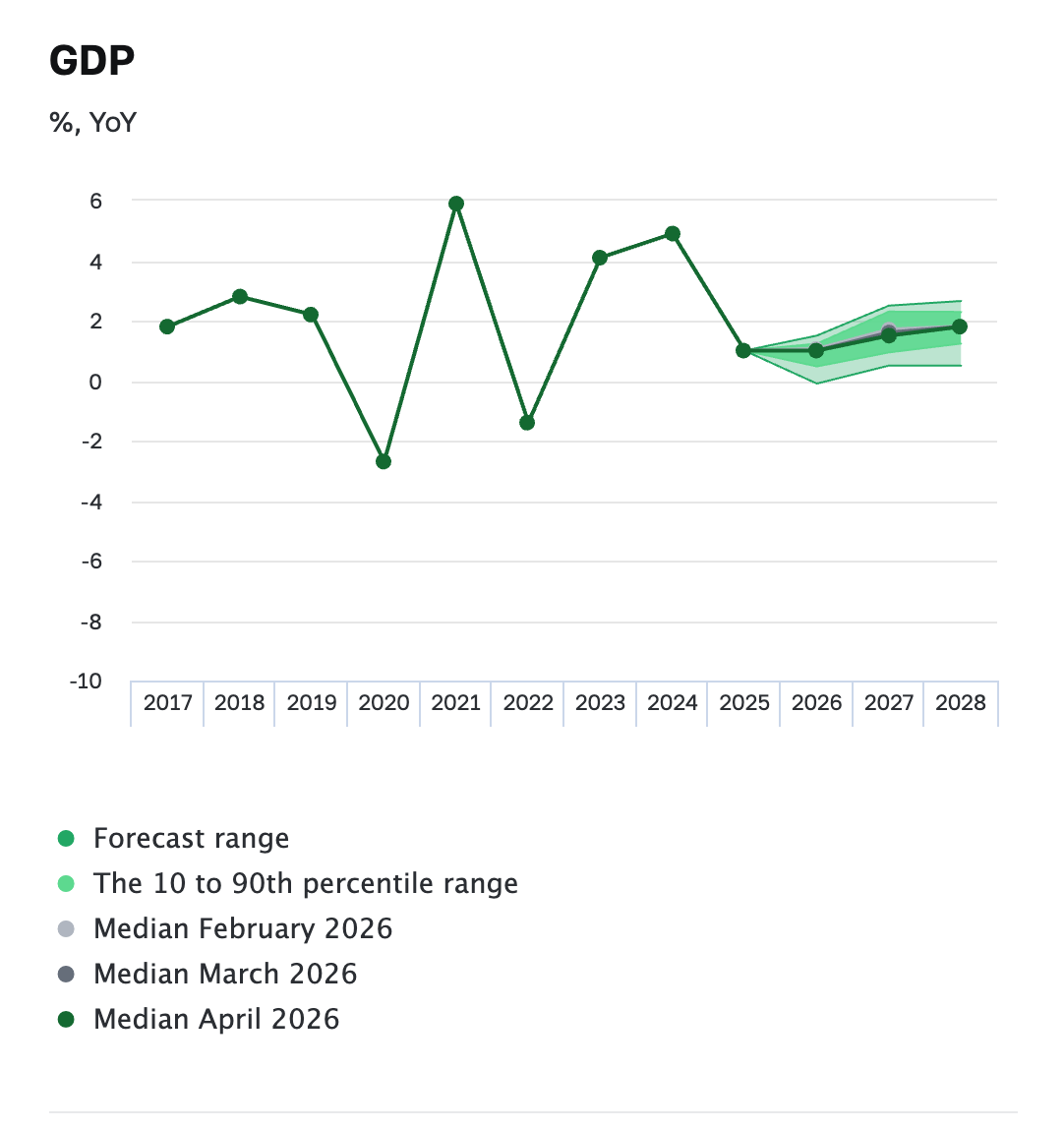
Russia’s economic growth outlook remained subdued. Analysts left their 2026 GDP growth forecast broadly unchanged at 1.0%, while trimming the 2027 forecast slightly to 1.5%. Long-term growth expectations also weakened marginally, with the estimated trend growth rate slipping to 1.7%. The survey indicated that analysts expect cumulative GDP growth between 2021 and 2028 to total 13.3%, equivalent to an average annual expansion of about 1.9%.
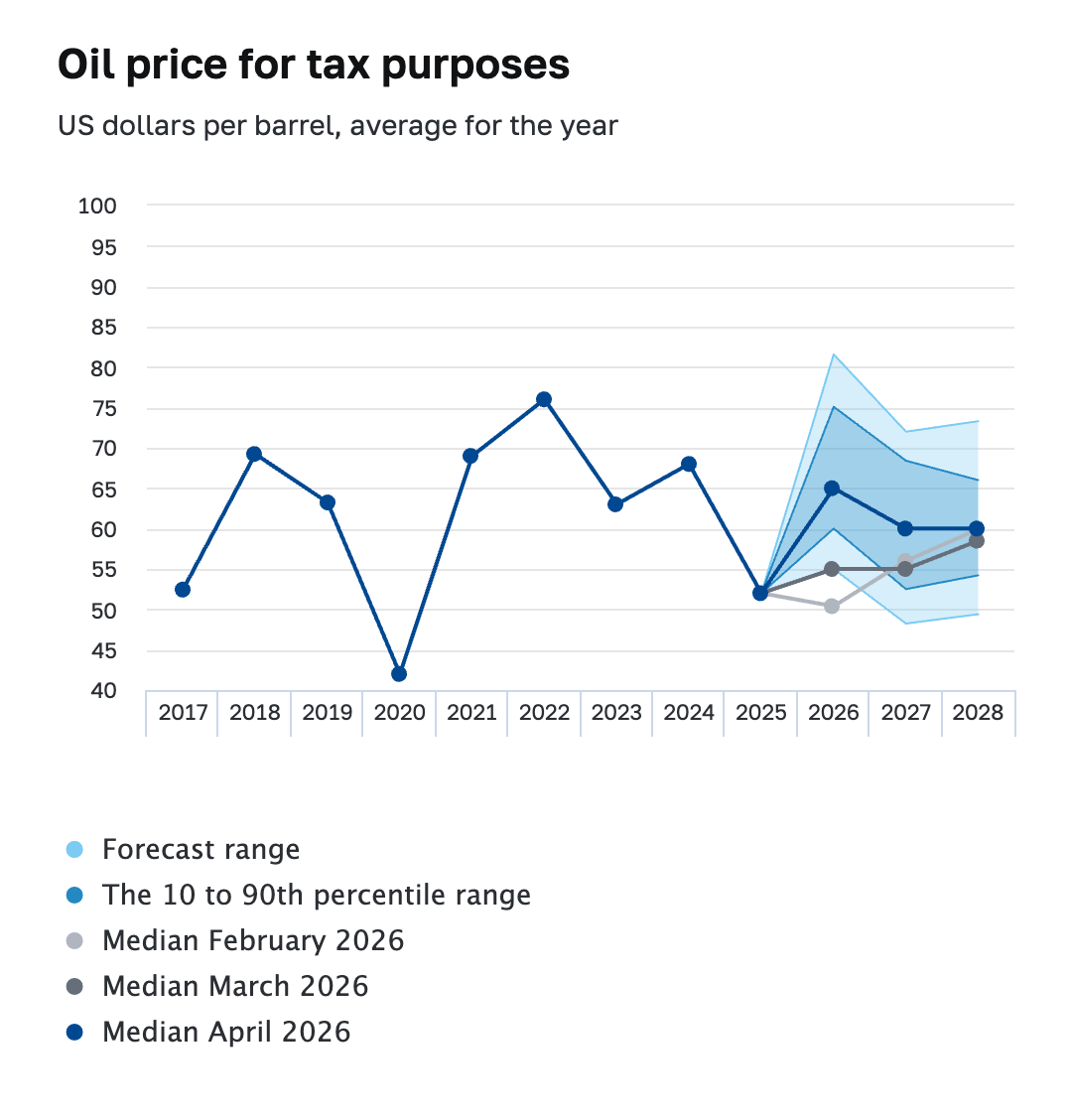
The outlook for oil prices, a key driver of Russia’s export revenues and fiscal position, was revised upwards. Analysts now expect oil prices used for tax calculations to average $65 a barrel in 2026 and $60 in both 2027 and 2028.
Unlock premium news, Start your free trial today.

