
Iran's fertility rate falls to 1.35 as births drop below 900,000


Iran's fertility rate has fallen to 1.35 children per woman, well below the replacement level, with annual births dropping under 900,000 for the first time, Health Ministry deputy for public health Alireza Raisi said, Iranian news agency Tasnim reported on May 19.
Raisi said the country's population stood at 86.56mn, comprising 43.66mn men and 42.91mn women, according to the latest census.
The fertility rate, which stood at around 6.5 children per woman in past decades, fell to 1.6 in the year to March 2024 and 1.35 in the year to March 2025, against a global replacement rate of about 2.1, Raisi said.
The Health Ministry official said 979,929 births were recorded in the Iranian year to March 2025, against 458,873 deaths. Births fell to 892,268 in the year to March 2026, dropping below 900,000 for the first time.
Raisi warned that an ageing population would push up deaths in the coming decades, with the number of deaths potentially overtaking births if current trends continued.
Raisi said 470,372 marriages were registered in the year to March 2025, falling to 431,664 in the following year, while divorces declined from 197,778 to 180,721.
The official said around 60% of births in Iran were delivered by caesarean section, with 38.5% of those first births, a pattern he said could affect subsequent childbearing.
He added that Iran had between three and five million infertile couples, with fertility treatment centres recording 15,759 births in the year to March 2026.
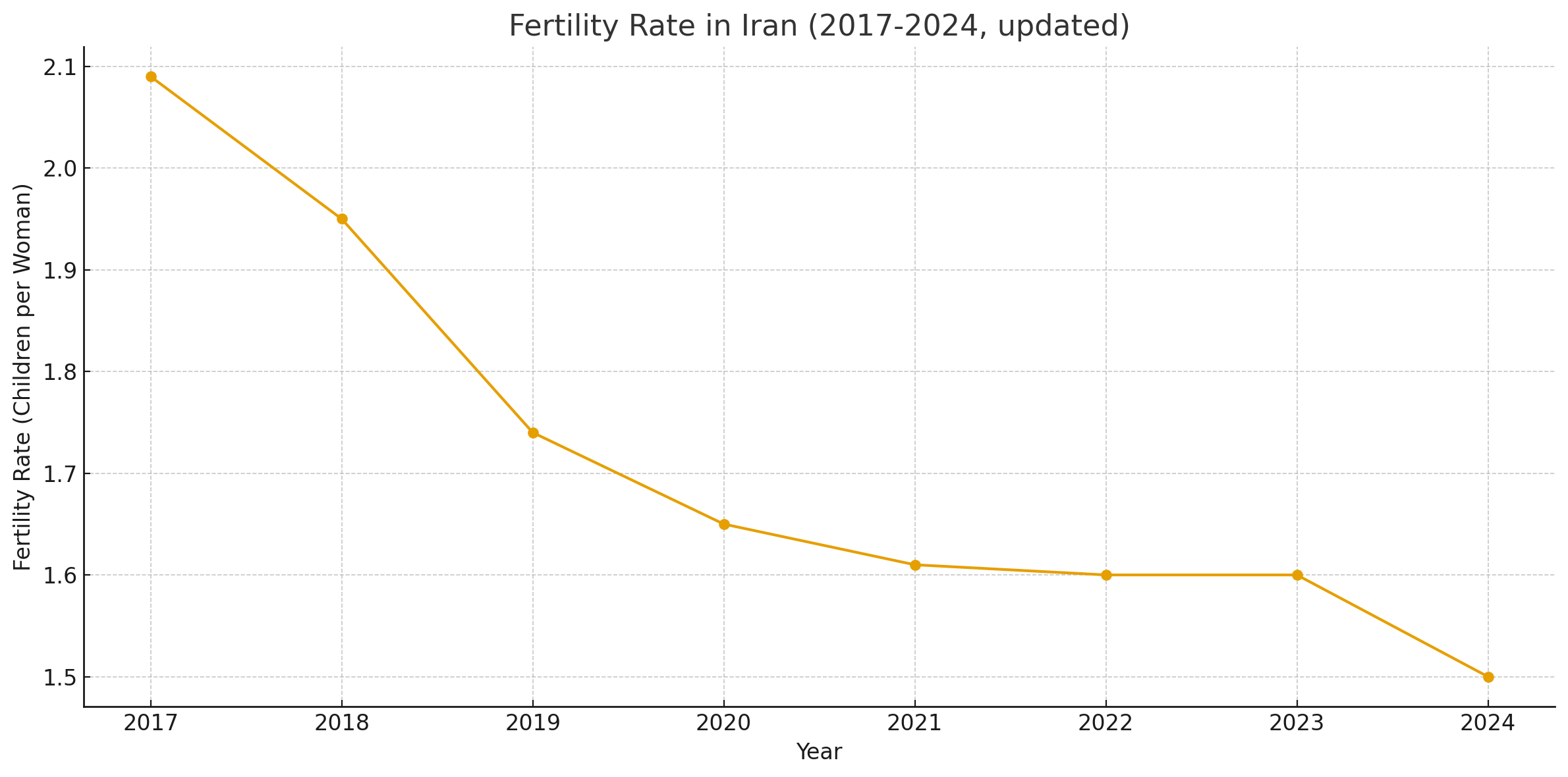
The official said population decline had become a global concern, describing a young and productive population as a key component of development, while warning that Iran could not be certain of returning its fertility rate to replacement level.
Raisi also said the Health Ministry had maintained healthcare services during the recent conflict with the United States and Israel, with more than 220 health and treatment centres damaged and five health workers killed, one of them a pregnant woman.
He said the ministry had shifted to an active model of service delivery during the conflict, with health workers directly contacting pregnant women, the elderly and newborns, and identifying 1,200 isolated and high-risk elderly people for support.
Iranian MP Fatemeh Mohammadbeigi, a member of the Iranian parliament's health commission, said the fertility rate had fallen from 6.8 to 1.4 children per woman (higher than the previous figure), describing the decline as a consequence of what she called extreme family-planning policies introduced in 1986.
The MP said Iran had experienced one of the steepest declines in population growth worldwide as a result of those policies.
Mohammadbeigi linked population to national security, saying at least five million active personnel were needed to defend the country's borders.
She said expert projections indicated Iran's population could fall to half its current level in the coming decades if present trends were not reversed, which she said would seriously threaten national security and defence capability.
The MP pointed to the Family Support and Youthful Population Law, passed during the 11th parliament, which provides incentives, including nutrition packages for mothers and children, housing and land for families with three or more children, increased marriage and childbearing loans, and expanded married-student accommodation.
Mohammadbeigi criticised the pace of the law's implementation, saying only around 15% of its provisions had been fully enacted. She identified budget allocation and execution as the main challenge, calling on executive bodies to act urgently to operationalise the legislation.
Unlock premium news, Start your free trial today.
_1.jpg)


