Romania’s manufacturing remains in contraction despite March improvement


Romania’s manufacturing sector remained in contractionary territory in March, despite a slight improvement in business conditions, according to data from the BCR Romania Manufacturing PMI cited by Erste Group.
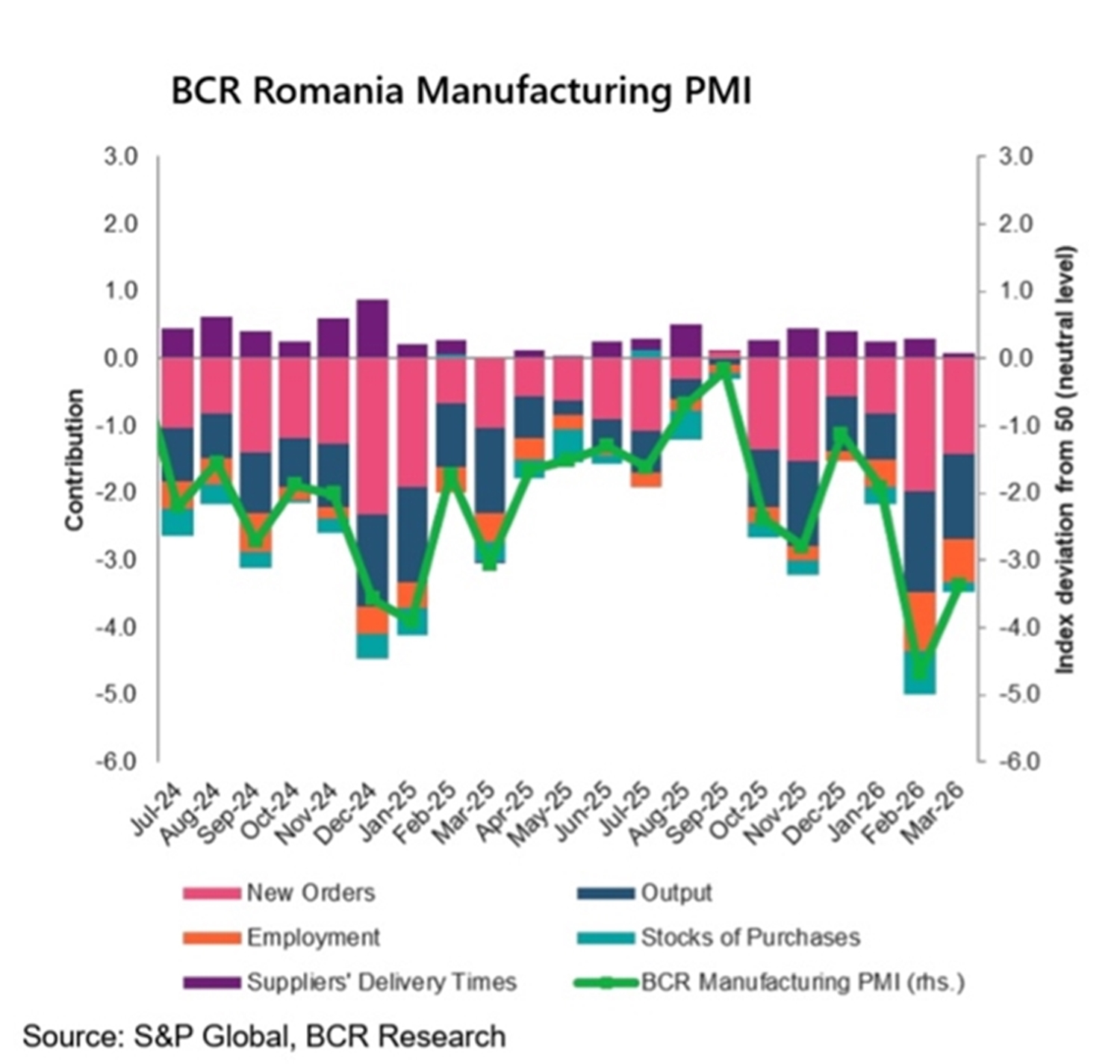
The index (chart) rose to 46.6 in March from 45.3 in February, remaining well below the 50 threshold that separates expansion from contraction. For the first quarter of 2026, the PMI averaged 46.7, down from 47.9 in the fourth quarter of 2025 and 47.1 in the same period last year, indicating a continued industrial slowdown.
The March improvement aligns with broader European trends but does not yet fully reflect the lagged impact of the Middle East conflict, apart from rising cost pressures.
The Austrian financial group said there is still potential for a modest rebound later in 2026, although significant downside risks persist, particularly from higher energy-related costs. The weak start to the year is seen as weighing on overall growth prospects.
According to a TransInfo analysis, March developments across Europe were marked by supply chain disruptions, longer delivery times and rising input costs. Eurozone manufacturers reported the fastest increase in input prices since October 2022, alongside the strongest rise in output prices in more than three years. Eurozone's PMI rose to 51.6 in March from 50.8 in February, and it reached 52.2 in Germany on stronger orders and output, helped by stock-building.
In Romania, the modest PMI improvement was driven by less severe declines across most components, although supplier delivery times deteriorated. Demand remains a key constraint on industrial activity, while the impact of the Middle East conflict is currently more visible through input costs than through final prices.
Despite ongoing challenges, analysts pointed to some support from the external environment, which could help stabilise the sector in the coming months.
Unlock premium news, Start your free trial today.