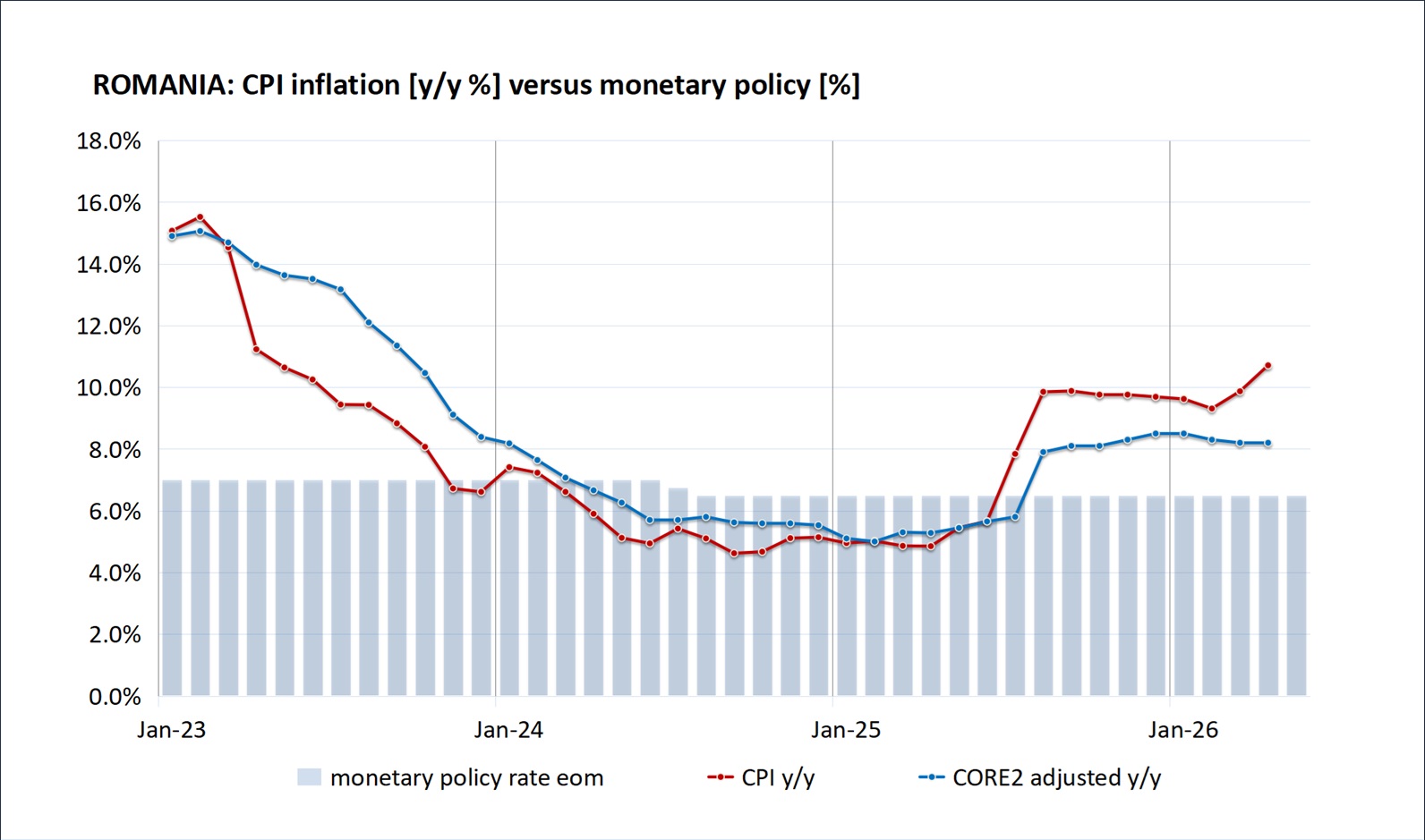
Romania keeps key interest rate at 6.5%


Romania’s central bank kept its benchmark interest rate (chart) unchanged at 6.5% during the monetary policy board meeting held on May 15, maintaining a cautious stance amid persistent inflationary pressures, political uncertainty and external risks linked to the conflict in the Middle East, the National Bank of Romania (BNR) announced.
The decision was widely expected by analysts, most of whom no longer anticipate interest rate cuts before 2027 given the deterioration in the inflation outlook and the broader macroeconomic environment. However, they don't expect a rate hike either.
In its statement, BNR reiterated expectations that headline inflation will slow substantially in the third quarter of 2026 due mainly to favourable base effects, particularly those related to last year’s electricity price liberalisation and VAT increases. The central bank also said disinflationary pressures stemming from weak domestic demand are expected to strengthen.
However, the monetary authority acknowledged that inflation in the second quarter rose above previous expectations, citing higher energy prices linked to developments in the Middle East and domestic factors including regulated rent increases for state-owned housing units. The next monetary policy meeting will be held on July 8.
BNR also pointed to additional inflationary pressures likely to emerge after mid-year, including the liberalisation of natural gas prices for non-residential consumers from April 1 and the planned expiry of the food price capping mechanism on July 1.
The central bank’s most recent inflation forecast, published in February, projected year-end inflation at 3.9% year-on-year. Since then, several analysts have revised projections sharply higher. Erste Group, for example, now expects inflation to end 2026 at 5.9% year-on-year.
BNR is due to publish an updated Inflation Report on May 19, which is expected to reflect the worsening inflation outlook and provide further guidance on future monetary policy.
The central bank also highlighted multiple sources of uncertainty affecting the economic outlook and future policy decisions.
Domestically, BNR cited the political environment and uncertainty surrounding additional fiscal consolidation measures required under Romania’s medium-term fiscal plan agreed with the European Commission and the EU excessive deficit procedure.
Externally, the bank warned that the conflict in the Middle East and the global energy crisis continue to pose risks to economic activity and inflation through their effects on energy prices, consumer purchasing power, business profitability and financing conditions across the region.
BNR also stressed the importance of maximising absorption of EU funds, particularly those available under the Recovery and Resilience Facility (RRF), arguing that these resources are essential for mitigating the contractionary effects of fiscal consolidation and supporting structural reforms and the energy transition.
The central bank added that monetary policy decisions taken by the European Central Bank, the US Federal Reserve and regional central banks remain relevant factors for Romania’s future monetary policy path.
Unlock premium news, Start your free trial today.