
Iranian stocks edge higher as Tehran reopens bourse after 80-day war shutdown


Iran’s stock market reopened in Tehran on May 19 after an almost 80-day suspension imposed during the February 28 outbreak of war with the United States and Israel, with roughly half of actively traded shares moving into positive territory despite dozens of large companies remaining frozen following conflict-related damage.
The cautious rebound shows Tehran’s attempt to restore confidence in a market that had effectively become a political and security concern during the conflict, while also preventing a disorderly selloff in an economy already battered by sanctions, inflation and a sharply weaker rial.
Authorities reluctantly reopened trading under heavy supervision, with restrictions on market makers, staggered resumptions for suspended shares and support from state-backed stabilisation funds aimed at containing volatility.
A market heatmap published after the opening bell showed selective gains concentrated in cement, pharmaceuticals, food producers and basic metals, while investment and financial holding companies remained under pressure.
Non-ferrous metals producer titled Iranian Copper Industries Corporation and several commodity-linked counters led advances as investors positioned for further currency weakness and higher domestic prices.
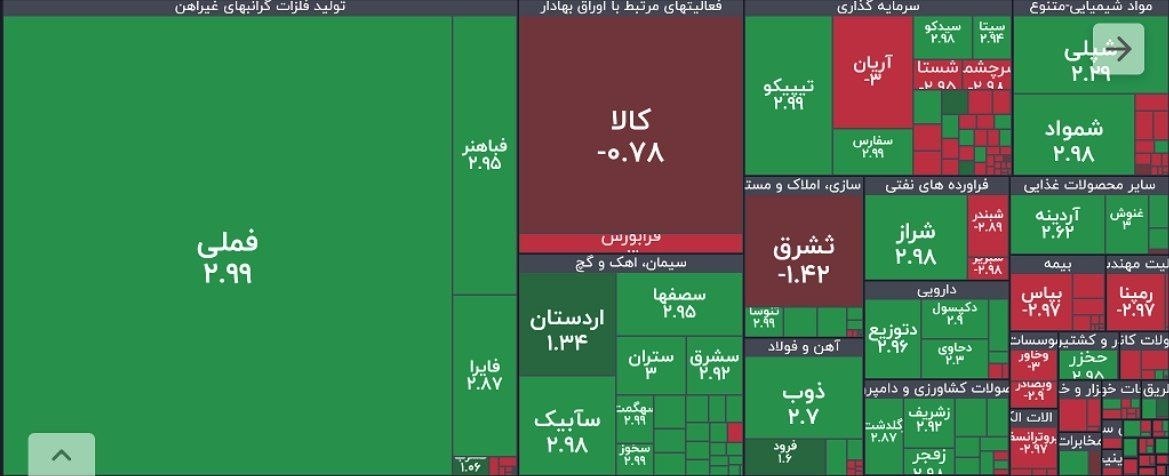
The Tehran Stock Exchange resumed operations with 42 major listed companies, representing about 35% of total market capitalisation, still suspended because of direct war damage or exposure through subsidiaries, officials said. Trading hours were extended to 13:30 local time due to the large number of pending disclosures.
Hojatollah Seydi, head of Iran’s Securities and Exchange Organisation, said more than 500 companies had been cleared to resume trading after completing financial reporting requirements disrupted by the war.
“After an unavoidable closure, we are beginning the first trading day of the new year,” Seydi said during the reopening ceremony at Tehran’s exchange hall, adding that “both major issues”, wartime uncertainty and delayed corporate disclosures, had been “largely resolved”.
Hamid Yari, deputy head of market supervision, previously said the original closure was intended to protect shareholder assets and avoid panic-driven trading after US and Israeli strikes targeted Iranian military, energy and industrial infrastructure.
The reopening comes amid a fragile post-war environment in which Tehran is trying to project economic normalisation despite lingering supply disruptions, damaged industrial facilities and continued pressure on the rial.
It is expected that the exchange will remain open even if geopolitical tensions flare up again, marking a notable shift from past crisis management policies.
Domestic financial newspapers described the reopening as one of the most complex trading resumptions in recent years, with around 180 symbols reopening without daily fluctuation limits and market makers temporarily barred from placing sell orders until early June.
While many retail investors remain wary after the lengthy freeze, sectors seen as insulated from direct wartime damage attracted early buying interest, particularly exporters and companies benefiting from higher inflation and a stronger dollar market.
Unlock premium news, Start your free trial today.
_1.jpg)


