
Young cormorants dying in large numbers on Caspian coastline


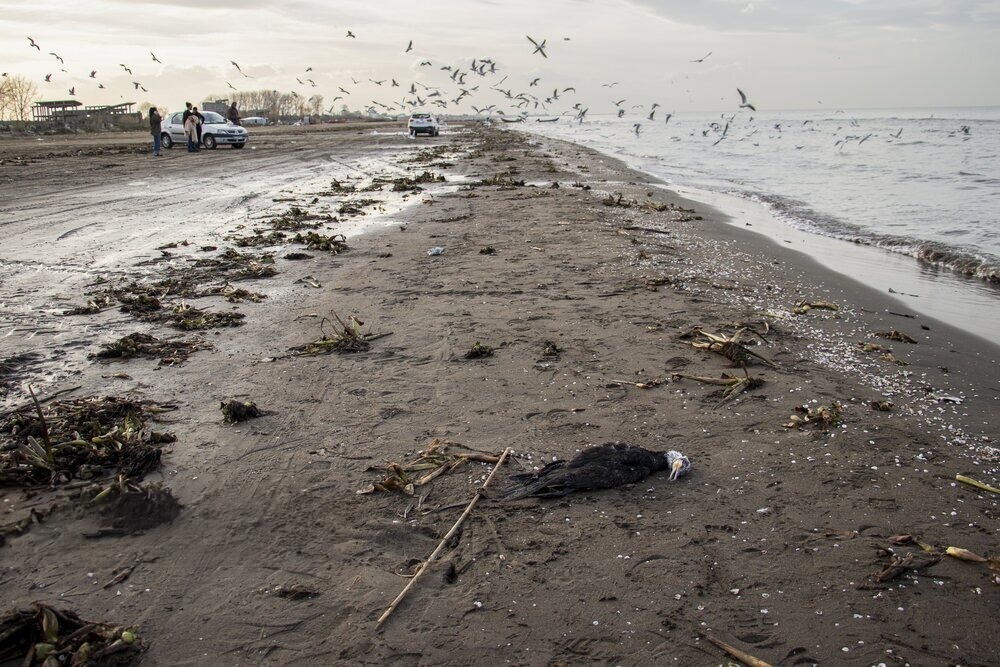
Young cormorants are dying in large numbers along the Caspian Sea coast off Port Anzali due to unknown causes that has stumped locals, the head of the city's environmental protection office said.
Mass bird die-offs in the Caspian Sea have primarily been linked to avian influenza (H5N1) outbreaks since 2022, with documented figures in the tens of thousands for key events; however, authorities have not yet attributed the latest mass deaths to bird flu, Nimrokh Gilan reported on February 6.
Hassan Jafari, head of the Bandar Anzali Department of Environmental Protection, stated that the deaths were caused by human activity rather than disease; however, his claims were not substantiated by environmental groups in the northern Caspian province, which is known for its large bird populations.
The birds become entangled in fishing nets set by fishermen from different countries at sea while diving for fish, he said, without adding further details about when the first numbers of birds started washing up onshore.
"Many of the dead birds are young and lack sufficient hunting experience," Jafari said. "Most deaths occur after rainfall and storms when the birds attack fish and become caught in the nets."
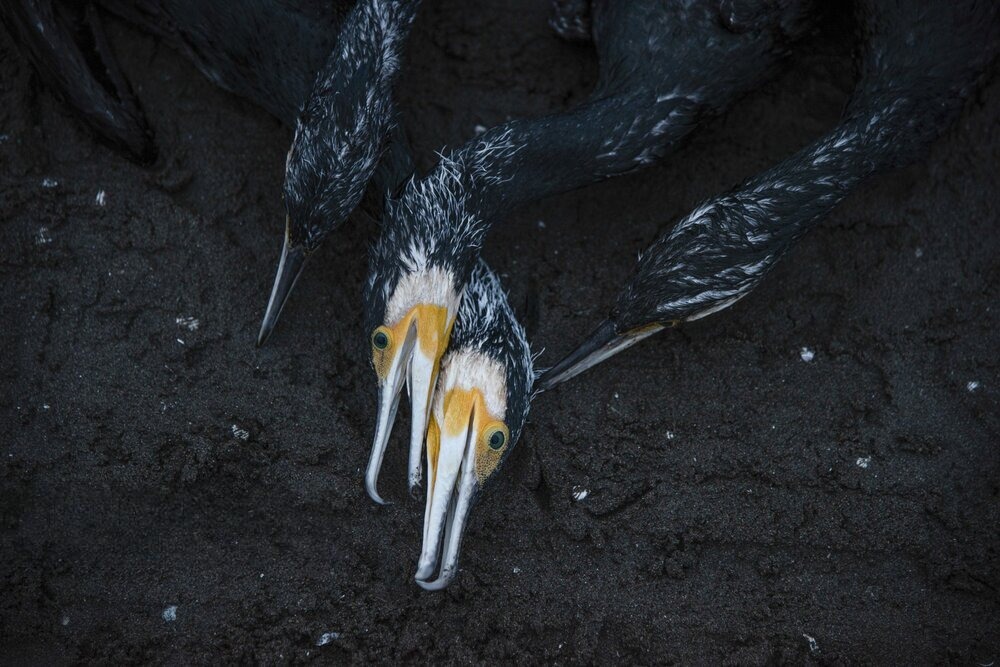
He added that local fishermen and residents have been quickly burying carcasses found along the shoreline in increasing numbers in recent days, which may indicate the birds were not caught in nets.
Jafari said similar incidents had occurred in previous years along the Caspian Sea coast, "but a mass die-off of this scale had not been observed in the Anzali area before," the official noted.
He called for coordination among fishermen, the fisheries authority, and environmental protection officials, recommending that fishing activities during stormy conditions be reviewed and better planned to reduce bird deaths.
"Protecting the lives of seabirds and preserving the livelihoods of fishermen must be addressed simultaneously so that we see a reduction in mortality of these species along the Caspian Sea coast," Jafari said, as quoted by Tehran's Mehr News.
Mass mortality events driven by highly pathogenic avian influenza (H5N1) have killed more than 40,000 wild birds along the Caspian Sea since 2021, according to studies by representative countries, including Russia and Kazakhstan.
The largest single incident struck Maliy Zhemchuzhniy Island off Russia’s Dagestan coast in May 2022, where over 34,000 birds perished. Emerging Infectious Diseases documented 25,157 great black-headed gulls, 3,507 Caspian gulls, 5,641 Caspian terns and 14 Dalmatian pelicans among the dead, attributing the losses to H5N1.
Unlock premium news, Start your free trial today.

_and_US_Ambassador_to_Kyrgyzstan_Lesslie_Viguerie_(center)__050226.jpg)
