
The best possible investment a government can make: health


What is the best possible investment a government can make? Is it a high speed train network, or are 5G telecom Nets? Perhaps it is space based solar power generation capacity. The answer is much more mundane: studies by both the IMF and the World Bank have found the best possible investments that the government can make that has the greatest return on boosting GDP and the prosperity of its population is in its health care service.
Most governments consider health care to be a cost dash and a big one. They pour billions of dollars into health care every year but spend a lot of their time trying to cut the costs and make it more efficient.
The multinational development banks have a different attitude. Whereas governments see healthcare as necessary to cure sick people, the well-being of the population is much more important to the economy than just putting people back to work after they've broken a leg or had the flu.
The general health of the economy relates directly to productivity. Healthcare is not just hospitals or doctors and nurses - it's encouraging a healthy lifestyle and nutritional diets in the population.
“Access to health services ensures that infants survive and thrive, and helps people live longer and stay productive. Healthy people can work, learn, and take care of their families. This strengthens both communities and the economy,” according to a report by the World Bank. “Access to quality health care is at the heart of productivity, human potential, and overall development. It can unlock human capital and economic dividends for countries.”
But the really big gains are invisible. Healthy people work longer and harder. Adding to gross national product. But even more important than that, unhealthy people tend to retire earlier but as their health fades the system is obliged to provide them with care - sometimes for decades where they become members of society who are entirely unproductive.
Healthy workers will continue to work even in retirement -- albeit at reduced rates -- but in doing so they continue to contribute to the GNP.
A particularly influential report was issued in 2001 by the World Health Organization committee chaired by US scholar Jeffery Sachs that set the tone for subsequent work and outlined the main policy conclusions.
The key findings of the report included:
Economic losses from ill health have been underestimated. Countries with the weakest conditions of health and education have more difficulty in achieving sustained growth. In sub-Saharan Africa losses due to HIV/AIDS are estimated to be at least 12% of annual GNP. Economic development in malaria-free zones is at least 1% per year higher than in areas where malaria is endemic.
The role of health in economic growth has been greatly undervalued. Evidence presented by the Commission suggests that each 10% improvement in life expectancy is associated with an increase in economic growth of about 0.3% to 0.4% per year, other growth factors being equal.
A few health conditions account for a high proportion of avoidable deaths. In 1998, 16mn deaths were caused by communicable diseases, maternal and perinatal conditions, childhood infections, tobacco-related illness and nutritional deficiencies. Of the 30mn children not receiving basic immunizations, 27mn live in countries with GNP per capita lower than $1200. Of the half million women who die annually in pregnancy and childbirth, 99% live in developing countries.
The International Monetary Fund (IMF) also did a string of papers in the noughties that was part of a broader shift in IMF thinking during the 2000s away from purely fiscal consolidation frameworks. A 2004 paper recommended that health spending “should be viewed as investment, not consumption.”
“Improved health reduces long-term public expenditure burdens and healthier populations work more, earn more and save more,” the paper concluded, helping to shape a new approach to health by the MDBs that from then saw health spending as a productive investment that produces a return on capital over the long-term, rather than an expenditure cost that governments have to bear.
The appeal to the Global South of investing into health is double, as the IMF concluded in a 2005 paper that low-income countries gain the biggest benefits into health system investments. Like trying to persuade Americans to use their cars less and walk more, the benefits to low income countries are disproportionately large at the very start of the process.
Demographic crisis
The longevity and productivity of older workers is becoming increasingly important as the world is suffering from an unprecedented demographic crisis that is being exacerbated by the Climate Crisis.
There is almost nowhere in the developed world that is going to see population growth in the next few decades. Populations are also falling in the Global South with the notable exception of Africa - which will see populations grow fast between 2060 and 2100, according to the World Bank.
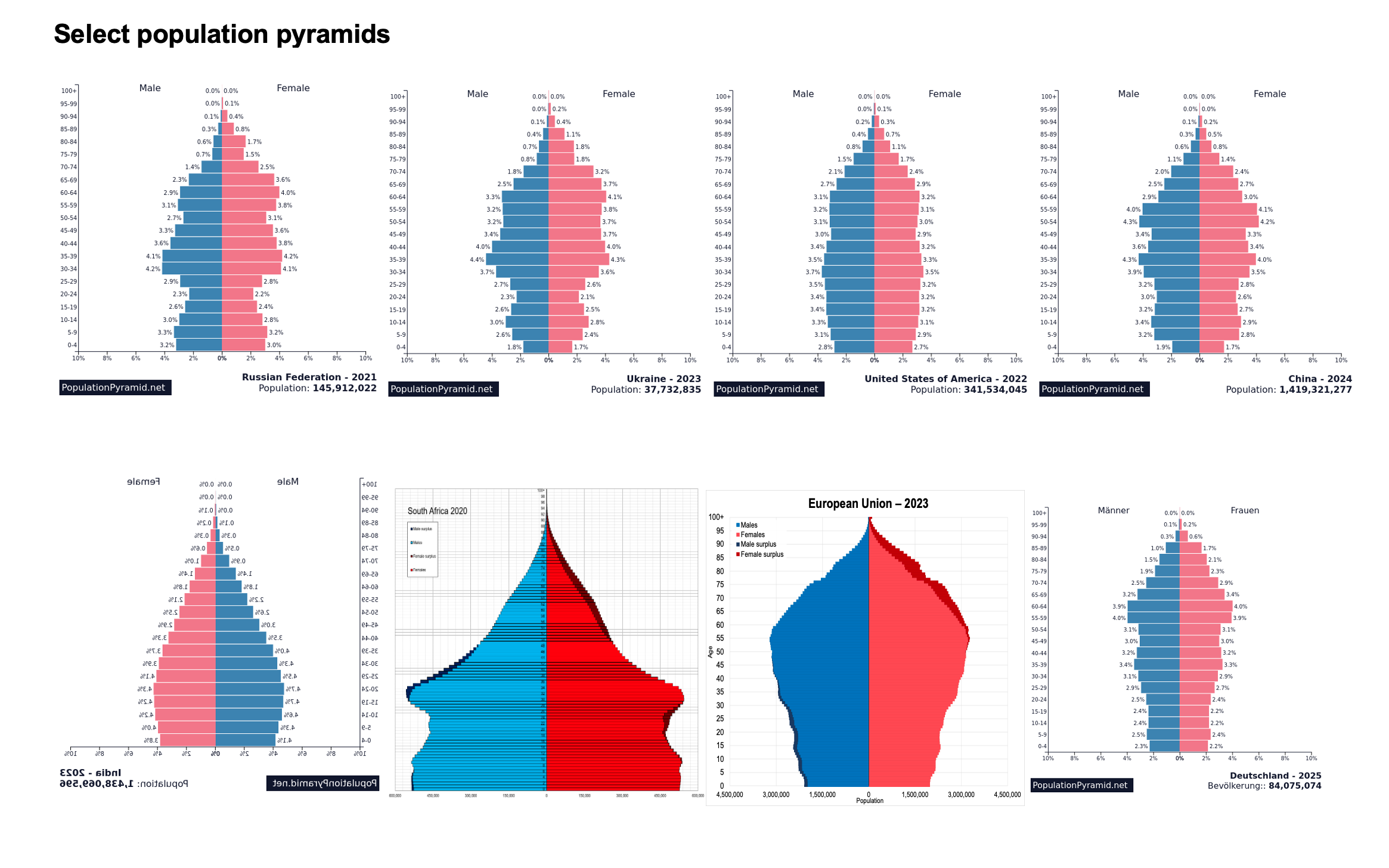
Population pyramids have become towers and the need to boost productivity and keep workers in the workforce for longer has become imperative.
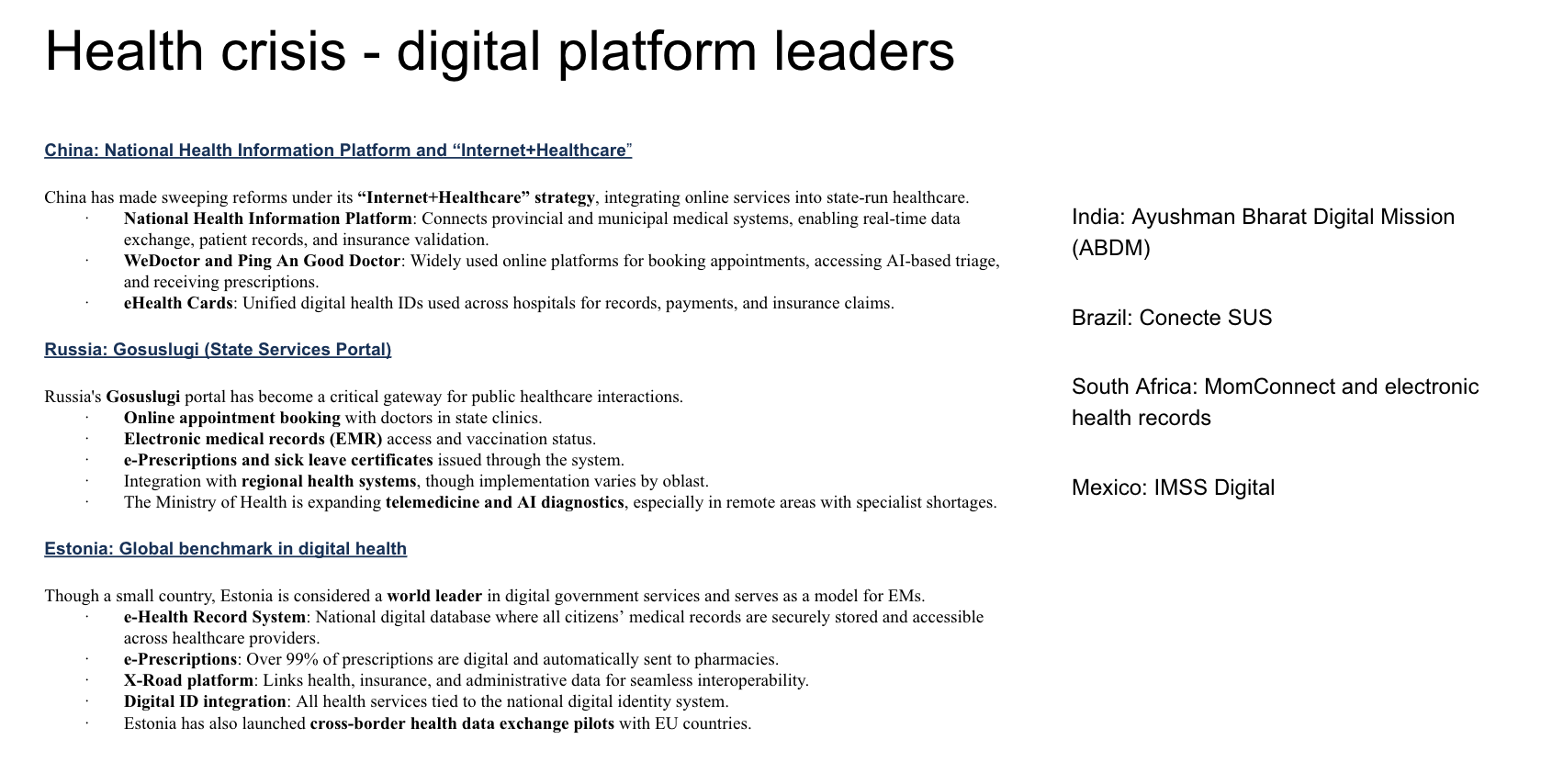
The Global South countries are embracing the idea of public health and leapfrogging over the Global North thanks to the lack of a legacy system. The size of the sunken costs in the Global North’s system are so enormous that the resistance to introducing something new is huge. In the Global South where they are building from scratch, it is simpler to go straight to state-of-the-art. Amongst the many examples, Russia and China stand out as they have put their entire government operations online with sophisticated apps such as China’s 12345 hotline and Russia's gosuslugy, a portal where hundreds of government services can be found. Uzbekistan is also turning into a tech hub and almost the entire government and financial sector has been put online in one of the most sophisticated sets up in the world.
Gone are the long waiting times to get a hospital appointment in China. Political commentator and bne IntelliNews columnist Arnaud Bertrand describes visiting a Chinese hospital where you can walk in off the street in the morning, and leave following an examination, a consultation with a specialist and a prescription before lunch time.
The quality of these healthcare systems may not be quite up to western standards, but the speed and efficiency means that treatment is quick, convenient and cheap.
Changing people's lifestyles is another important aspect. Russians famously drink vodka but in the last two decades they have swapped hard spirits for beer or wine and increasingly tea. Moscow is awash with gyms, and the government is actively promoting sports and healthier lifestyles as it grapples with its own demographic crisis. Simple things like introducing bicycle lanes can have a disproportionate effect on public health as even a little exercise does far more for your well-being then going to the gym every day and working out.
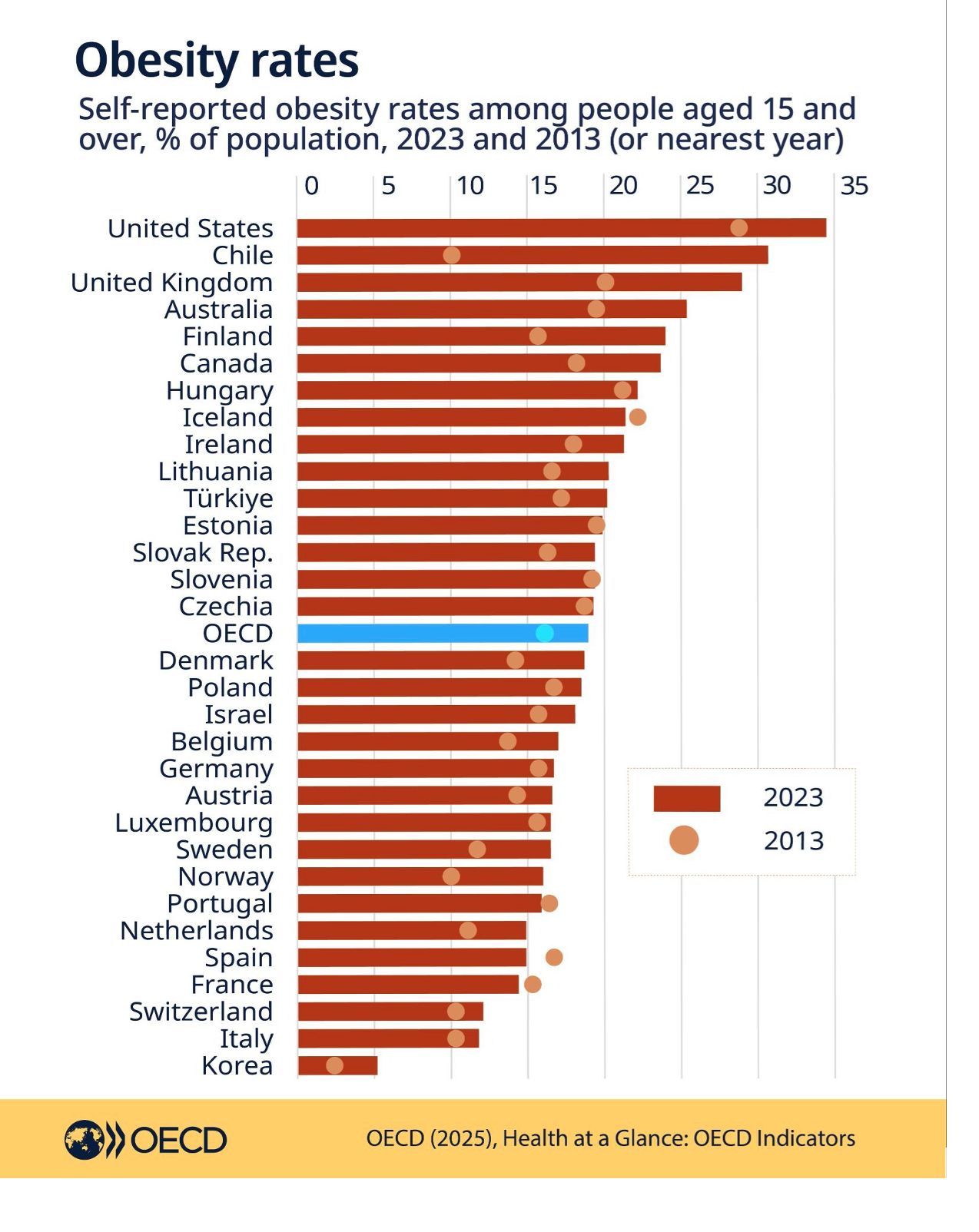
In the West, Big Food’s stranglehold over the food distribution and labelling system has filled food with unhealthy additives ranging from salt to corn syrup that has led to an explosion of obesity in the Global North. The Global South is beginning to suffer from similar problems as incomes rise, but not nearly in the same proportion.
Obesity is also leading to shortening of life expectancy, and an explosion of chronic diseases like diabetes and heart disease that is beginning to visibly impact Western demographics. This is already apparent in America where average life expectancy has begun to fall dramatically as these problems take their toll.
Unlock premium news, Start your free trial today.


