
Taiwan’s lethal road culture - where red lights don’t mean stop
.jpg)

Taiwan likes to present itself as a modern, developed democracy in sharp contrast to its authoritarian neighbour. But step off the plane and onto any Taiwanese street, and a very different reality quickly emerges: one in which basic public safety is dangerously absent.
Fresh figures from Taiwan’s Ministry of Transportation, reported by TVBS, show that 264 people died in road accidents across Taiwan in January alone - up 23 year-on-year. That is not a statistical blip, however, it is a warning sign that a long-running crisis is not being fixed at either the local or national level. It is barely even being addressed.
The worst-hit area in the country of just 24mn is New Taipei City – the largest city by population on Taiwan’s main island – where 44 recorded fatalities far outstripped other major urban centres. The cause is hardly mysterious though. Scooters dominate Taiwan’s roads, many zipping in and out of traffic and crossing lanes with no indication of intent as indicators, if used at all, are often applied after a scooter has started to cross lane divides. Helmet use in some areas of New Taipei is apparently optional and enforcement of the law on speed, direction of travel into oncoming traffic and head coverings is inconsistent.
Added to this is the reality that road infrastructure at major junctions with just four or five seconds between one traffic light turning red and the opposite direction turning green is the norm – and in a land where a common adage runs that traffic lights turning yellow means go faster and red only means stop if no one is coming – pedestrian safety is often ignored altogether.
None of this is new though. As previously documented by IntelliNews, Taiwan’s traffic environment has for years been a volatile mix of scooters, cars and pedestrians competing for space in poorly designed urban environments. Pedestrians being forced to step aside on pavements by scooters looking for a short cut is standard practice in many areas and this in part is the reason that Taiwan sees hundreds of thousands of accidents annually, thousands of deaths, and pedestrians placed at risk every time they step outside their front door.
International comparisons only deepen the concern. According to global data cited by TVBS, Taiwan recorded 2,858 road deaths in 2024. This is more than double the totals in both Japan (1,415) and South Korea (1,137).
That Taiwan is so small and home to just 24mn, however, is telling. With South Korea’s population of 51.75mn and Japan’s 125mn, this equates to 119 deaths per million in Taiwan compared to just 22 deaths per million in South Korea and 11 deaths per million in Japan.
In other words locals and visitors alike in Taiwan are five times more likely to die on the road than in South Korea, and 10 times more likely to die when out for a walk or a drive than in Japan.
But Japan and South Korea are not developing economies struggling with rapid motorisation; far from it, they are peer nations and amongst the most developed in the modern world. Taiwan’s performance is thus an outlier, and not in a good way.
Even global institutions have flagged the scale of the issue. The World Health Organisation estimates that around 1.19mn people die on roads around the world annually, but Taiwan’s persistently high fatality rate places it uncomfortably among far less developed countries.
Labelled a “living hell for pedestrians” by CNN in 2022, and “a deadly mix of drivers and pedestrians” by IntelliNews in 2025, the US State Department warning cited by CNN said that “many drivers do not respect the pedestrian’s right of way.” It also reported an official Canadian statement claiming that in Taiwan “Motorcycles and scooter drivers don’t respect traffic laws. They are extremely reckless” proved of interest briefly, but interest soon faded and little was done to rectify the issues raised.
The August 2025 IntelliNews piece in turn led to The Ministry of Transportation and Communications defending its efforts to improve traffic safety and a Department of Railways, Highways and Road Safety Division Director-General claiming “Taiwan is making progress on road safety” according to the local English language media outlet Taipei Times.
Meanwhile, Deputy Director-General of Taiwan’s Tourism Bureau Huang Shih-fang at the time opted to compare Taiwan’s conditions favorably to those see in Thailand in an apparent attempt to deflect the issue. That is not policy or even an attempt to fix the issue at hand. It is public relations.
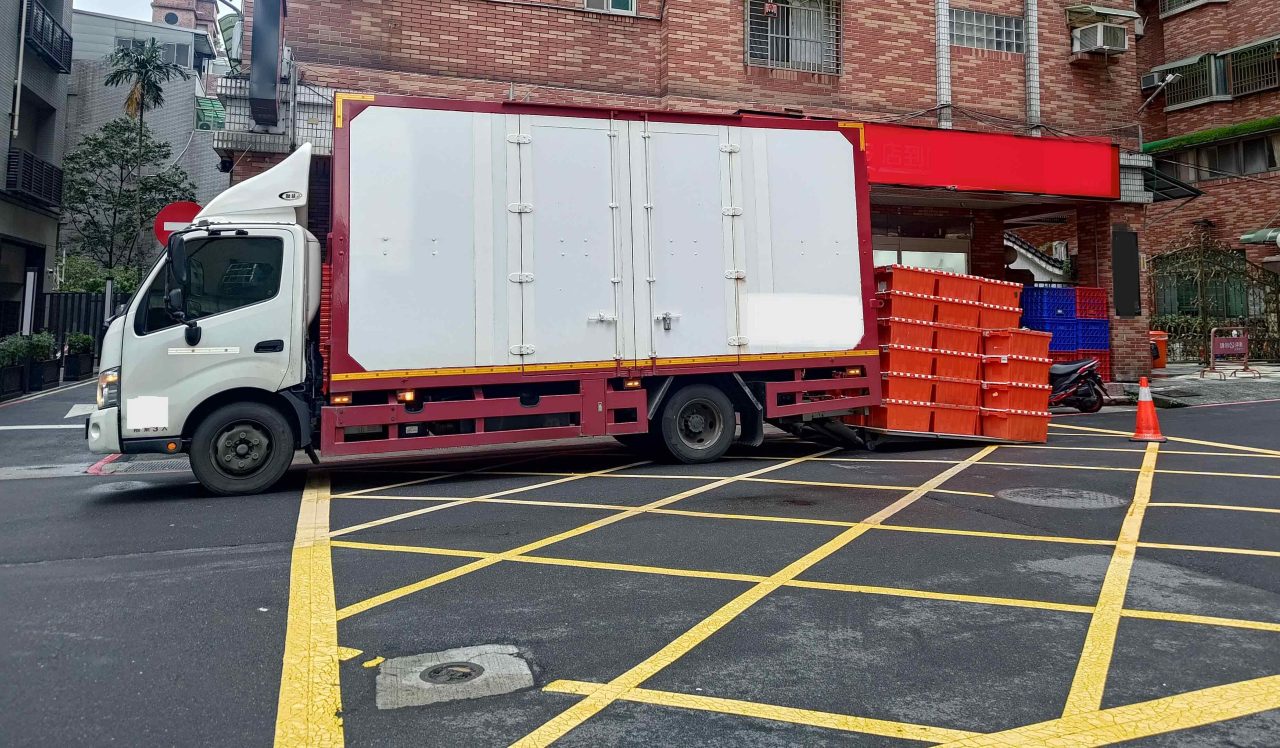
Much of this is compounded by illegal parking on red lines near pedestrian crossings, or directly on the pedestrian crossings themselves – often by delivery drivers – and in clearly marked and forbidden turning areas or on corners creating blind spots for oncoming drivers and pedestrians – sometimes with fatal outcomes. How many of the more than 14,000 accidents at Taiwanese junctions in 2025 reported by TVBS were the result of such limited respect for basic parking rules?
Yes, there have been incremental measures taken by authorities: upgraded intersections, and more enforcement at so-called “black spots”, as well as tweaks to road design. But these efforts are piecemeal fixes applied to a systemic problem in a land where aspiring scooter drivers can be seen arriving at test centres – driving their own scooter – to take the test, before driving off again. The very concept of adherence to driving rules and regulations for the greater good is missing entirely from the conscience of many drivers across Taiwan.
To this end, the underlying issues in Taiwanese road safety and the dangers posed to drivers and pedestrians alike remain deeply embedded: lax enforcement by authorities and a driving culture that so often treats rules as optional. Added to inadequate pedestrian infrastructure in which pavements are often missing altogether or in many areas are just part of the road painted green but which in turn are then seen as valid parking spots by car and scooter drivers, is a political system reluctant to impose meaningful change for fear of losing votes. This all adds up to Taiwan’s roads being dangerous on many levels.
Public safety is the most basic responsibility of any democratic first world state. On that measure, Taiwan is falling dangerously short, and until that changes, for many driving or walking along the nation’s roads today, alive at time of writing, this will ultimately prove fatal.
Unlock premium news, Start your free trial today.
_Cropped.jpg)

.jpg)