
Putin attempting to freeze Ukraine into surrender


Russia is trying to freeze Ukraine into submission. As temperatures plunge to -20°C in Kyiv, the Armed Forces of Russia (AFR) has stepped up its barrage of drones and ballistic missiles to take out key heating and power infrastructure. Half of Ukraine’s capital is now in subzero darkness and the city’s mayor, Vitali Klitschko, said that anyone with somewhere else to go should leave. He is not the only one. Other governors in frontline regions have said the same.
The attacks are country wide. Russian forces launched another massive overnight drone attack on Zelenskiy’s home town of Kryvyi Rih on January 13, knocking out heat to more than 700 apartment buildings and cutting electricity to over 45,000 customers as temperatures dropped to –7°C, local officials said.
“Russia is attacking energy infrastructure in Kyiv, Dnipropetrovsk, Kharkiv and Zaporizhzhia regions. Russia deliberately plans these attacks during very cold weather to maximize the damage and bring more suffering to Ukrainian civilians,” Anton Gerashchenko, advisor to Ukraine’s Minister of Internal Affairs and founder of the Institute of the Future, said in a social media post this week.
The extreme cold temperatures of deep winter have arrived, with the mercury falling below -15°C. Russia has been attacking Ukraine’s energy infrastructure for more than two years, but the Kremlin has been waiting for the icy Siberian airmasses to settle over Ukraine, as they do every year, and is now scaling up the attacks. The targets have changed too. The non-nuclear generating capacity is already largely destroyed, but now the AFR is hitting the infrastructure – things like power substations, gas pipelines and hot water pumping stations. In just one attack this week, Russia used over 300 drones, 18 ballistic and seven cruise missiles to target energy that deprived people of power, water, and heating on January 13, according to Ukrainian Foreign Minister Andrii Sybiha.
“Russia is deliberately trying to inflict conditions of life calculated to bring about physical destruction of the Ukrainian people—which falls exactly under the definition of Article II (c) of the Genocide Convention,” Sybiha said following the barrage against Kyiv.
Weaponizing the weather
Turning off the lights in Ukraine has been a long-standing strategy. Putin is using his ability to take out civilian energy infrastructure with highly accurate and powerful guided missiles as a tool in his ongoing efforts to force Ukraine to capitulate on Russian terms. While the damage has been dramatic and devastating, in typical Putin-style it has also been incremental. Putin has been proceeding step by step, starting with the generating capacity, but ignoring the substations until now.
Russia began to target the power sector in 2023 and over the next two years it destroyed virtually all of Ukraine’s non-nuclear generating capacity. Off limits for obvious reasons, the nuclear power stations have been left alone and account for about half of Ukraine’s generating capacity, but the substations that distribute their power have also been largely untouched so far.
With reduced output, last winter was harsh but between the repairs, imports, temporary container-sized generators largely supplied by USAID, and the surviving nuclear capacity the country managed to struggle through the season.
As deep winter arrives this year, the situation is already much more difficult. Since a missile war began this summer and Russia’s military production went into surplus, the AFR has changed tactics. It now flies in waves of hundreds of drones to denigrate air defences that are followed by a few powerful ballistic missiles that can destroy a target completely.
Power plants have been made vulnerable by the Energoatom corruption scandal. While Ukrenergo, the state-owned thermal utilities operator, built some 70 highly effective concrete bunkers to protect its infrastructure, a similar plan for nuclear power infrastructure under the control of Energoatom was never implemented, when Zelenskiy’s close associates siphoned off $100mn in a kickback scheme that was supposed to be spent on defences. At the same time the $1bn in foreign aid for the power sector raised by Ukrenergo fell away to almost nothing partly due to corruption in the sector.
The AFR is now capitalising on this weakness and has been targeting key energy and transport infrastructure that can knock out the power in entire cities and regions. Ukraine’s key ultra-high voltage 750kV substations are especially vulnerable, which provide power to whole cities and act as the regional interconnectors. So far, Russia has deliberately avoided hitting these hard to protect and hard to fix substations, but in the last two months the 750kV substations in Sumy and Odesa were knocked out leaving both in darkness for over a week.
Similar substation attacks are now being reported in Kyiv and other cities. A third of Kyiv is now without power or heat for several days, which has sparked limited public protests as the city starts to be uninhabitable, according to local reports.
Siberian airmasses arrive in Ukraine
Russia has clearly been waiting for the coldest part of the year to scale up its attack. A large cold mass of icy air from Siberia is now trapped over the country and temperatures have dropped below -20°C. In Ukraine, Belarus, and western Russia, temperatures will regularly drop to around −20°C over the next at least 14 days, according to the Ventusky metrological service, while daytime highs will be only around −10°C. These are below-average temperatures which, according to current forecasts, could persist throughout the entire month of January.
Families in Soviet-era apartment blocks have taken to huddling together in the smallest rooms to try and keep warm as internal temperatures fall to 13°C-15°C and will fall further. The “invincibility points” are back in use – small huts set up in the courtyard of apartment complexes where locals can go to warm up, cook some food and recharge their phones that were deployed after two years of the war during the first big missile barrages in January 2024.
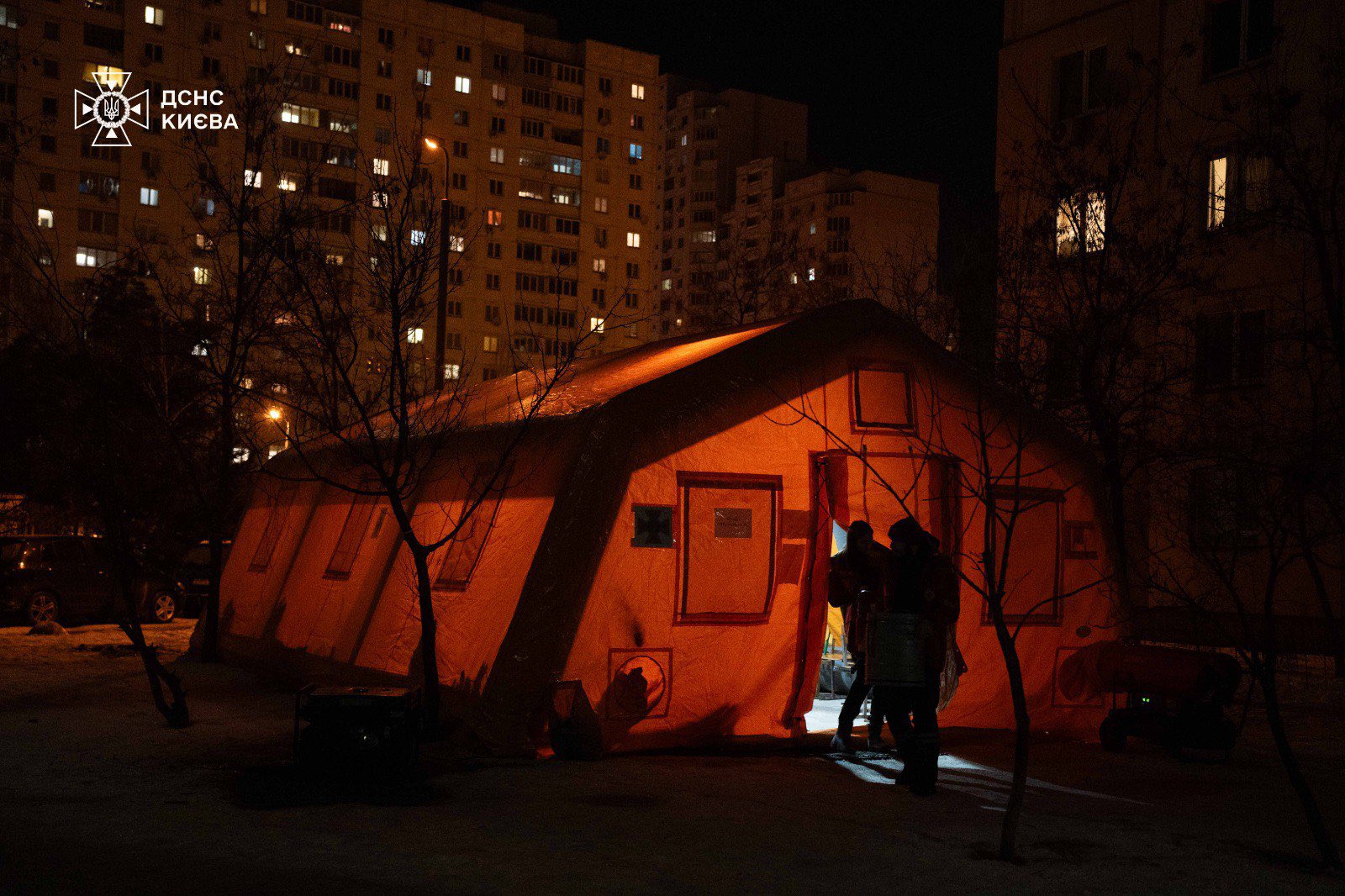
With no prospect of the heating being restored soon, apartment block management have drained the water from central heating pipes to avoid them freezing and bursting. The bitterly cold weather is also shutting down supermarkets and offices.
“The humanitarian crisis in Kyiv and the region is intensifying amid prolonged power outages and severe winter conditions, Iuliia Mendel, Zelenskiy’s former press secretary said on social media. “For the second consecutive day, photos and videos of empty store shelves—particularly bread—have been circulating widely on social media. Several supermarket chains have partially or temporarily closed locations due to extended blackouts and equipment failures in sub-zero temperatures.”
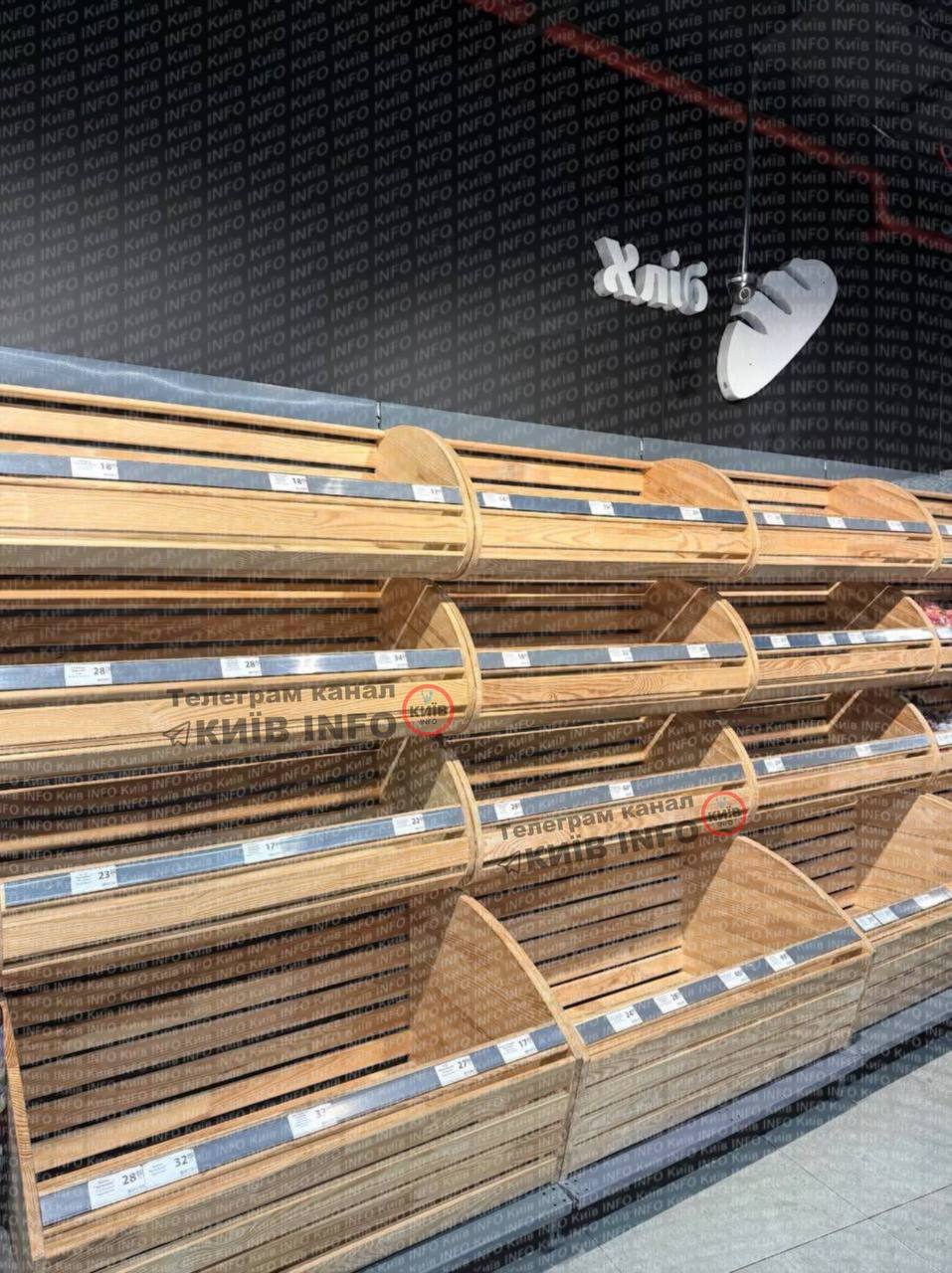
Ukraine's retail chains are starting to collapse. More and more stores cannot open or are suspending operations indefinitely after their equipment -- primarily refrigeration units -- cannot withstand the constant power surges and outages. The surges lead to breakdowns, product spoilage, and massive losses, leaving the urban populations unable to meet their basic needs. Photos of empty shelves are starting to pop up on social media as residents hunt for bread and other basics.
Public transport remains severely disrupted too. Kyiv’s metro is operating with delays or reduced service in many areas, while ground transport struggles with snow, ice, and power issues.
In some districts of Kyiv, residents are blocking roads in protest over multi-day blackouts. Windows in apartment blocks are blown out by constant missile and drone attacks but go unrepaired. In other cases, workers turn up at their offices only to go home again in a few hours thanks to the intense cold, reports Mendel.
A large-scale humanitarian crisis is brewing. If Russia’s campaign continues then western governments have been warned to prepare for a fresh wave of refugees fleeing the freezing conditions, bne IntelliNews diplomatic sources say.
Negotiating tactics
“Production of missiles is way up and interception rates are way down…” says journalist and bne IntelliNews columnist Leonid Ragozin. “Ukrainian air defence forces downed seven of 25 missiles fired by Russia last night. Quite a contrast with earlier in the war when all but a few missiles would be shut down, at least as per official reports.”
For the last two days, people in multiple cities have been without electricity, water, or sewage services, pushing living conditions to a critical brink. Thousands of generators are struggling to provide enough electricity to maintain even the most basic level of normalcy in people's lives as demand starts to overwhelm small-sale generating capacity.
Putin is attempting to freeze Ukraine into submission and has been using his ability to destroy the heating as a negotiating tool. Last summer, when there were hopes that a peace deal could be done after the Alaska summit on August 15, there was a preliminary follow up meeting between a Ukrainian and Russian delegation in Qatar – the first time officials from the warring parties agreed to meet since the failed 2022 Istanbul meeting. Top of the agenda was a limited offer to halt Russia’s attacks on Ukraine’s energy sector.
Putin tends to telegraph his intentions well in advance, although this is not widely appreciated. He made it clear in his Munich Security Conference (MSC) speech in 2007 that he was irked with Nato’s eastward expansion and that “Russia will push back” if it was not stopped, but he didn’t start modernising his army until 2012.
Around the same time, Putin ordered CBR governor Elvia Nabiullina to build up Russia’s hard currency reserves, increase the share of gold and start selling US treasury bills – a process that took years to complete. Putin plans for the long-term.
With the economy sanction-proofed, things went up a level in 2021. In the showdown with the EU over Ukraine, Russian Foreign Minister Sergei Lavrov warned Europe what was coming in his “new rules of the game” speech delivered in February 2021. He warned Russia would break off diplomatic relations with Europe unless the 2014 sanctions were ended. That was followed by breaking off diplomatic relations with Nato in October the same year – another signal - and the Russian Ministry of Foreign Affairs eight-point list of demands in December in 2021. The Kremlin massed troops on Ukraine’s border twice ahead of the actual invasion in 2021 and again in 2022 before actually invading.
What has surprised with the war in Ukraine is when Putin finally loses patience, he has chosen the most extreme and dramatic escalation option on the table – starting with the invasion of Ukraine in February 2022 itself, which few commentators expected from the otherwise cautious and slow-moving Putin.
Now Putin is employing the same step by step escalation of missile attacks on energy infrastructure. He has had the ability to knock out power from the start, but it is being done incrementally and he has waited until deep winter arrives to make it more effective.
The Qatar talks were an olive branch, albeit all the Kremlin was looking for was a capitulation on its own terms. They were called off after Russia launched its largest missile barrage against Kyiv since the start of the war a few days before. Typically, Russia launches increased attacks on Ukraine each time they are scheduled to meet, but in this case it appears Putin overplayed his hand and scuppered the first real attempt by the two sides to meet and negotiate.
Now the peace talks appear to have stalled again and so Putin is turning the screws on Kyiv by ratcheting up the energy attacks. A lot of progress was made in the last quarter, starting with the Witkoff-Dmitriev plan, named after its reported authors, US Special Envoy to the Middle East Steve Witkoff and the head of Russia’s sovereign wealth fund, Kirill Dmitriev, who started meeting in October. That effort culminated in the Moscow meeting on December 3 between the US representatives and Putin and a 27-point peace plan (27PPP) that Russia said it was largely happy with.
However, following the Berlin meeting on December 14-15 and the Mar-a-Lago meeting between Trump and Zelenskiy on December 28 Ukraine came up with an alternative 20-point peace plan (20PPP) submitted to the Kremlin on Christmas Eve, which has since been largely rejected. Both Trump and Putin were pressuring Zelenskiy to do the deal at Mar-a-Lago, but without real Article 5-like security guarantees from his partners, Zelenskiy refused.
US President Donald Trump said that Ukraine, not Russia, is holding up a potential peace deal, in sharp contrast to rhetoric from European allies who have consistently said that Moscow has little interest in ending the war in Ukraine, Reuters reported on January 15.
"I think [Putin] is ready to make a deal. I think Ukraine is less ready to make a deal," Trump said. Asked why US-led talks have so far failed to resolve Europe’s biggest land conflict since World War II, Trump replied: "Zelenskiy,"
Talks are continuing at the level of foreign ministries and amongst the envoys, but little progress has been made. The talks appear to have stalled again.
Cracks in Bankova’s position appearing
Putin’s tactics appear to be having an effect. Zelenskiy is putting a brave face on the deteriorating situation. “Russia must understand that the cold will not help win the war,” he said this week. But he admitted that the main target of this week’s strikes was again energy infrastructure - generation facilities and substations – and the significant destruction of residential and civil infrastructure. Dnipropetrovsk, Zhytomyr, Zaporizhia, Kyiv, Odesa, Sumy, Kharkiv and Donetsk regions were all simultaneously under attack. Hundreds of thousands of households are without electricity, according to the president.
Cracks in Bankova’s resistance are appearing. Zelenskiy’s call for Europe to rush stockpiled ammo to Kyiv this week smacks of growing desperation. This month Zelenskiy also said that the war might be over by summer – an unusual statement as Zelenskiy typically doesn’t give timelines.
In an interview, Ukraine’s former Foreign Minister Dmytro Kuleba, also said that Ukrainians are ready to accept territorial concessions to end the military conflict with Russia, something that Bankova has been adamant it won’t agree to until recently.
"What everyone sees in ratings and opinion polls is one story. But what people say on the streets and in their kitchens is quite another. When I travelled to villages and started talking to people outside of gas stations, I honestly stopped reading opinion polls,” Kuleba said. “My impression is this: if people are told, 'This is what we need to give up, but it will all stop, and this is what we'll get in return: a strong army, billions for reconstruction, and EU membership,'… I think this is a story that society will be ready to accept. Provided, of course, that it doesn't say anywhere that we are finally and irrevocably giving up any territories forever," Kuleba said.
So far, Zelenskiy is toughing a bad and worsening situation out. However, with temperatures in homes plummeting and shops emptying with at least two or three months of winter still to go, the question is how long can Ukraine’s population hold out.
Unlock premium news, Start your free trial today.


