
PANNIER: After 10 years of Mirziyoyev, some aspects of Uzbekistan still bear stamp of Karimov


When Uzbekistan’s first president, Islam Karimov, died in the late summer of 2016, he left a long list of problems for his successor.
That successor turned out to be Shavkat Mirziyoyev, who served as Uzbekistan’s prime minister during the last 13 years of Karimov’s reign. There was nothing to suggest Mirziyoyev’s ascent to power would represent any drastic change in policies – but, as things unfolded, Mirziyoyev did in fact depart from many of Karimov’s policies.
Mirziyoyev, 69, has now been in power for 10 years. Much has changed in that time and in many ways the country is indeed the “New Uzbekistan” that Mirziyoyev talks about. But some key aspects of Uzbekistan are still very recognisable from the Karimov regime, and the current president gives no indication that this will change.
The king is dead, long live the king!
Karimov was appointed head of the Soviet Socialist Republic of Uzbekistan in June 1989. Like many other heads of Soviet republics, he simply stayed in office after independence and arranged a presidential election. In December 1991, he won that poll easily.
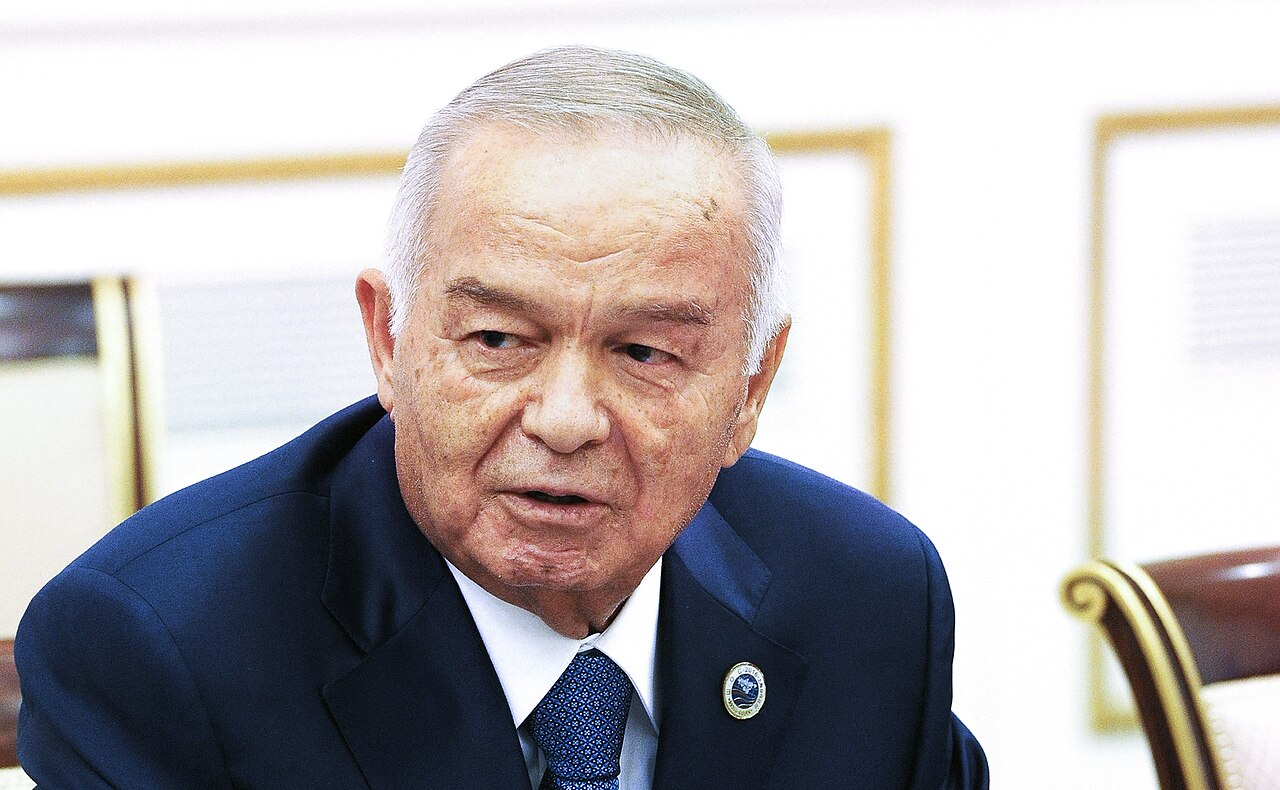
Karimov saw Uzbekistan as the regional hegemon and publicly gave advice to other leaders of Central Asia on how they should run their own countries (Credit: Kremlin.ru).
Uzbekistan had the largest population in Central Asia and was the only country that bordered all the other Central Asian states as well as Afghanistan. Karimov saw his country as the natural regional leader and criticised his neighbours for their continued dependence on Russia.
In times of trouble, Karimov was quick to turn to the Kremlin for help, but generally he viewed Russian influence in Central Asia as an obstacle to his country’s ascent to regional hegemon.
He publicly gave advice to neighbouring leaders on how they should run their own countries and was quick to criticise them when they did not fall into line with his wishes.
Uzbekistan’s smaller and poorer neighbours to the east, Kyrgyzstan and Tajikistan, bore the brunt of Karimov’s aggressive policies in large part due to their dependence on Uzbek gas supplies.
During the Soviet era, Kyrgyzstan and Tajikistan were connected to and, especially during winters, were dependent on Uzbekistan’s gas fields. In Soviet times, the gas arrived for free but after independence, Uzbekistan expected to be paid. The cash-strapped Kyrgyz and Tajik governments fell behind in payments and when Karimov was dissatisfied with their policies, the gas was reduced or cut off entirely, ostensibly due to unpaid bills.
One of the first times this happened was when Kyrgyzstan became the first Central Asian country to issue its own currency, the som, in May 1993.
Uzbek officials worried it would make Uzbekistan a dumping ground for the rapidly depreciating Russian ruble that all the Central Asian states continued to use after the demise of the USSR. Uzbekistan imposed sanctions on Kyrgyzstan, lifted those sanctions after about one week, and then in June, cut gas supplies to its neighbour.
Also under Karimov, Uzbekistan spent millions of dollars building roads and railways to replace the Soviet-era connections that passed through other Central Asian countries.
In one example, Uzbekistan spent some $1.9bn on construction of the PAP-Angren railway connecting Tashkent to Uzbekistan’s section of the Ferghana Valley rather than use the Soviet-era railway that passed through Tajikistan.
State media focused on Karimov and the country’s alleged achievements. Independent journalists who criticised the government were punished.
Political opposition was tolerated in the first years after independence but by the mid-1990s it had been almost completely eliminated. Religious opposition was next, though the backlash against the crackdowns on Muslims produced Central Asia’s earliest extremists.
When Karimov died in 2016, Uzbekistan was isolated, its international reputation severely tarnished, and its economy stagnating.
That was the situation when Mirziyoyev took over as president.
A different country
Karimov’s death was not announced until September 2, 2016, the day after the country marked 25 years of independence.
The big question was who would be his successor. There were three likely candidates: Prime Minister Mirziyoyev and the two Rustams, Finance Minister Rustam Azimov and head of Uzbekistan’s State Security Service Rustam Inoyatov.
In line with Uzbekistan’s constitution, Senate speaker Nigmatulla Yuldashev became acting president. But when parliament met on September 8, Yuldashev said Mirziyoyev should get the post as he was much better known to the country’s people. Parliament agreed and Mirziyoyev wasted no time in laying out his vision for the country.
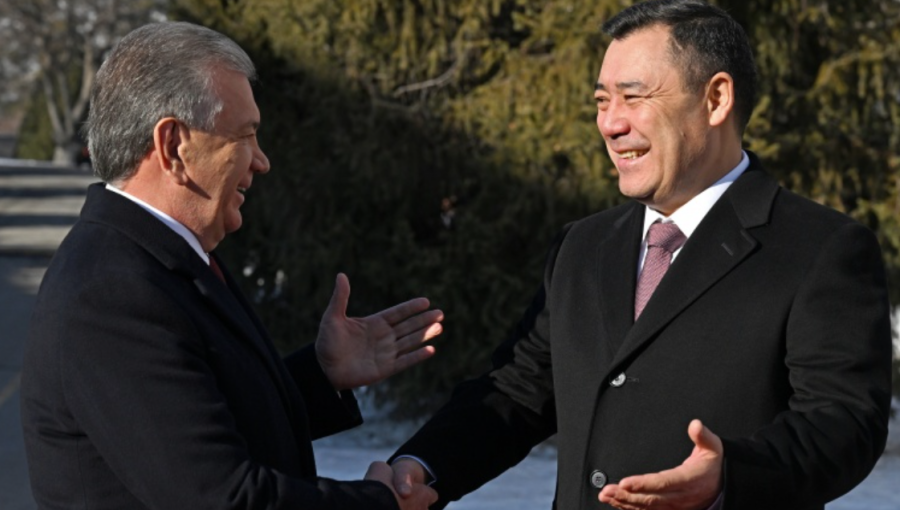
In stark contrast to his predecessor, Mirziyoyev has made building bridges with Uzbekistan's four Central Asian neighbours a priority. He is seen here with Kyrgyz counterpart Sadyr Japarov (Credit: president.kg).
On September 9, he said repairing the economy would be his first priority and that his government would work to improve ties with all of Uzbekistan’s immediate neighbours.
Before the end of that September, Mirziyoyev phoned the Kyrgyz and Tajik presidents to discuss future cooperation. He easily won the snap presidential election in December and his first state visits were to Turkmenistan in early March 2017 and Kazakhstan later that month.
Uzbekistan’s emergence as a regional partner led to other important developments.
On March 15, 2018. the first summit of Central Asian leaders in nearly 19 years took place in Astana. The summits have since become an annual event.
The Central Asian foreign ministers had been meeting collectively with Japan’s foreign minister since 2004 under the format C5+1.
Other countries, including the United States, began using this format for their own meetings with Central Asians. In September 2023, Central Asia’s leaders met with US president Joe Biden on the sidelines of the UN General Assembly in New York. Since then, the C5 presidents have held similar summits with the Russian, Chinese, German, Japanese and European Union leaders, and the group is due to have a summit with South Korea in Seoul on September 16-17.
Uzbekistan finally completed border demarcation with its Central Asian neighbours. Kazakhstan and Turkmenistan in 2023, and Mirziyoyev attended a ceremony with Kyrgyz President Sadyr Japarov and Tajik President Emomali Rahmon in Khujand on March 31, 2026 where a three-way frontier agreement was signed.
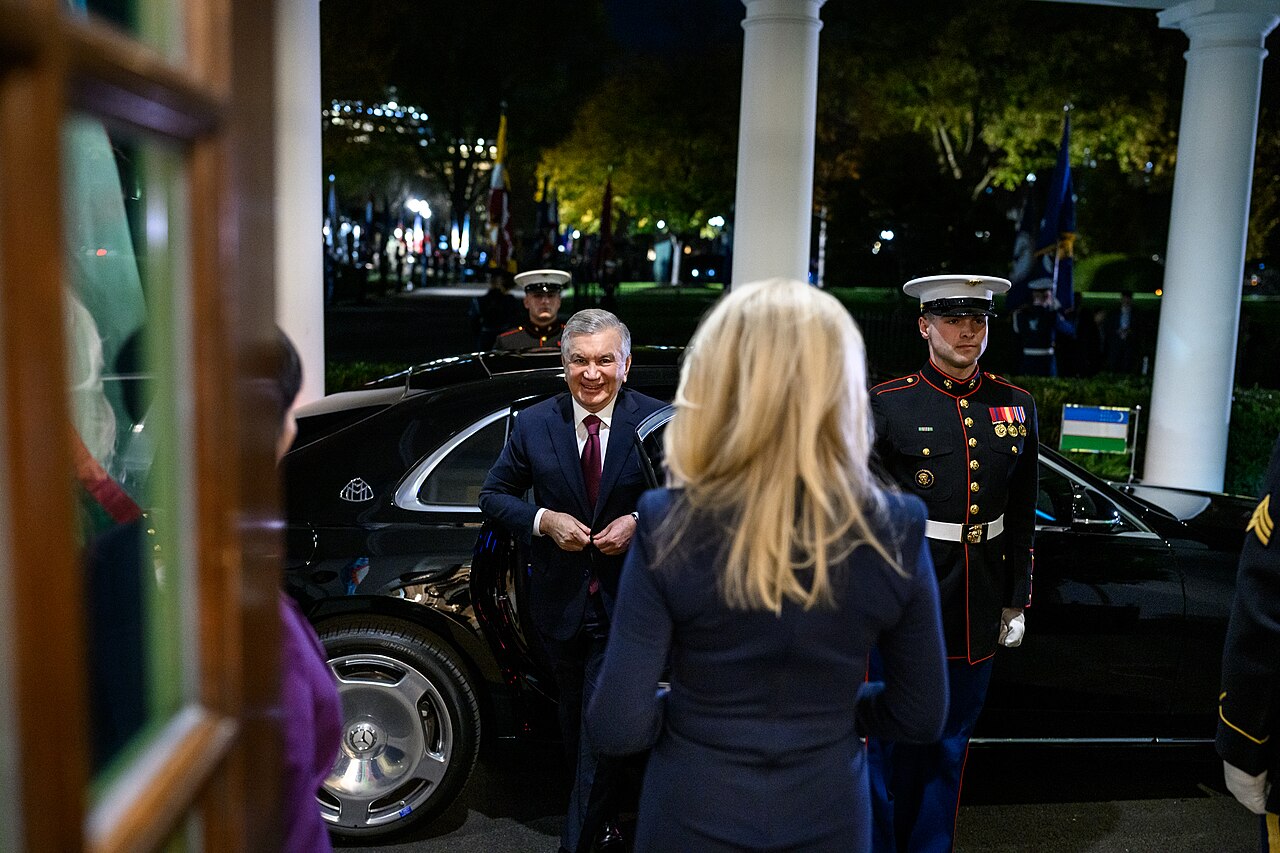
November 2025: Mirziyoyev is greeted by the chief of protocol at the West Wing Lobby of The White House before a dinner with President Donald Trump and the other "C5" Central Asian leaders (Credit: Official White House photo by Molly Riley, public domain).
Uzbekistan, meawhile, has re-engaged with the wider world.
With the country located at the centre of Central Asia, many international organisations and businesses gravitated there in the 1990s. But after the Andijan massacre of May 2005, when Uzbek troops opened fire on a crowd of mainly peaceful protesters, leaving dozens, some say hundreds, of people dead, many Western governments called for an independent international investigation.
Karimov refused and pressured or ordered many Western organisations, particularly media and rights organisations, to leave Uzbekistan. US troops stationed at a base near the southern Uzbek city Karshi as part of the campaign in Afghanistan were told to leave.
Russia and China continued to do business with Uzbekistan, but very few other countries were willing to test their fortunes there. This contributed to an economic malaise in Uzbekistan that would last until Karimov’s death.
After coming to power, Mirziyoyev said Uzbekistan’s doors were open to foreign business. Gulf States, particularly Saudi Arabia and the United Arab Emirates, have become major investors in Uzbekistan in recent years. Western companies are also coming to Uzbekistan, many seeking to get a share of its critical mineral wealth.
Remnants of old system
While Uzbekistan’s foreign policy has changed dramatically under Mirziyoyev, the country’s domestic political situation still resembles that of the days of Karimov.
There are still five registered political parties, all of them pro-presidency, and the Liberal Democratic Party of Uzbekistan still officially nominates the eventual victor of the presidential elections.
Uzbekistan’s constitution limits a person to two terms in office.
First elected president of independent Uzbekistan in late 1991, Karimov, in 1995, had his term extended until 2000 through a national referendum. He won a second term in an election that year.
Two years later a constitutional referendum changed the presidential term in office from five to seven years, giving Karimov the opportunity to run for two more terms as president. In any case, Uzbekistan’s presidential elections left the schedule after that and Karimov was reelected in 2007 and again in 2015.
Mirziyoyev was first elected to a five-year term as president in a December 2016 snap election. He was re-elected in 2021. In April 2023, a constitutional referendum returned the presidential term in office to seven years and Mirziyoyev won a fresh term in the snap election held three months later. He can potentially run for another seven-year term in 2030.
Not since the first election in 1991, when Erk (Freedom) Party leader Muhammad Solih ran, has any election ever had a genuine opposition figure running.
In 2005, businessman and aspiring politician Sanjar Umarov founded the Sunshine Uzbekistan coalition. In October 2005, Umarov was arrested and charged with embezzlement and money laundering. He was convicted of those charges in March 2006.
In early 2021, Hidirnazar Allaqulov tried to register his Haqiqat va Taraqqiyot (Truth and Development) Social Democratic Party and planned to run for president in the election later that year. His party did not gain registration.
In late March 2021, a group of people assembled in Allaqulov’s apartment building. When they saw Allaqulov, they demanded he “give up politics.” He was later found guilty of slander for claiming the group assaulted him and ordered to pay a fine equivalent to $470. Allaqulov was unable to run in the 2021 election. He did not even try to run in the 2023 snap election.
Not long after becoming president in 2016, Mirziyoyev called on the media to report on government shortcomings, especially on corruption by officials. It later became apparent that while reports on corruption by municipal, district and provincial officials were possible, top officials and their practices remained off-limits.
In 2021, legislation was adopted that made insulting the president on the internet a criminal offence punishable by up to three years in prison.
When widespread power shortages hit Uzbekistan during a particularly cold November in 2020, media outlets were instructed not to report on the problem, though clearly everyone in the country was aware they were experiencing heating and electricity shortages.
In 2022, state media published the text of a proposed new constitution. Some changes were to strip Karakalpakstan of its nominal right to secede from Uzbekistan and its status as a sovereign republic.
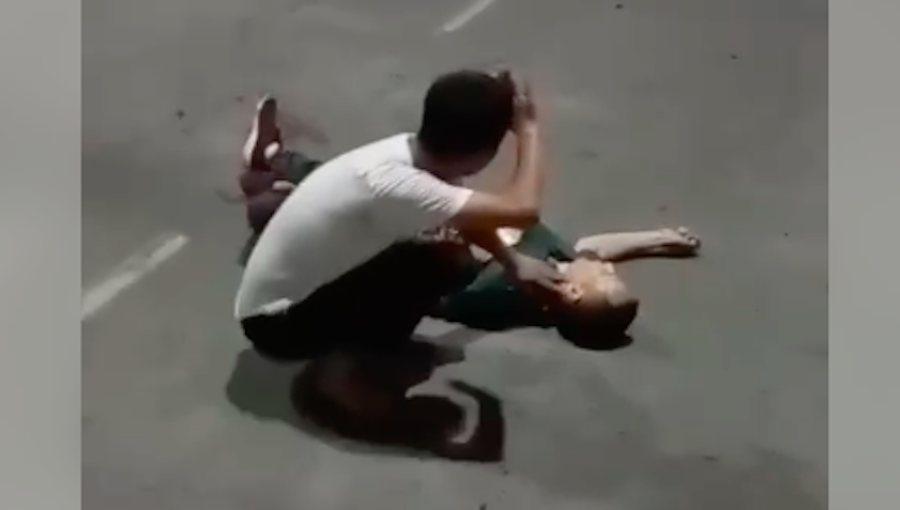
Mirziyoyev misstep? In 2022, proposed constitutional changes reducing the powers of the autonomous republic of Karakalpakstan in northwestern Uzbekistan resulted in protests in which 21 people were killed.
Protests broke out in Karakalpakstan. When thousands of people gathered outside the administration building in the Karakalpak capital Nukus, police and security forces fired tear gas and percussion grenades and violence broke out. Twenty-one people were killed, most of them protesters.
Mirziyoyev blamed local officials and members of the committee that drew up the new constitution for failing to properly assess the reaction to the proposed Karakalpakstan amendments. But when the prosecutor charged people for involvement in the violence nearly all of them were Karakalpak civilians. Eventually, 61 people, all civilians, were found guilty. Karakalpak lawyer and activist Dauletmurat Tazhimuratov, who was in custody when the crowd gathered outside the administration building, received the stiffest sentence of anyone, 16 years in prison.
New look internationally, old habits domestically
Uzbekistan certainly has a more prominent and positive international image than the country did under Karimov. The country of 39mn has expanded and strengthened its international and regional partnerships and that bodes well for its economic future.
Critics, however, often observe that the country’s domestic political scene has not changed much under Mirziyoyev. The current government is less repressive than Karimov’s regime, but media is still kept on a tight leash and there are no signs opposition political parties or movements will have any opportunity to participate in the political system.
There is also no indication that Mirziyoyev will leave office. Under the latest constitution, he could remain in power until 2037, at which time he will be 80 years old.
Unlock premium news, Start your free trial today.


