
PANNIER: Afghanistan’s increasingly unruly north a headache for Taliban and Central Asia


When they returned to power in August 2021, the Taliban promised that no group would use Afghan soil to plot or carry out an attack on any of Afghanistan’s neighbours.
Yet several attacks experienced in southern Tajikistan in recent months, which emanated from Afghanistan, suggest the Taliban cannot entirely uphold this guarantee.
Just as alarming is the fact that the Taliban are experiencing problems controlling the situation in areas of northern Afghanistan that border Central Asia, in great part due to their policies on ethnic groups that inhabit this region, such as the Tajiks and Uzbeks.
Fractious northern provinces
During the early morning of January 18, Tajik border guards shot dead four intruders who had crossed into Tajikistan from Afghanistan. Tajik authorities said the four were from an unspecified terrorist group.
They were discovered shortly after they entered Tajikistan’s Shamsiddin Shohin district. The district was the scene of several attacks in the second half of 2025, including an attack on a gold-mining operation in late November that killed three Chinese workers. The raid involved the use of a small drone armed with a grenade.
The district is also the same one where two Tajik border guards and three people, described as terrorist group members, were killed in a shootout on December 23, and where Tajik border guards and Taliban fighters exchanged fire on August 24 and then again in late October.
In the August clash, at least one Taliban fighter was killed and four were wounded. Reports on the October incident said only that there were casualties on both sides.
There have also been incidents in Darvoz district, which neighbours Shamsiddin Shohin to the east, including one on November 30 in which two Chinese roadworkers were shot dead and three were wounded by gunfire from the Afghan side of the border.
On the other side of the border from these districts in Tajikistan is Afghanistan’s Badakhshan Province.
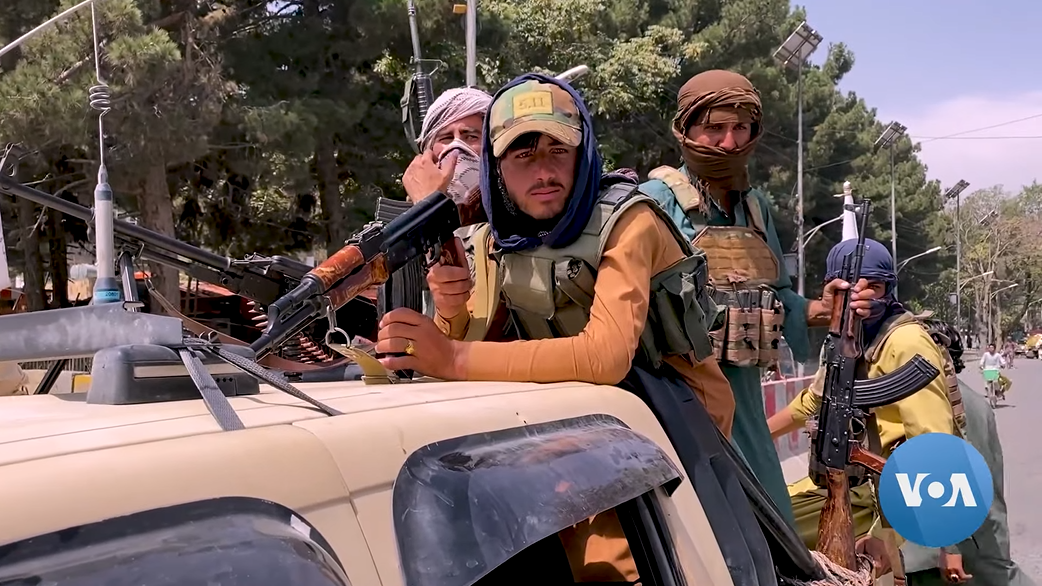
The Taliban are encountering more and more difficulties in controlling matters in areas of northern Afghanistan that border Central Asia (Credit: VOA (YouTube), public domain).
On May 24 last year, Taliban forces arrived in the village of Farghamanch in Badakhshan’s Jurm district to destroy local farmers’ opium crops. Ethnic Tajik Taliban fighters in the area reportedly supported the farmers’ protest against the newly arrived ethnic Pashtun Taliban forces’ plans to eradicate the crop. Shooting started and at least one of the locals was killed, while six were wounded. The same day, a local Taliban commander, Mawlawi Zaidullah, recently returned from Iran, was killed along with his wife and child in Badakhshan’s Shuhada district during a clash between “rival” Taliban units.
On June 19, some residents of Badakhshan’s Khash district protested against the arrival of Taliban intent on destroying their opium poppy crop. The protesters burned three tractors that the Taliban intended to use to plough under the poppies. On June 30, the Taliban returned and fired on the protesters, killing eight people and wounding 27.
Five days later, a leading religious figure among the Shi’ite Ismaili Muslims, Fazi Ahmad Paoz, was assassinated in Badakhshan’s Zebak district. A report in December detailed the Taliban’s “organised discrimination, including arbitrary arrests, torture, and death threats aimed at forcing [Ismaili]) to renounce their faith.”
Across the border from Turkmenistan and Uzbekistan there have also been problems.
On the first day of 2026, there was an attack on a court building in Maimana, the capital of Faryab Province that borders Turkmenistan. The Afghanistan Freedom Front claimed responsibility. The group said they were targeting a meeting of local officials from the Taliban’s Ministry for the Promotion of Virtue and Prevention of Vice and that four Taliban were killed and two wounded.
In Faryab Province in June last year, tensions broke out between the Taliban and the local ethnic Uzbek community after a group of Pashtun boys tossed fireworks at a group of Uzbek girls. Tempers flared and spread as the Uzbeks protested. Some reportedly attacked Taliban police posts. At least 165 Uzbeks were arrested during the next several days, though all were later released. Only two Pashtun boys were taken into custody.
In April 2025, there was an explosion in Mazar-i-Sharif, 75 kilometres (47 miles) south of the border with Uzbekistan. The target appeared to be a Shi’ite mosque.
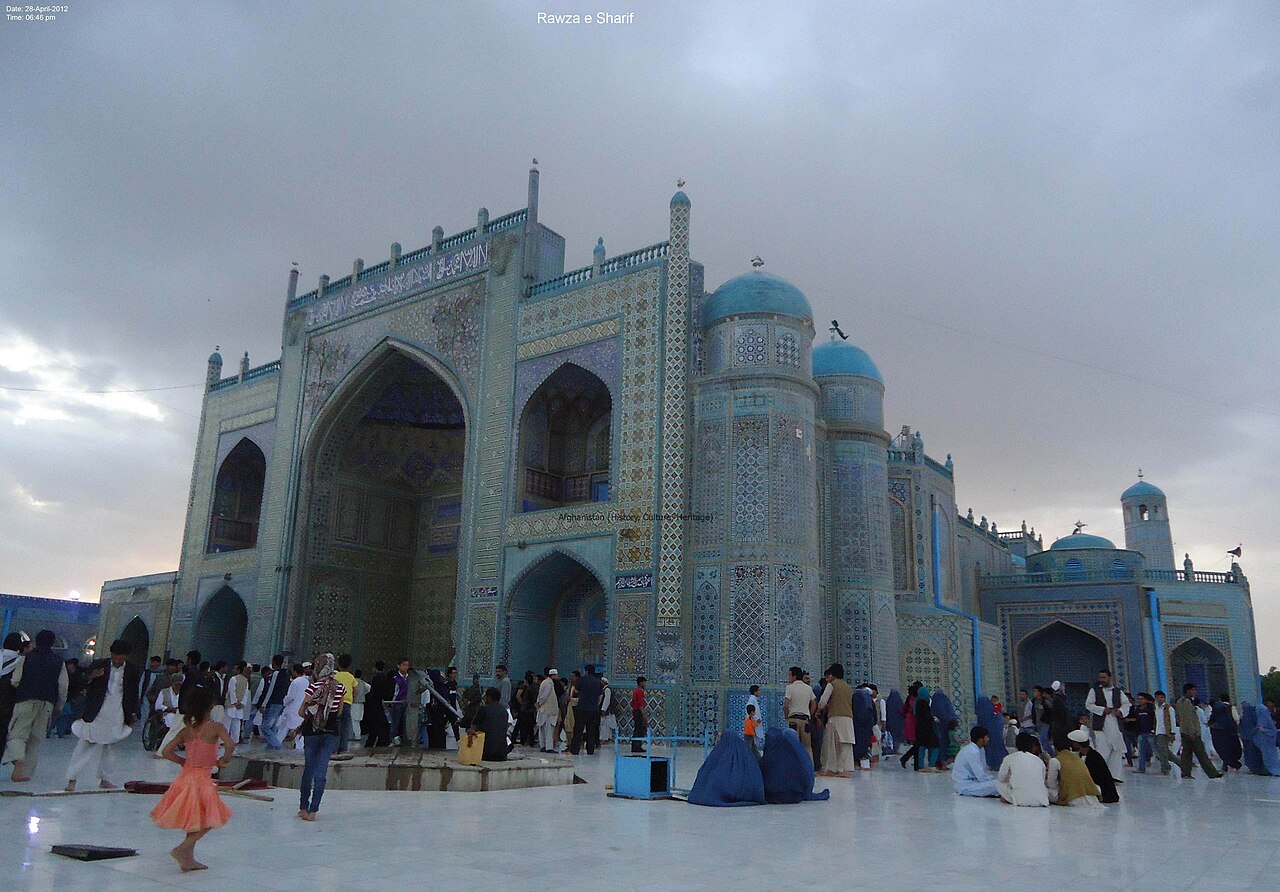
The city of Mazar-i-Sharif is sometimes a flashpoint for ethnic tensions (Credit: AhmadElhan, cc-by-sa 4.0).
Uzbekistan’s government twice raised concerns about Taliban actions in northern Afghanistan that appeared to discriminate against ethnic Uzbeks. In August last year, the Uzbek Foreign Ministry contacted the Taliban after reports that a monument to revered Uzbek poet and scholar Alisher Navoi in Mazar-i-Sharif had been demolished, and again after reports in November that Uzbek and Persian were removed from signs at Afghanistan’s Samangan University.
In both cases the Taliban promised to address the issues. The signs with Uzbek and Persian were restored.
The Taliban said they were moving the monument of Alisher Navoi to a more dignified location (it was in front of a market), but there is no word of it reappearing in another location in Mazar-i-Sharif.
Disarmed and relocated
Another potential flashpoint in northern Afghanistan concerns the fate of ethnic Tajiks and Uzbeks, some of them from Tajikistan and Uzbekistan, who were part of, or allied to, the Taliban from 2001-2021.
Recent reports have said the Taliban is reducing the number of its fighters for budgetary reasons and that thousands of ethnic Tajiks and Uzbeks have been discharged from the armed forces. Most of these personnel cuts took place in northern provinces where Tajiks and Uzbeks make up the majority of the population.
Militants from the Islamic State of Khorasan Province (ISKP, or ISIS-K) have been fighting the Taliban for a decade. For the last several years, ISKP propaganda has targeted ethnic Tajiks and Uzbeks who have been evicted from their land or otherwise abused by ethnic Pashtun Taliban leaders and their policies.
ISKP continues to carry out attacks in northern Afghanistan and the group has found recruits, particularly among Tajiks in Tajikistan. Tajik nationals have carried out attacks in Afghanistan, Iran, Turkey and Russia, and have been detained for plotting attacks in European countries.
The Taliban, meanwhile, evacuated four villages in Panjshir Province to resettle militants from the Islamic Movement of Uzbekistan (IMU) and their families.
The IMU is a domestic terrorist organisation from Uzbekistan who staged attacks in southern Kyrgyzstan and Uzbekistan in 1999 and 2000. The IMU were allies of the Taliban before the attacks of September 11, 2001 brought the United States and its allies into Afghanistan.
The IMU group being moved to Panjshir has been living in Baghlan Province. Their resettlement solves two problems. Firstly, it removes these veteran fighters from majority-Uzbek areas, and secondly, it transfers them to an area that has been a known stronghold of ethnic Tajik fighters who battled the Taliban in the late 1990s and have been fighting a guerrilla campaign in the area since the Taliban retook power in 2021.
The Taliban are facing increasing challenges to their rule in northern Afghanistan. Some of the resistance comes from ISKP. But in the cases of the villagers in Jurm or Faryab, it is from average Tajiks and Uzbeks, respectively, something the governments in Tajikistan and Uzbekistan have surely noticed.
The Central Asian states have been trying to establish solid business ties with the Taliban with an eye toward using Afghanistan as a transit country to Pakistan and India. The unrest in northern Afghanistan involving Tajiks and Uzbeks threatens to derail the cautious but amicable relationship Central Asia is trying to establish with the Taliban.
Don’t just follow the news—understand it.
The IntelliNews PRO service includes access to reports, exclusive market data, and more news that decision-makers care about. Stay ahead of the market with IntelliNews PRO.
Sign Up NowUnlock premium news, Start your free trial today.
_and_US_Ambassador_to_Kyrgyzstan_Lesslie_Viguerie_(center)__050226.jpg)


