
MOSCOW BLOG: EU unblocks Ukrainian loan, twentieth sanctions package, as Kyiv builds a robot army


Phew. That was an effort. EU leaders met in Brussels yesterday and signed off on releasing the €90bn loan for Ukraine that will keep it in the fight with Russia for another two years. They also passed the twentieth sanctions package on Russia, however, that was gutted of some of its most painful measures by vested interests.
The money was key. Without it the Ukrainian government was going to face an economic meltdown in the next few months. Now it can soldier on for another two years. But the problem is it doesn’t have enough soldiers. So, Bankova is experimenting with building a robot army. I know it sounds far-fetched, but the first unit is already on the battlefield and had its first victory. Bankova will have to do with robots what it did with drones and while it sounds like sci-fi, if you ask me I think it's got a good chance of pulling this off.
EU signs off on cash and sanctions
Ukrainian President Volodymyr Zelenskiy must be very relieved. At the end of the day both Hungary and Slovakia agreed to vote through the loan. Ukraine was rapidly running out of time and this money includes a distribution of €45bn for this year about two thirds of which will go on defence. It is also enough for the first three quarters of next year. There's still about €50bn missing which Brussels intends to raise from the other G7 members - although they have not committed to that yet.
In addition, Brussels finally got the twentieth package of sanctions through but in a sign of the disunity in the EU and growing Eurosceptic-lite trend, where countries in the club are increasingly acting on their own national interests and less and less interested in the European Commission executive’s goals, the package was typically watered down.
Stricter restrictions on working for Russia's shadow fleet were removed at Greece and Malta's insistence, both of which have been making a bundle of money, legally, from the Kremlin which is paying premium rates for anyone willing to carry its oil. The new package was supposed to ban EU companies from working for Russia completely – previously Greece and Malta could carry Russian oil by gaming the oil price cap rules. This is the problem the EU is facing: member states are only willing to back sanctions as long as it doesn’t cost them any money.
With the €90bn loan it went down to the wire. Ukraine announced yesterday it was turning the Druzhba oil pipeline back on, and Hungary and Slovakia both said they would sign off on the loan – if the oil actually arrived. The deal is not actually signed as both Bratislava and Budapest are waiting to see what comes out of the pipeline this morning and then will ink the deal this afternoon.
Doesn’t really smack of “stand by Ukraine” does it? Smacks more of: “We don’t trust you an inch, but we have to do this or face problems getting our money out of the EU treasury.” None of this is how the EU is supposed to work.
Demographic disaster
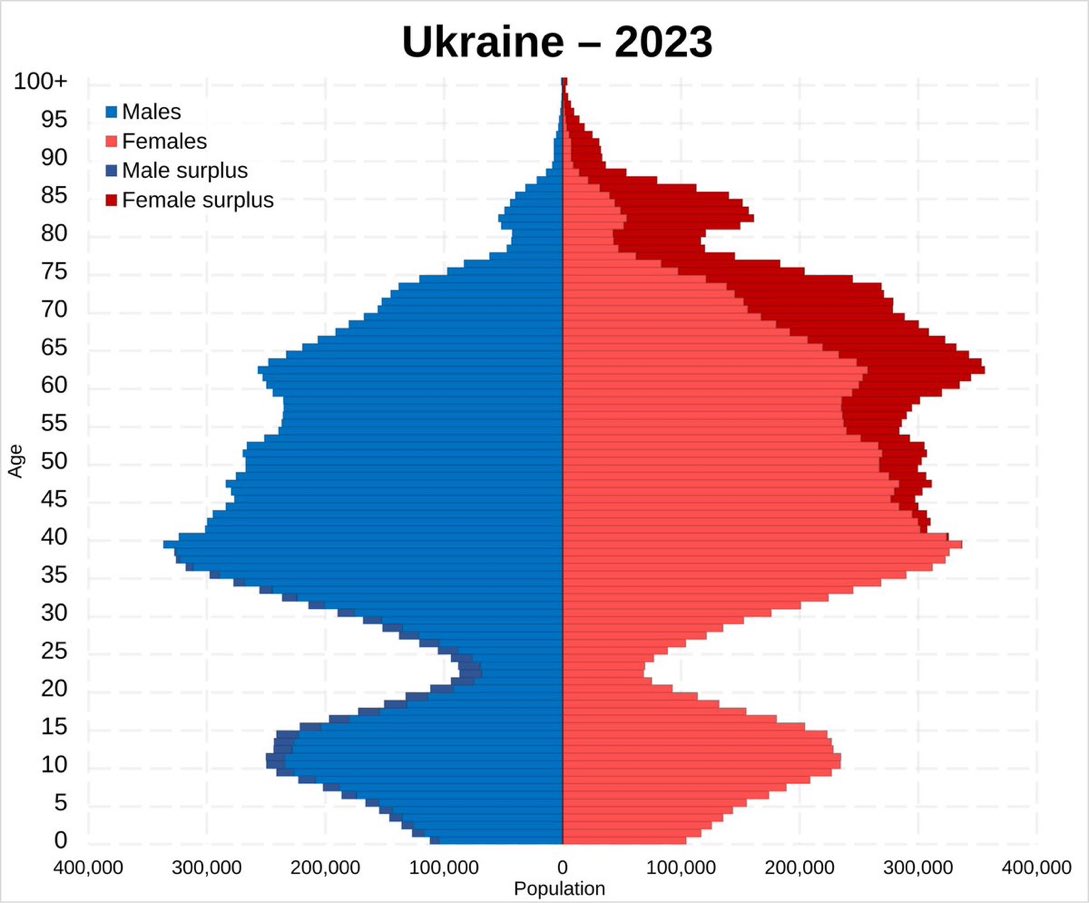
Is funding Ukraine for another two years a good idea? What worries me is the demographic destruction the country is enduring. It has already lost an entire generation of young men which puts its post-war recovery in doubt. The population pyramid already has a deep gouge out of the 20-30 something cohort – worse than Russia’s 1990s demographic collapse – and overall is down to around 26mn from the official 45mn pre-war.
There is no way that the Armed Forces of Ukraine (AFU) can fight on without fresh recruits. That is not going to happen unless Zelenskiy drops the minimum recruitment age again – possibility to 18. That would mean another generation lost. The UN is already predicting that thanks to the low fertility rate, which is now a third of the mortality rate, the population will shrink to a mere 16mn by 2050 if the war stops today. That is failed state territory. To lose another generation of even younger men would be beyond a catastrophe.
Of course, Russia is suffering from a recruitment slowdown too, but Russian President Vladimir Putin still has the option of a general mobilization and even if he sticks to the 1.4mn men army he already has, proportionally, Ukraine is still losing more men faster than Russia is.
The manpower issue is coming to the fore as the key issue that will determine the outcome of this war. And things are going really badly in Ukraine. There are reports that as the recruitment drive is becoming increasingly desperate; they are now grabbing drug addicts and “partially fit” men from the street to bolster the numbers. These men are likely to last less than a week on the frontline – if they don’t immediately desert, which the majority of them do. According to the estimates some 250,000 Ukrainian men are already deserters from an army of 880,000 men.
Moreover, the popular resentment of the press gangs is clearly growing and reaching explosive proportions. There was one report of an officer’s arrest this week after he tried to extort $30,000 from one man snatched from the street. There are regular reports of crowds violently assaulting the officers and rescuing detainees.
In the most high-profile case in April, a conscription officer who was trying to “busify” another man in Lviv was stabbed in the neck and died. At least 620 enlistment officers had been attacked between February 2022 and April 12, 2026, according to the Kyiv Oblast Draft Center citing National Police data.
And that is with a minimum recruitment age of 25. Now imagine what will happen if the conscription thugs start to snatch 18-year-olds from the street. As a father of three boys between 19 and 22 myself, I'm pretty sure fathers across Ukraine would do everything they could to rescue their sons from what is very likely a death sentence. There is a big difference in familial relations towards kids of 18 and those that are 25 years old. I'm pretty sure there would be yet another revolution.
Terminatorsky
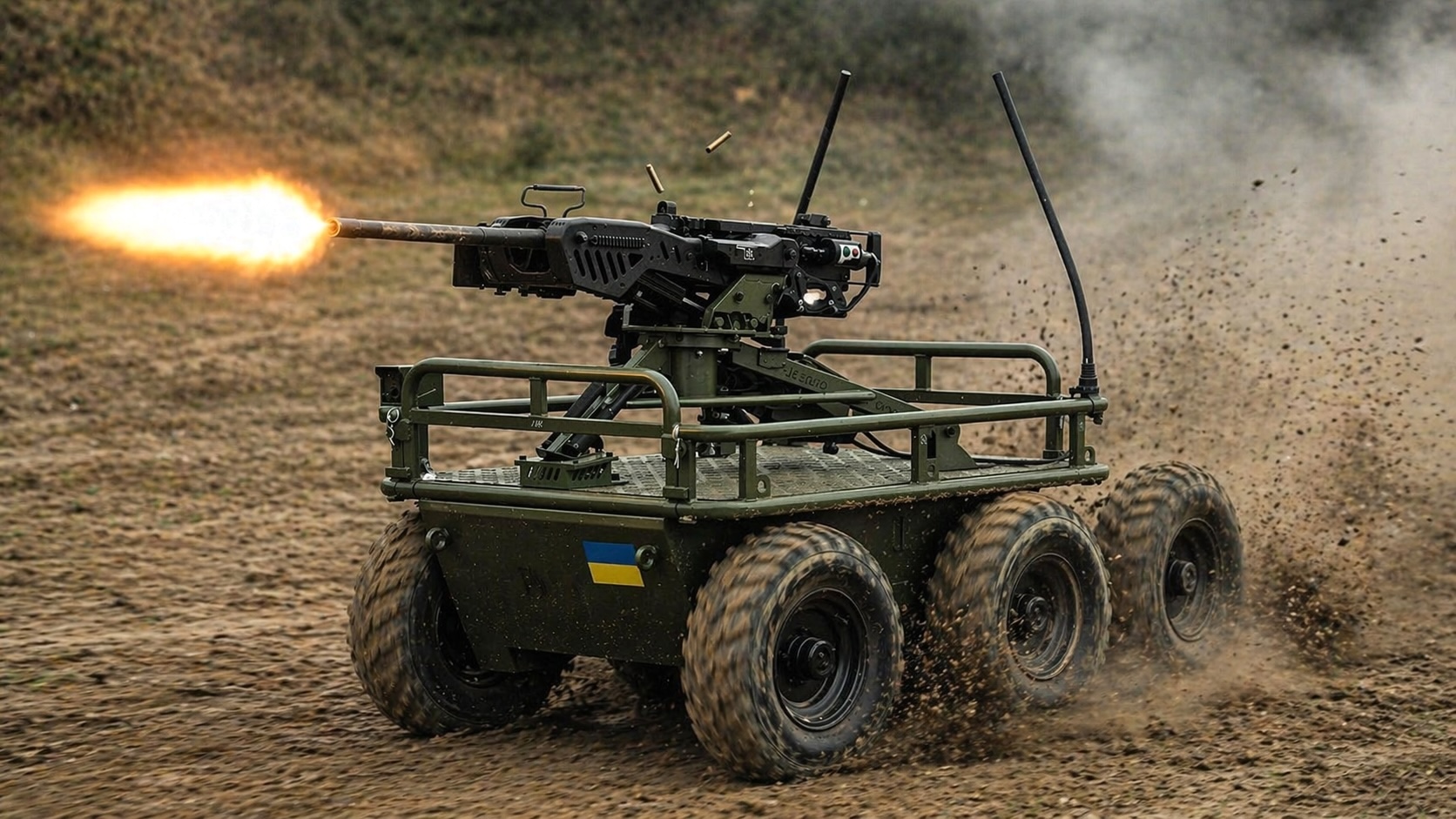
Having said that, Bankova might have found a solution. As we reported last week, for the first time ever, the AFU took a Russia position without sending a single soldier into the fight. Ukrainian robo-soldiers – unmanned ground vehicles, or UGVs – have been deployed in an assault for the first time and proved to be extremely effective. This follows on from the deployment of robo-dogs that we reported on almost two years ago. Someone has been sitting in a lab somewhere, beavering away at this idea.
This is a potential gamechanger.
Robot technology is coming on very very fast. I’m sure you have seen the video clips of Chinese robots dancing at K-pop concerts or beating the cr*p out of American robots online. More seriously, China staffed an entire car plant with robots last November. What is driving this is a global demographic crisis where populations everywhere – except Africa, India and in Central Asia – are going to fall over the next few decades. In China they will halve from the current 1.2bn to around 600mn. An obvious solution is to replace the labour with robots. Issac Azimov would love this.
It appears that Ukraine is once again about to pioneer another breakthrough in modern warfare.
It was actually Azerbaijan, in the short 2020 Nagorno-Karabakh War with Armenia, that introduced the world to offensive drone use. Ukraine took that idea and ran with it. The progress Ukraine has made from the small commercial hobby-drones with a grenade dangling from its belly to the multitude of reconnaissance and hunter-killer pairs it has now – only three years later – is extraordinary. It’s got to the point where if you are a Russian soldier and you go into no-man’s land you will die.
And robots are already in action in the wheatfields of Donbas. The AFU has already developed and deployed unmanned medical vehicles like the Ardal to collect and recover wounded and bring them back across the battlelines for treatment. Other drones supply food, water and ammo. It is an important innovation as it negates the need to send easy to target ambulances or supply trucks into the field and can get the wounded out fast and efficiently without endangering medical personnel.
Another encouraging sign is Ukraine developed its own cruise missile, the Flamingo, in only nine months, according to reports. However, while this was supposed to be a gamechanger too, there are only a handful of reports of its actual use and the AFU is still almost entirely dependent on its long-range drones to hit Russia’s oil terminals in the north and oil refineries.
Now the first robo-soldiers have appeared on the battlefield, but if their development goes anything like the development of Ukraine’s drones then there is going to be another revolution in the way wars are fought in the future. Last spring Ukraine announced plans to deploy 15,000 ground robots, but progress seems to have been slow. There are currently about 40 mostly private Ukrainian firms producing some 200 UGV models.
Bottom line is Bankova has no choice except to build a robot army. And it will have to do it very fast. And now it has the money to do it. If it doesn’t then Ukraine will have no people left and Zelenskiy will face a popular uprising at a minimum.
This article originally appeared in Editor’s Picks, a free daily email digest of bne IntelliNews’ best stories from the last 24 hours. Sign up for free here.
https://to989.infusionsoft.com/app/form/editors-picks-subscribers
Unlock premium news, Start your free trial today.


