
KSE: Russian oil export revenues surge but budget deficit only normalizes with long conflict


Russia's oil export revenues nearly doubled in March as the Iran war drove global crude prices sharply higher, providing Moscow with a temporary financial lifeline even as underlying economic and fiscal indicators paint an increasingly stressed picture, according to the latest monthly Russia Chartbook published by the Kyiv School of Economics Institute on May 4.
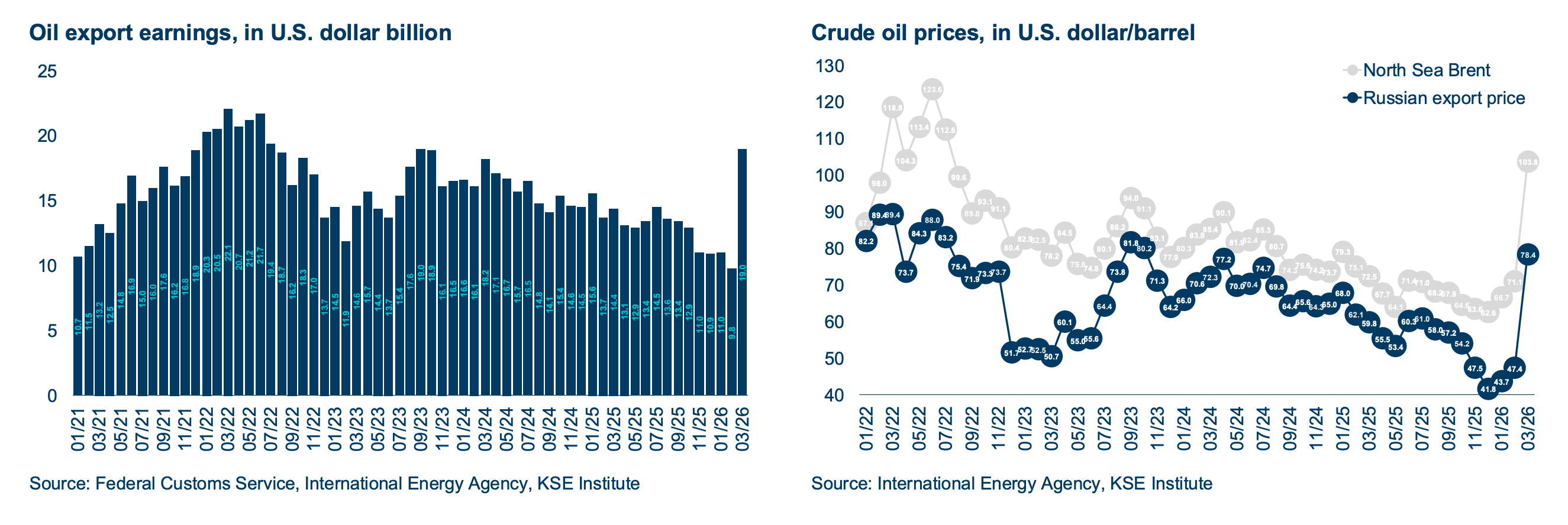
Russian oil export earnings jumped to $19.0bn in March, up from $9.8bn in February and the highest figure since autumn 2023. The surge was driven almost entirely by price rather than volume: Russian oil recovered to $78.4 per barrel — a 65% increase from $47.4 in February — as the disruption to Middle East supply pushed up global benchmarks. Export volumes rose only modestly, by 3% to 7.1mn barrels per day. Russia's discount to global benchmarks remained elevated at $25.4 per barrel, limiting the full pass-through of higher global prices to Russian revenues.
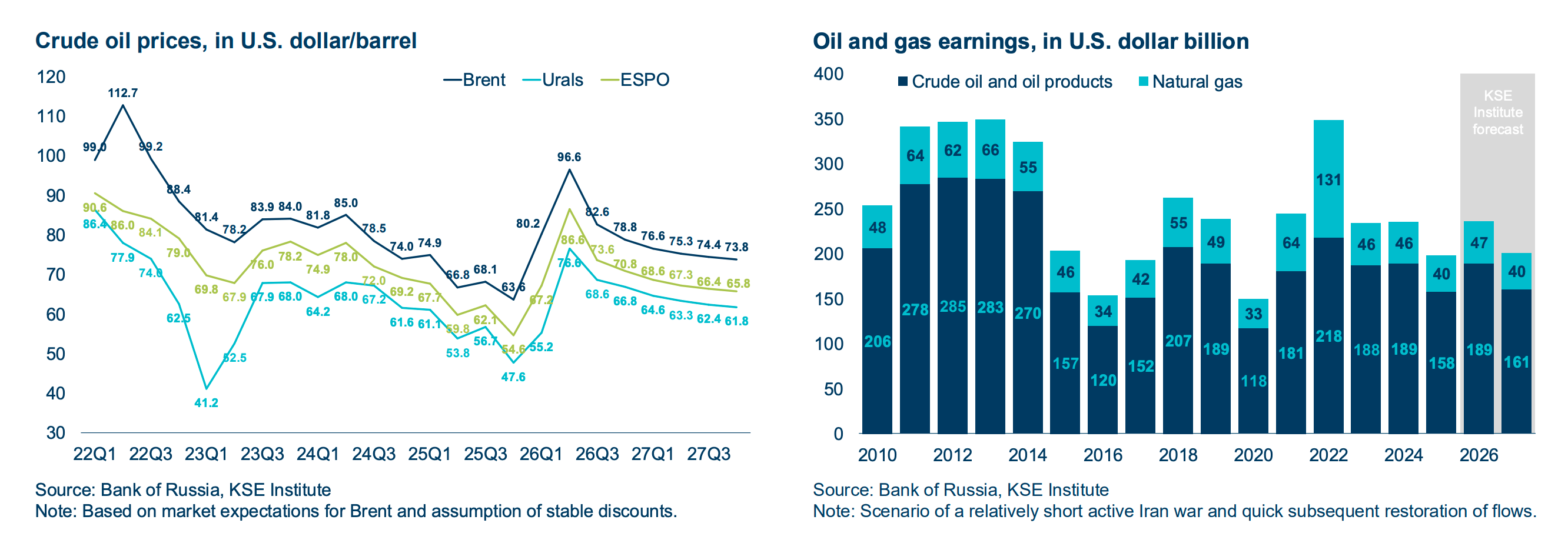
KSE analysts note that partial US sanctions relief opens the door to further volume increases, including through stepped-up purchases by India, and that Russia will retain elevated oil export earnings until global markets stabilise — even if the Iran conflict proves relatively short-lived.
A record deficit — with relief on the horizon
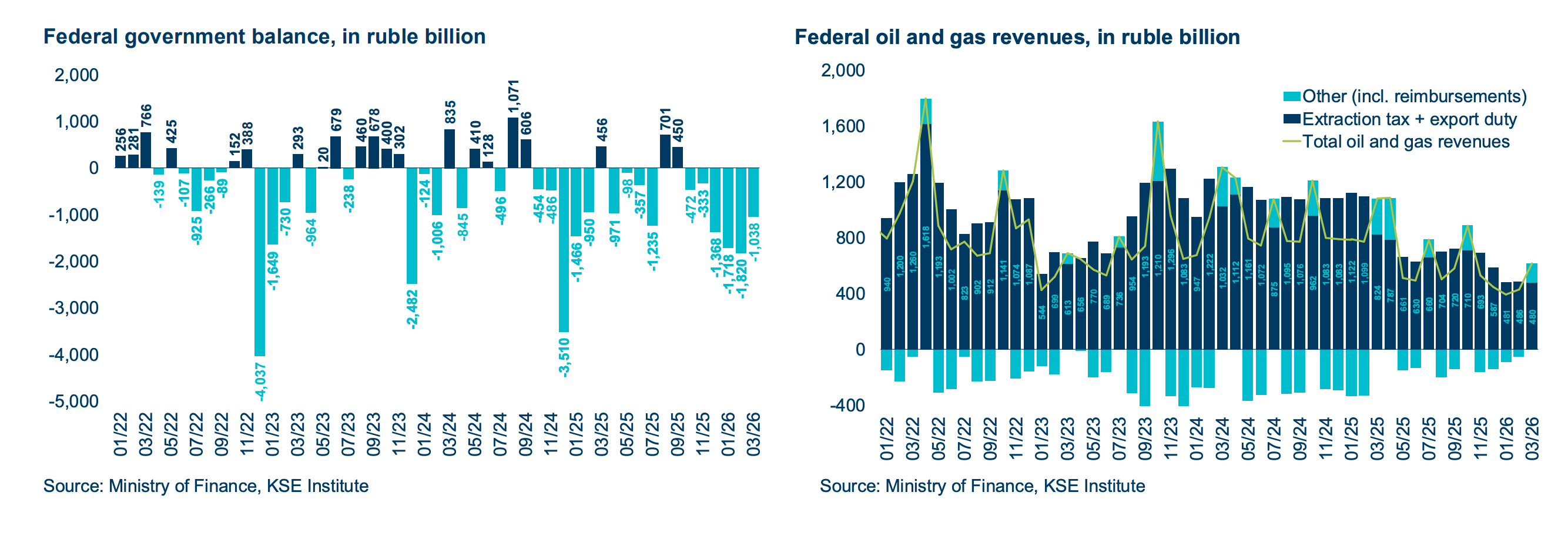
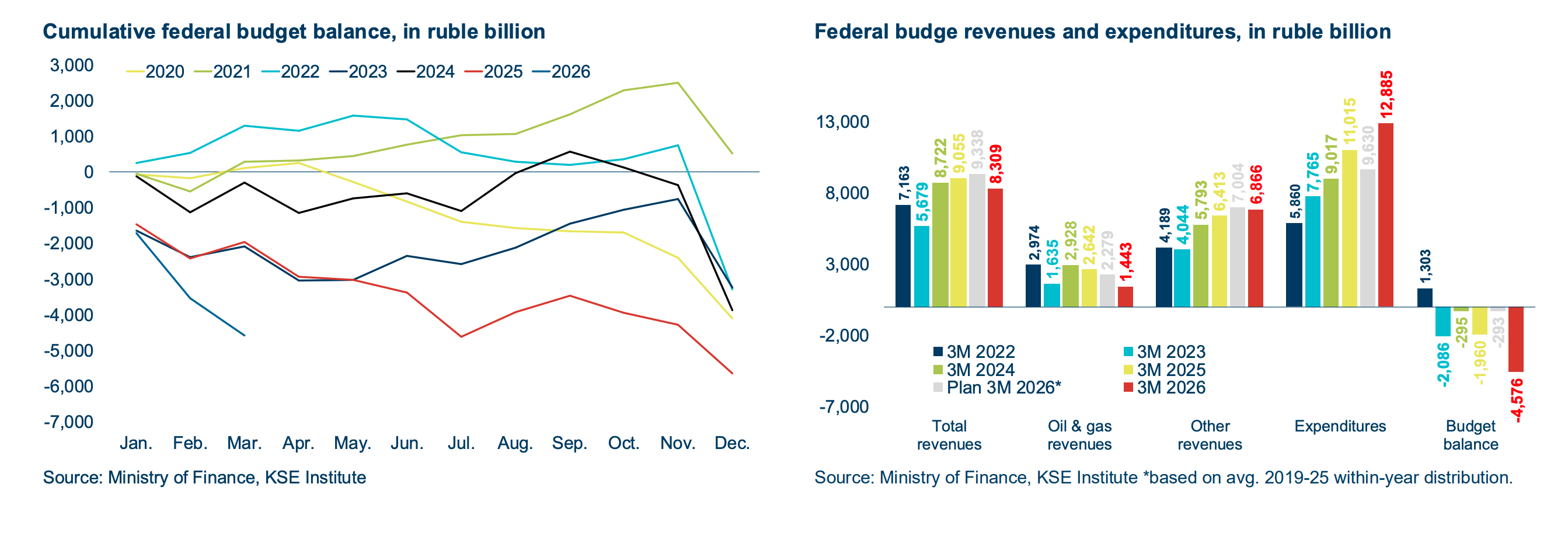
The oil revenue windfall arrives against a backdrop of severe fiscal strain. Russia's cumulative budget deficit over the first quarter reached RUB4.6 trillion— approximately $59bn — a record figure that already exceeds the government's full-year deficit target by 21%. Oil and gas revenues fell 45% y/y in the first quarter, reflecting the collapse in prices that preceded the Iran war.
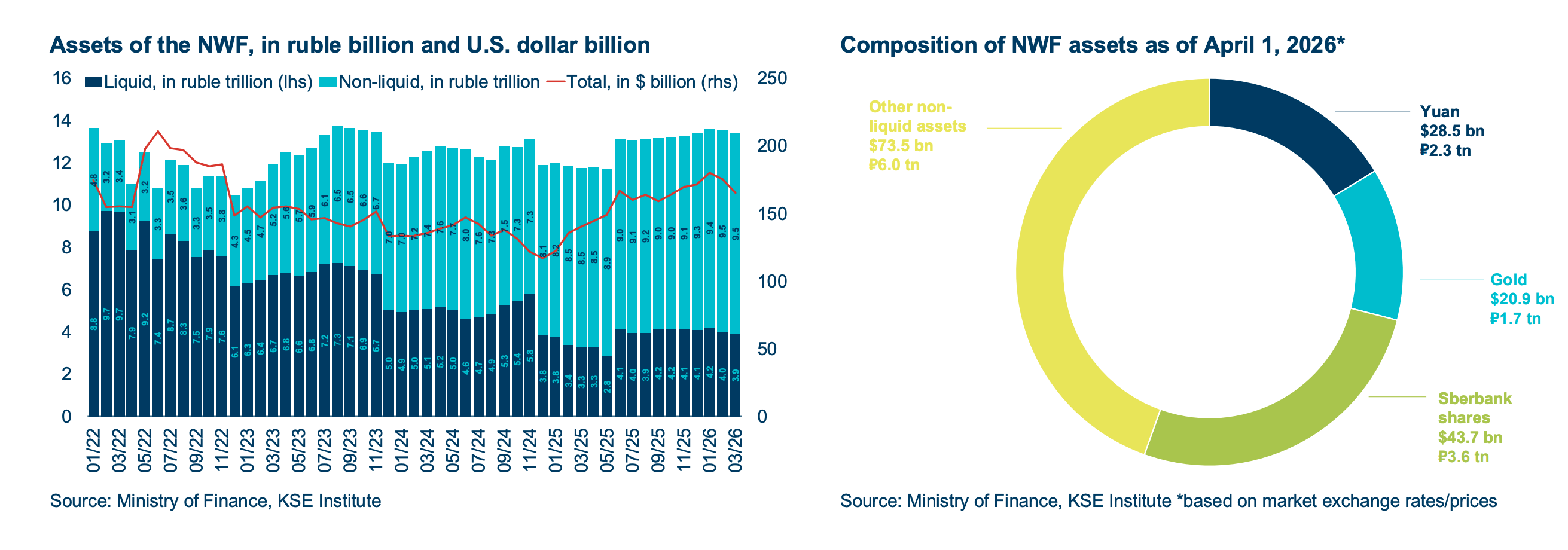
To cover the shortfall, Russia withdrew RUB460bn from its National Wealth Fund by selling gold and yuan-denominated assets, while the Finance Ministry issued RUB1.4 trillion in OFZ government bonds in the first quarter — 25% more than in the same period of 2025. Federal government debt has doubled since the start of the full-scale invasion of Ukraine, reaching RUB31 trillion.
The KSE chartbook notes that April and May will bring considerable budget relief as higher energy prices feed through to oil and gas tax revenues with a one-month lag — but the structural deficit problem remains.
Reserves under pressure
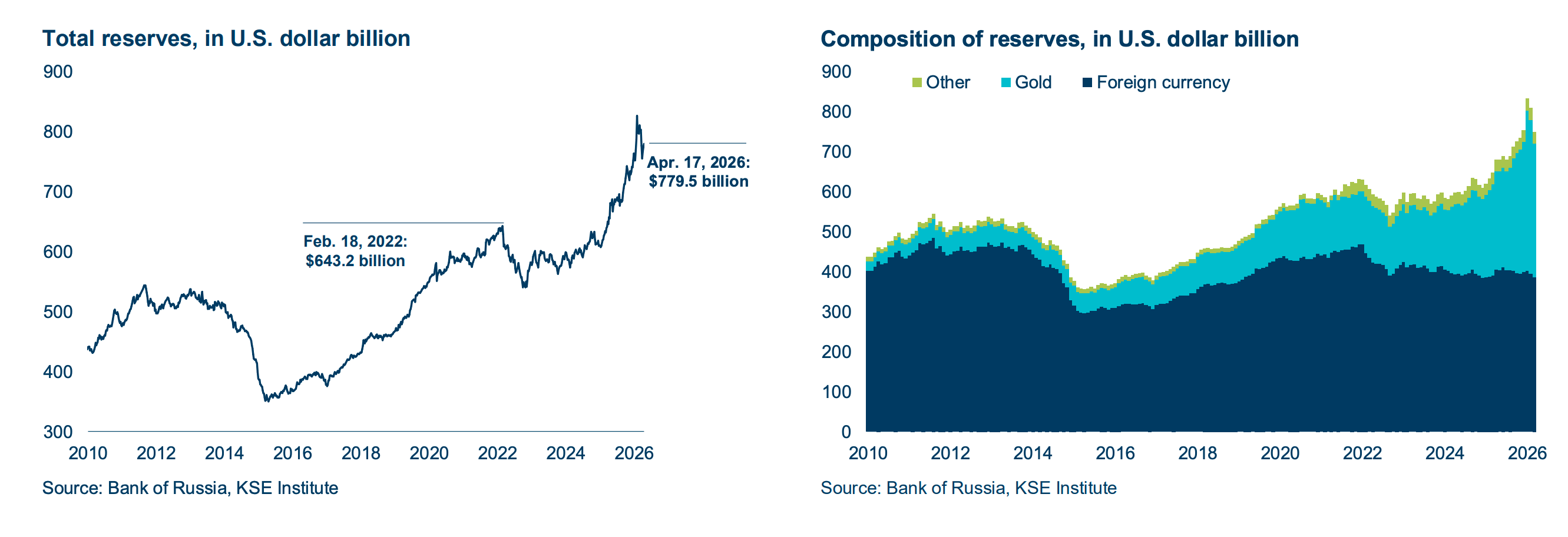
Russia's macroeconomic buffers are eroding. International reserves fell from a peak of $827bn in late January to $780bn by mid-April — a decline of $47bn in less than three months — driven primarily by falling gold prices, which had also been the main factor behind the earlier rise in reserves from $643bn at the time of the full-scale invasion. NWF liquid assets declined from $56bn in January to $48bn in March.
The immobilisation of more than $300bn in central bank reserves overseas as a result of Western sanctions remains a separate and significant constraint on Moscow's financial flexibility.
War-driven growth is over
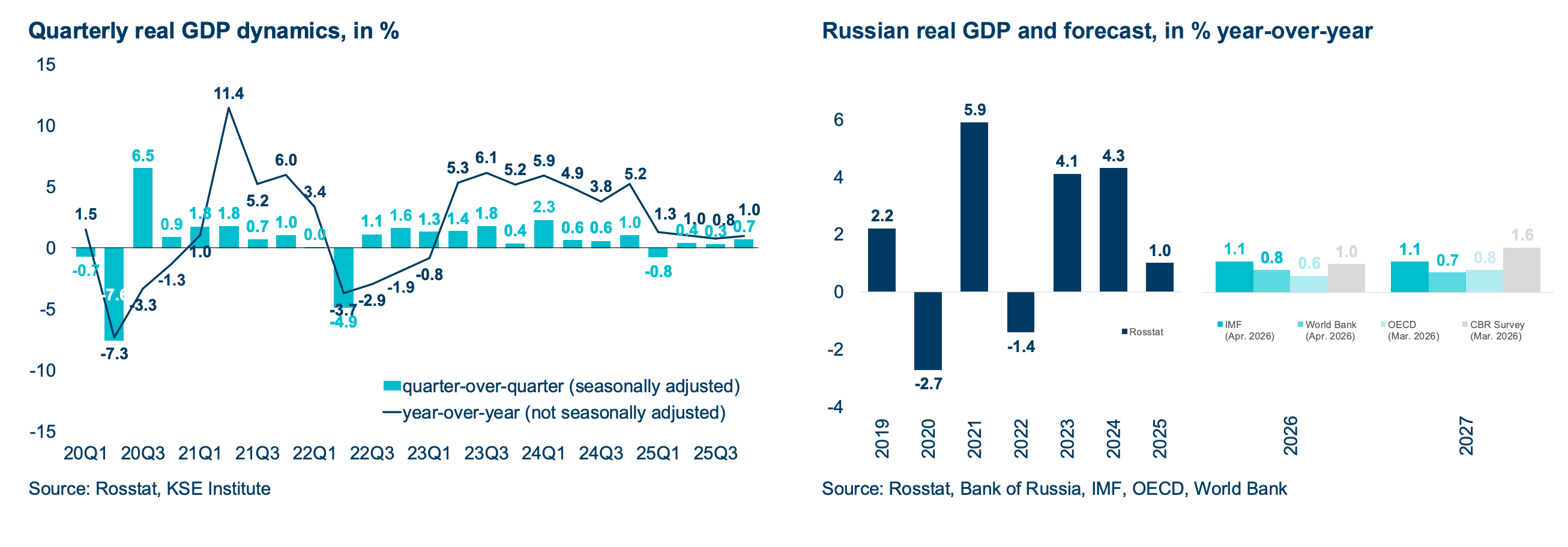
The broader economic picture has deteriorated sharply. Russia's statistical agency Rosstat reports real GDP growth of just 1% in 2025 — a marked slowdown from growth above 4% in both 2023 and 2024. Russian authorities have since reported that the economy contracted by 1.8% in January and February. Most forecasters expect growth of around 1% or below in both 2026 and 2027.
War-related sectors continue to expand, but the civilian economy is contracting under the combined pressure of high borrowing costs, acute labour shortages and tightening sanctions. The KSE chartbook concludes that while the Iran war may offer some near-term fiscal relief, it "leaves none of Russia's underlying structural problems resolved."
Unlock premium news, Start your free trial today.


