
EDB opens in Uzbekistan, pledges $1.5bn in investments by 2031


Eurasian Development Bank (EDB) opened a representative office in Uzbek capital Tashkent on May 18, pledging up to $1.5bn in investments by 2031 as it celebrated its 20th anniversary.
In parallel with the opening, EDB announced a $70mn investment into Uzum, Uzbekistan’s number one digital platform.
The launch marks the bank’s formal entry into Uzbekistan. Central Asia’s most populous country joined the lender in 2025 as its seventh member state.
Uzbek government and EDB officials said the move would help to channel development financing into transport, energy, mining and digital infrastructure projects across the country.
“From new regional initiatives to becoming an authoritative international financial institution that has made a significant contribution to the economic development of its member states, this is a remarkable anniversary,” said Jamshid Khodjaev, Uzbekistan's Deputy Prime Minister during the EDB opening ceremony in Tashkent.
“It is symbolic that, in its anniversary year, the Bank is opening its representative office in Uzbekistan. We view today’s event as an important and practical step toward strengthening the partnership between Uzbekistan and the EDB,” Khodjaev added.
Uzbek officials said they see the multilateral develop bank’s expertise in infrastructure financing, export support and digital systems as aligned closely with the economic priorities of what the government bills as “New Uzbekistan”. Khodjaev pointed out that a permanent office in Tashkent would “significantly increase the intensity of our cooperation, reducing the distance between a project idea and its implementation”.
The EDB opening comes as Uzbekistan seeks to sustain rapid economic growth while attracting higher levels of foreign capital. The government has promoted free economic zones, technology parks and transport upgrades as part of a wider reform programme aimed at opening the economy and strengthening regional trade links.
Chairman of the EDB management board, Nikolai Podguzov, said that the lender intended to become one of the country’s leading providers of investment financing.
“In the year of the EDB’s 20th anniversary, we are launching our operations in one of the fastest-growing economies in the region, Uzbekistan,” Podguzov said. “Over the past 20 years, the bank has accumulated unique experience. Our total portfolio has reached $19.6bn and we have implemented 326 projects. We are now ready to bring these capabilities to Uzbekistan.”
In aiming to invest up to $1.5bn in Uzbekistan by 2031, the EDB will seek to back nearly $800mn in projects with regional integration potential. Podguzov also outlined a more ambitious target of providing at least $2bn over the broader investment period, with annual financing expected to exceed $500mn.
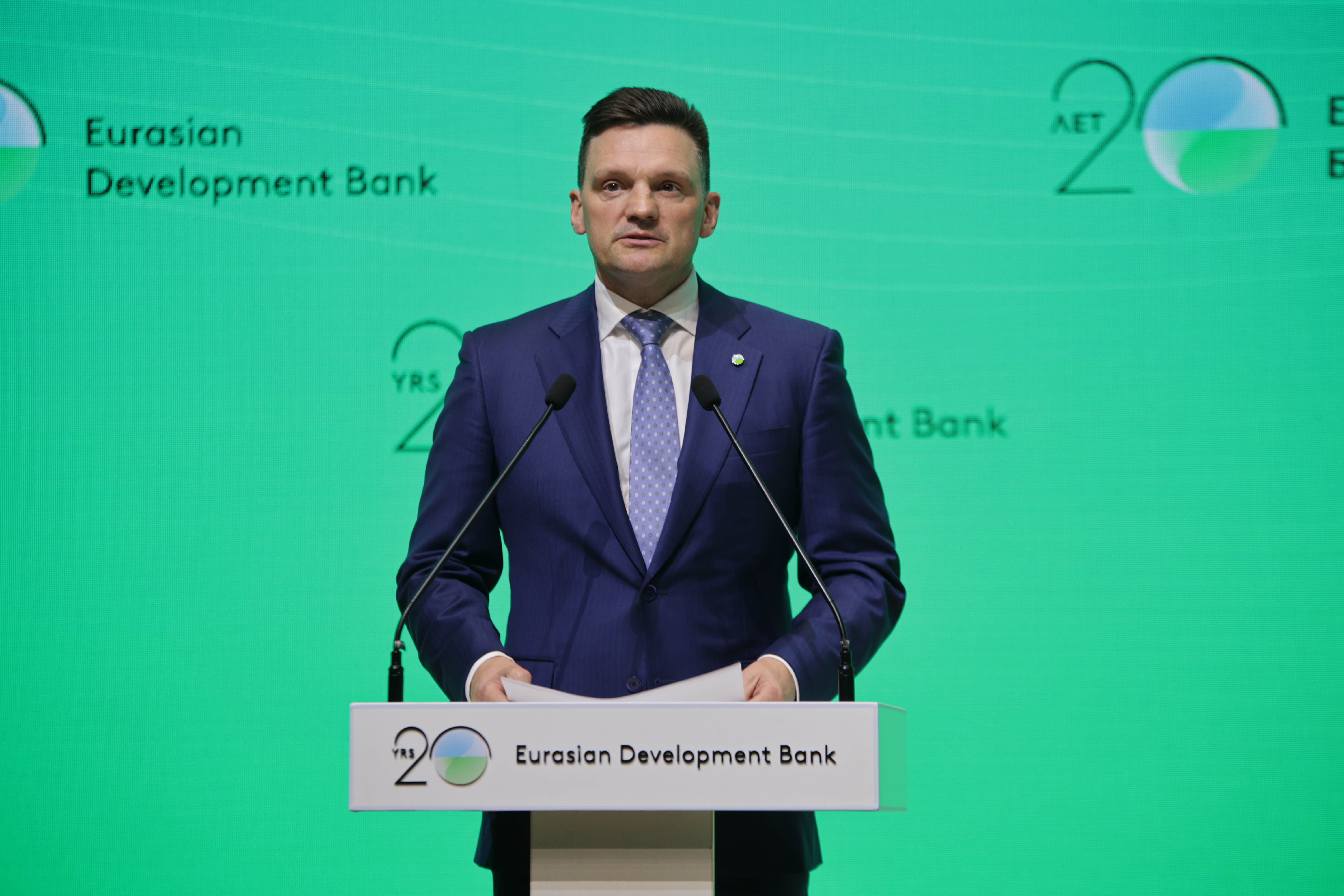
“Our investments will primarily focus on transport connectivity, logistics, the energy sector and industry,” he said. “We have already prepared several projects and today we plan to sign our first agreements worth tens of millions of dollars.”
Outlining the $70mn investment into Uzum, Uzbekistan’s largest digital ecosystem, the EDB said it was its first information technology investment in the country of 38mn.
The financing is to support the expansion of consumer lending, digital banking infrastructure and fintech services, with Uzbekistan experiencing rapid growth in cashless payments and digital finance adoption.
“Digital platforms are becoming a vital part of modern economic infrastructure,” Podguzov said. “By partnering with Uzum, the EDB is expanding access to financial services, fostering entrepreneurship and investing in a regional technology platform that can strengthen economic connectivity across Eurasia, including with China and the Middle East.”
Uzum serves more than 20mn users across its e-commerce, banking and fintech businesses. The company’s lending volume reached $1.2bn in 2025, nearly tripling year-on-year, while payment volumes exceeded $11bn.
“We are building fintech infrastructure at a national scale, deeply embedded into everyday economic activity,” founder and CEO of Uzum, Djasur Djumaev, said. “This investment is an important recognition of Uzum’s role in shaping the infrastructure for Uzbekistan’s future development. It also reflects a broader shift, where digital platforms are becoming a key focus for development finance and international capital.”
Uzum said Uzbekistan is emerging as one of the fastest–growing digital economies in Eurasia, driven by rapid adoption of cashless payments, expanding digital financial services, and strong demographic tailwinds from a young, digitally active population. More than 70mn bank cards are currently in circulation across the country, it added.
The EDB opening ceremony featured workshops organised by the EDB Academy as part of the bank’s efforts to expand engagement with policymakers, businesses and media in member states.
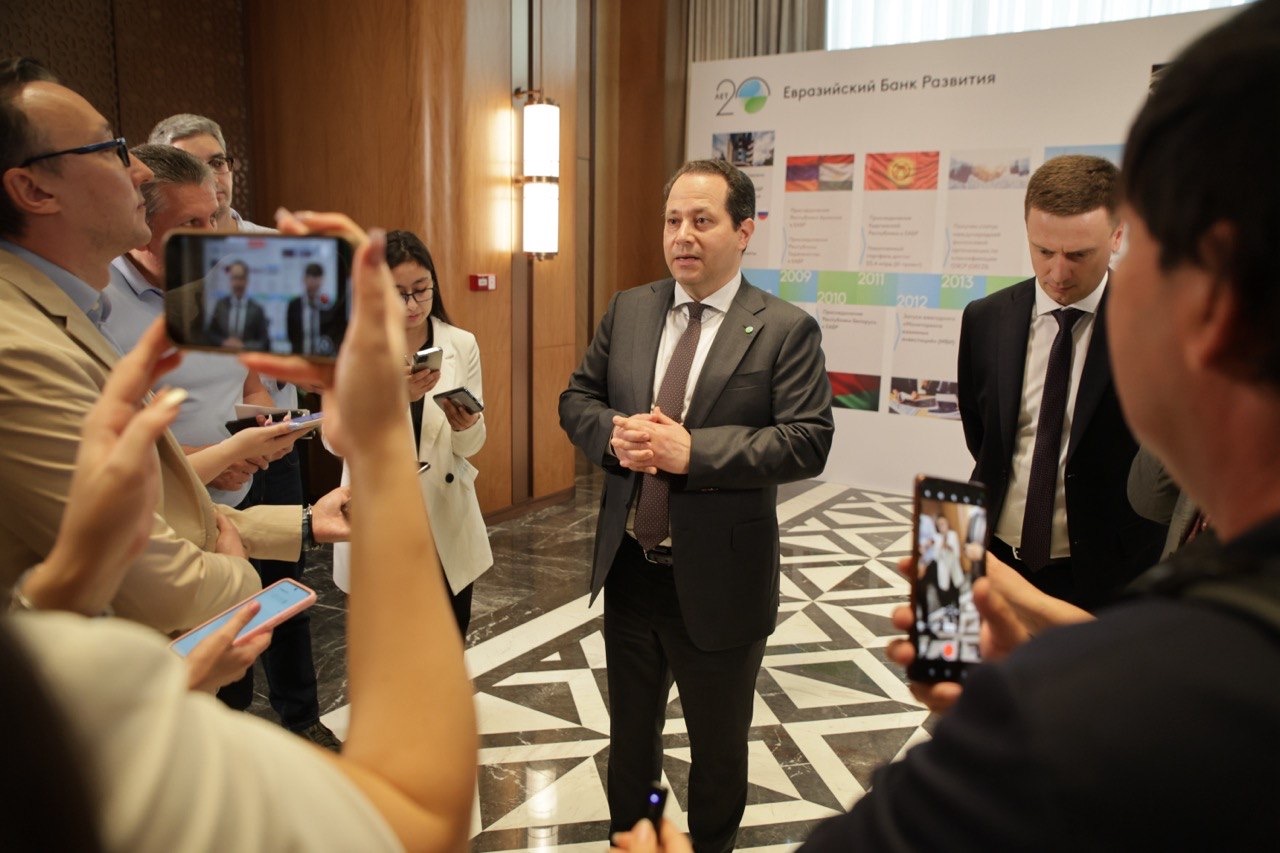
Evgeny Vinokurov, vice chairman and chief economist of the EDB management board, announced a new macroeconomic forecast for Uzbekistan, forecasting growth of 7.9% by the end of 2026.
“Uzbekistan is growing as one of the global leaders in terms of growth rates,” Vinokurov said. “In fact, 7.9% growth could probably place Uzbekistan in the global top 10 this year,” he said.
Annual inflation in Uzbekistan is expected by the forecast to fall below 7% despite external pressures linked to higher global fuel prices amid the crisis in the Gulf.
The Uzbek som, Vinokurov added, was supported by strong foreign investment inflows and rising remittances.
Looking further ahead, Vinokurov noted that the bank expected Uzbekistan’s economic output to reach $200bn by 2030 and $300bn by 2035, although he cautioned that the country’s main risks were external rather than domestic.
“If the global economy slows, demand for Uzbek exports across all commodity categories will decline,” he said. “We believe the current risk for the Uzbek economy is not internal, but external and it needs to be monitored carefully.”
The EDB’s latest economic update anticipates that Uzbekistan’s policy rate will be around 13.5% by the end of 2026, implying a possible 50-basis-point reduction as inflation pressures are managed.
In its outlook released in December for 2026-2028, the bank projected a slightly higher average key rate of 13.7% in 2026, declining to 11.6% by 2028.
On inflation, the December forecast expected a gradual easing from 7.4% in 2025 to 6.7% in 2026 and 6.3% by 2028.
Unlock premium news, Start your free trial today.


_1.jpg)