
CENTRAL ASIA BLOG: Water “insecurities” are rumbling under the surface of regional diplomacy


There was a very mixed vibe coming from this week’s major water security meeting held in the Tajik capital Dushanbe – the Fourth High-Level International Conference on the International Decade for Action “Water for Sustainable Development” 2018-2028.
On the one hand, the Central Asian countries were commending shows of good neighbourliness in the face of water stress – Kazakhstan, Tajikistan and Uzbekistan, for instance, talked up their new agreement on water releases from Tajikistan’s strategic Bahri Tojik reservoir for the June-August 2026 irrigation period – while on the other hand there were uncomfortable moments such as Kyrgyzstan’s pointing to a disgruntled elephant in the room.
That elephant is upstream Kyrgyzstan’s contention that downstream countries that receive its vital water supplies, most particularly Uzbekistan and Kazakhstan, do not make enough of a financial contribution to the maintaining of Kyrgyz reservoirs, hydraulic infrastructure and glacier ecosystems, work that is important to the entirety of Central Asia.
With water shortage tensions threatening to mount amid the climate crisis and the melting of glaciers, mostly notably in Kyrgyzstan and fellow mountainous upstream country Tajikistan, the issue is not about to go away.
Erlist Akunbekov, Kyrgyzstan’s deputy chairman of the Cabinet of Ministers and minister of water resources, agriculture and processing industry, delivered a stark reminder of the enormity of the work that must be done to keep the water flowing to downstream Central Asia, telling delegates to the conference: “Without glaciers, there will be no water in the rivers, and without water in the rivers, there will be no life in the valleys.”
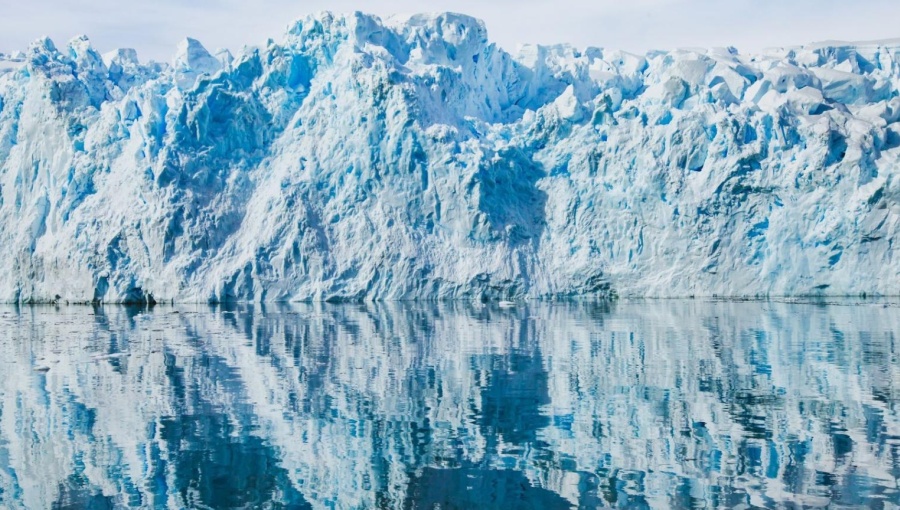
The melting of glaciers in mountainous Tajikistan and Kyrgyzstan poses a water security threat to all of Central Asia (Credit: Canva, World Meteorological Org.).
Glacier melt in Central Asia, wherever it occurs, is indeed a regional problem, not just a Kyrgyz, a Tajik or another single country’s national problem.
Kyrgyzstan is in fact solely self-dependent in water. It is the only state in Central Asia that can say its water resources are formed completely within its own territory. What’s more, the country of 7.4mn uses only roughly a third of its available water resources, with the majority flowing to its neighbours.
Returning to the infrastructure maintenance costs, Akunbekov said that “we must frankly admit that today our country is not receiving adequate compensation for these efforts”.
“Maintaining hydraulic facilities and preserving glaciers in the mountains of Kyrgyzstan requires enormous expenditures,” he added, noting Kyrgyzstan channelled around $80mn into its water sector in 2025, with funds often needed to address ageing Soviet-era facilities and structures.
“We need additional consolidated financing to build an effective and modern water management system for all countries in the region,” Akunbekov concluded, making the case for compensation mechanisms.
Agriculture across Central Asia would often not be viable without heavy use of transboundary rivers and cross-border flows from reservoirs, meaning deals such as the Bahri Tojik reservoir agreement are always encouraging.
Water from Bahri Tojik will be released during the summer growing season to Kazakhstan’s southern Turkestan region to meet spiking irrigation demand.
“The issue of supplying irrigation water to the southern regions remains under special control,” said Kazakhstan’s Minister of Water Resources and Irrigation Nurzhan Nurzhigitov. “The agreements reached are the result of constructive interaction and mutual support between Central Asian countries. The measures taken will help ensure a stable growing season and support domestic farmers.”
Given the added difficulty of falling precipitation linked to climate change, more and better cooperation and coordination between the five states of Central Asia is undoubtedly the way to go, but what if there was suddenly a sixth country to bring into the tent?
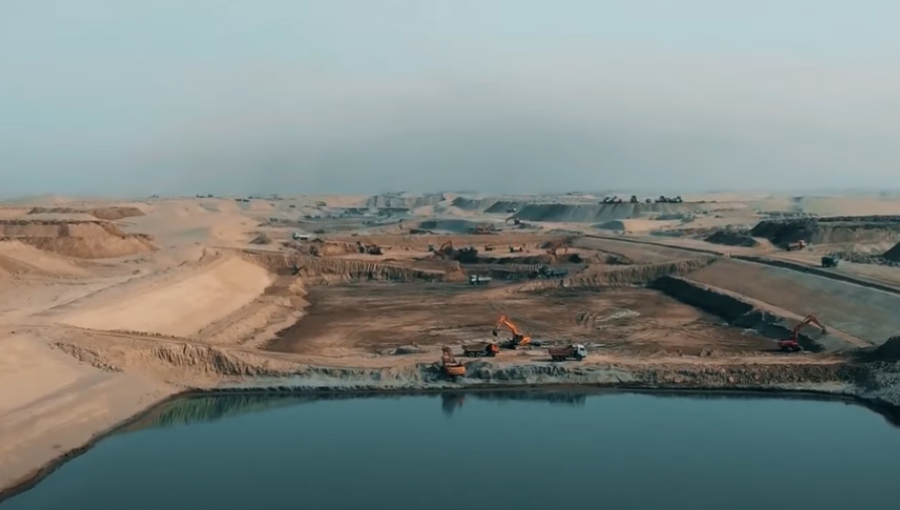
When the Taliban's "thirsty" Qosh Tepa canal is ready to claim its share of the Amu Darya river, Central Asia will have another water difficulty on its hands (Credit: @FDPM_AFG).
Afghanistan, as related in IntelliNews’ May 19 article on the Wakhan Corridor, is eager to be considered part of Greater Central Asia and, at least as far as water is concerned, this is less an option for Central Asia proper, than a given. Running along the northern border of Afghanistan (usually considered South Asia, rather than Central Asia) with the Central Asian countries of Tajikistan, Uzbekistan and Turkmenistan is the major river of Amu Darya. Afghanistan, wracked by decades of war and instability, has never got around to laying claim to its share of this vital water resource, but several years ago, to the horror of resource planners across Central Asia, it became plain that Kabul, under its second Taliban administration, is doing exactly that – not by submitting an intergovernmental demand through the usual channels, but simply by building a huge irrigation canal that could divert up to a third of the Amu Darya river flow.
A year ago, Kazakhstan became the latest country in the region to speak up over the possible implications of the canal, the Qosh Tepa, for region-wide water sufficiency. Since then, the Taliban, eager for northward economic integration, especially in light of their volatile relations with southern neighbour Pakistan, have played things relatively nice with Central Asia – mostly in interactions with Uzbekistan – over Qosh Tepa, expected to launch within a couple of years. But should matters dissolve into a lack of cooperation, Central Asia’s water dilemma might get that much worse rather quickly.
One fear is that if Qosh Tepa is not built to adequate specifications, the water leakage from its sides could be horrendous.
Unlock premium news, Start your free trial today.


