
Why Afghanistan dreams of opening up Wakhan Corridor, the mountain valley that connects three worlds


By now the world is all too familiar with the Hormuz Strait and the economic distress that the strangulation of a small-but-vital territorial zone can cause to markets the world over. Perhaps now then is a good time to take a look at the Wakhan Corridor, the narrow, protruding strip of land in northeastern Afghanistan, sandwiched between China, Pakistan and Tajikistan.
Wakhan is a 350-kilometre (217-mile) mountain valley nestled high in the Pamir Mountains in the province of Badakhshan. The width of this rugged strip of land dividing Tajikistan from Pakistan is just 13 km (eight miles) in places. Likely once trodden by luminaries including Alexander the Great and Marco Polo, its potential is fascinating.
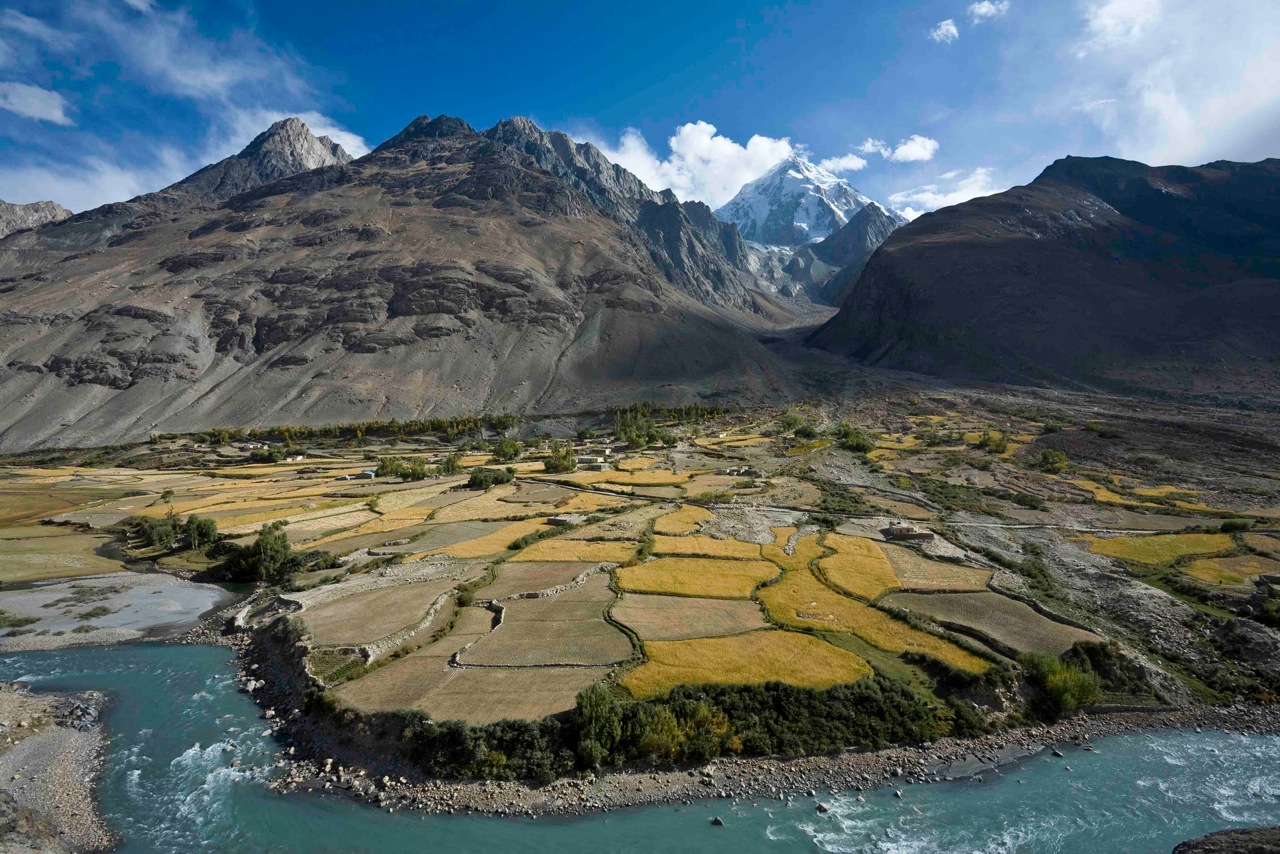
The little-known Wakhan Corridor is nestled in the Pamir Mountains and is flanked by the Hindu Kush, Himalayn, Karakoram and Kunlun ranges (Credit: USAID, public domain).
If the high valley was made generally accessible and developed for modern trade flows, it would serve as a fabulous, even stupendous, link between Central, South and East Asia. Landlocked Central Asia would finally gain a clear road into Pakistan and thus the access to the ocean sought for so long by the region, Pakistani commerce would enjoy a short path into Central Asia and Afghanistan would have a direct trade passage into China. It would also become a route to the world’s second largest economy likely favoured by Iran.
Analyst Nargiza Umarova – who lately wrote a commentary titled, “The Wakhan Corridor's Increasing Role In Central Asia-Afghanistan-China Interaction”, published by The Central-Asia Caucasus Analyst – observes that “the Wakhan Corridor represents a unique intersection of historical legacy and modern strategic potential”. However, as any analyst au fait with the territory’s history will also tell you, the corridor is fraught with challenges, including security risks and geopolitical rivalries.
The corridor was formed out of the Khanate of Wakhan upon the signing of the 1893 Durand Line Agreement and the 1895 Pamir Boundary Commission protocols, drawn up so that the then Russian Empire’s Turkestan dominion, now Tajikistan, would not bump up against a British Empire dominion, now Pakistan. The agreement also formed the Durand Line, which to this day traces the border between Pakistan and Afghanistan.
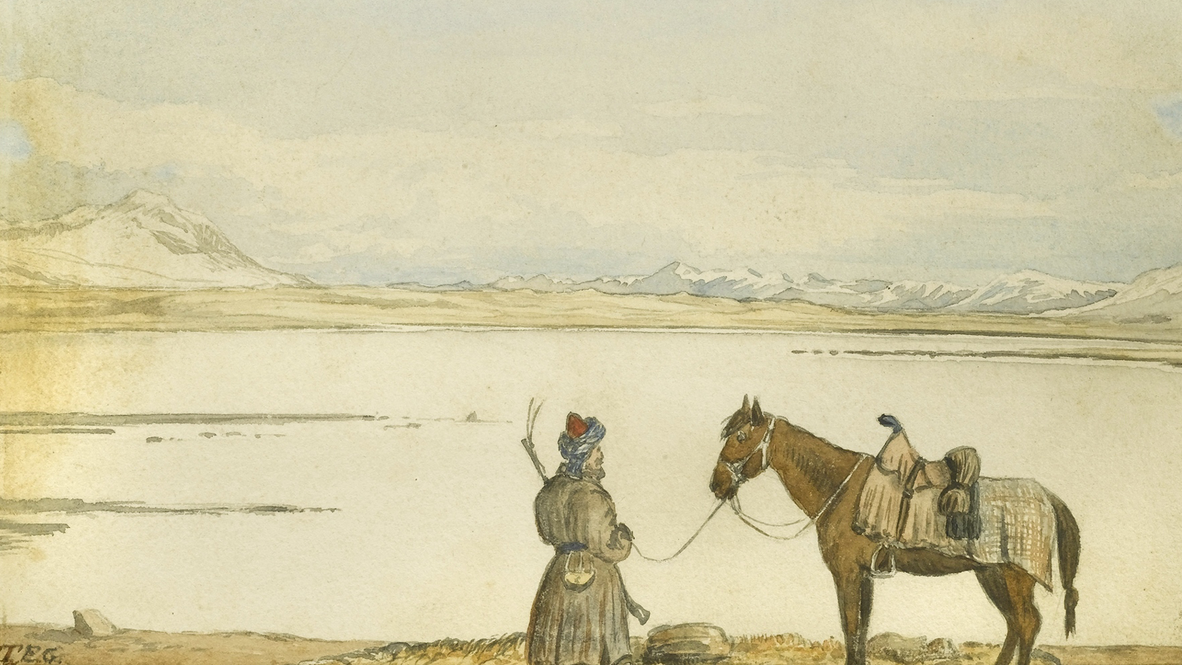
Nowadays, the impediments precluding the development of the Wakhan Corridor – home to 110 villages inhabited by around 12,000 people – for trade and passage include the volatile relations between Taliban-ruled Afghanistan and Pakistan, the poor relations between Tajikistan and the Taliban and China’s fear that Islamist militants could use the route for sustained infiltration of its northwestern Muslim Turkic-majority region Xinjiang, which borders Wakhan.
Afghanistan, of course, has been beset by complex wars and rivalries for decades, during which it has remained isolated from the global community. As things stand, only Russia formally recognises the country’s Islamist fundamentalist Taliban rulers. Yet at the same time, Wakhan is a reminder that Afghanistan boasts an exceptional geographical location, with great strategic significance for both global and regional powers.
Since the US exited the country in August 2021, the Taliban have not, as many expected they would, entirely withdrawn Afghanistan into itself, but have cast around for ways to unlock economic potential with neighbours. High on their agenda is an ambition to develop the Wakhan Corridor as a trade route connecting Afghanistan and China through the high-altitude Wakhjir Pass.
Beijing has since the US departure moved carefully in building links with Taliban-ruled Afghanistan, but China has nevertheless secured its status as Afghanistan’s main trade and investment partner, with trade reaching around $2bn in 2024. What’s more, Chinese companies have signed contracts to develop Afghan oil, copper, lithium and gold deposits.
As pointed out by Umarova – head of the Center for Strategic Connectivity at Tashkent’s Institute for Advanced International Studies (IAIS), operating under the University of World Economy and Diplomacy (UWED) – security risks have to date impeded the integration of volatile Afghanistan into China’s global initiative “One Belt, One Road,” the grand project billed as aiming to interconnect China’s neighbouring states and regions into a single transport chain similar to the ancient Silk Road. But in April 2023, Beijing announced its “Position on the Afghan Issue,” with a paragraph stating that Afghanistan’s participation in the Belt and Road Initiative is an important objective.
Here, however, China’s chosen path has diverged from Wakhan, instead concentrating on the utility provided by the $62bn China-Pakistan Economic Corridor (CPEC). It stretches from Kashgar in Xinjiang, across the Karakoram mountain range on China’s border with Pakistan and through to the Pakistani strategic deep-water port of Gwadar on the Arabian Sea.
In Beijing’s thinking, Afghanistan and Central Asia should enjoy access to CPEC infrastructure via link-through routes opened up on Afghanistan’s border with Pakistan, but this concept runs counter to the ambitions of the Taliban to conduct trade with China through Afghanistan’s own sole border with its giant neighbour at the end of the Wakhan Corridor.
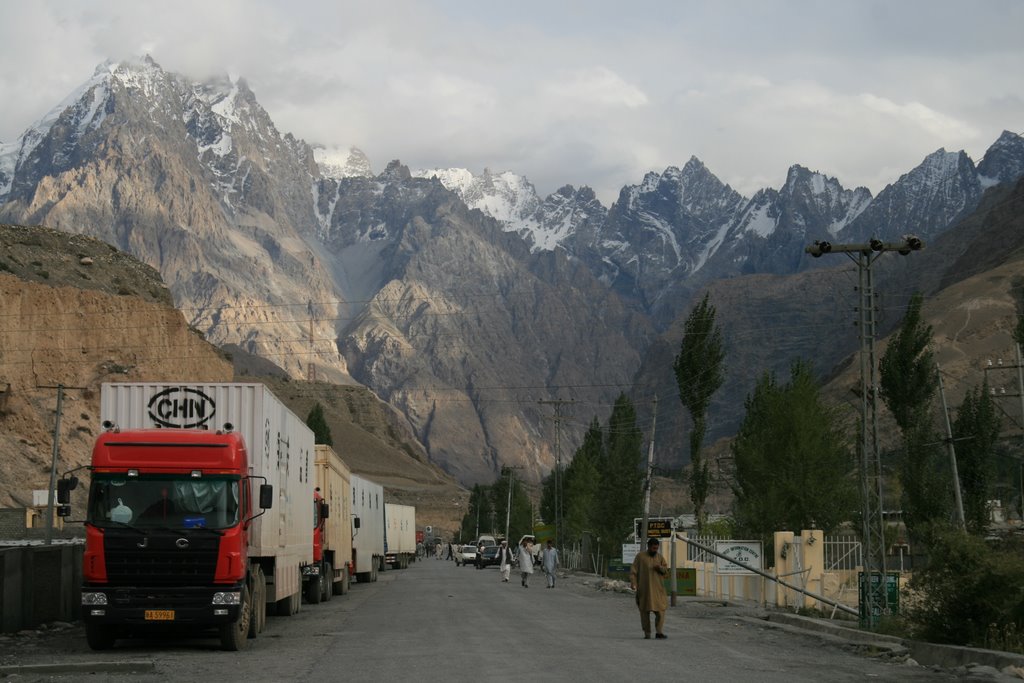
China and Pakistan conduct trade via the Karakoram Highway, part of CPEC. Beijing envisages linking the highway to Afghanistan via Pakistan (Credit: Anthony Maw, Vancouver, Canada, cc-by-sa 3.0).
According to one proposal explored by China, CPEC would have a connecting road running from the Karakoram Highway to the Wakhan Corridor via the Broghil Pass, a mountain pass at an elevation of 3,798 metres (12,461 feet) in the Hindu Kush range with Afghanistan’s Wakhan District on one side and Upper Chitral District in Khyber Pakhtunkhwa, Pakistan, on the other.
It sounds plausible and practicable from the perspective of finally delivering effective intersections interlinking traders of Central, South and East Asia – but there is no doubt that the Taliban, only recently embroiled in a short military conflict with Pakistan that could yet blow up into something far bigger, have their minds set on establishing a Wakhan/Xinjiang border post viable for major trade flows. Entering Pakistan in order to reach China sounds like a poor second choice to those holding sway in Kabul.
In January 2024, according to Umarova, Moizuddin Ahmadi, head of the Information and Culture Department of Badakhshan province, announced the completion of a 50-km and $5mn section of gravel road, due for asphalt work, leading along the Wakhan to the Chinese border via the Wakhjir Pass. Then, in December 2025 says the analyst, the Afghan Ministry of Rural Rehabilitation and Development announced that 70% of the road to Xinjiang was complete.
“This,” says Umarova, “reflects the Afghan government’s persistent pursuit of establishing direct connections with China, despite Beijing’s lack of approval for such moves. The revival of the historical Silk Road through the Wakhan Corridor could potentially diminish the importance of Pakistani transit, and with it the very concept of the CPEC in cargo transportation between Afghanistan and China, which has demonstrated remarkable growth due to the intensification of mutual trade.
“This development is particularly significant for the Taliban government in light of the intensified military escalation along the border with Pakistan. In an effort to put economic pressure on Kabul, Islamabad has suspended the movement of goods from Afghanistan through its territory and seaports in the Indian Ocean, resulting in significant financial and reputational losses for both sides.
“Ongoing tension with its southern neighbor will likely increasingly encourage the Afghan government to minimize the use of Pakistani transit for exports and imports, and to promote alternative routes to foreign trade partners, including China and other Central Asian states. Consequently, the Taliban may intensify their efforts to establish the Wakhan Corridor project, presenting it as a viable solution to the issues arising from Pakistan’s restrictive transit policy.”
S. Frederick Starr, a founder of the Central Asia-Caucasus Institute, was last month reported by Eurasianet as arguing vociferously that Afghanistan needs to be woven into the fabric of a Greater Central Asia if the region’s full trade potential in critical minerals, fossil fuels and other goods is to be unlocked.
Starr was reported as saying that Central Asian states are already working assiduously and “subtly” to bring Afghanistan into the fold, adding that “all of them have de facto recognised” the Taliban’s leadership of the country.
“Afghanistan desperately wants to be part of Greater Central Asia,” Starr said.
So, partly to that end, how could China be tempted into investing in fully opening the Wakhan Corridor and equipping it for modern-day transit and logistics in trade?
One added attraction that would result from such a commitment would be improved interconnectedness between China and the Middle East with less time required for the transport of goods between the two end-points. Not to be forgotten is that Iran, which, like Pakistan, boasts port facilities with direct sea lanes opening out to the Indian Ocean, lies on the other side of Afghanistan from China.
China, however, has remained reluctant to open its border with Afghanistan even for trade and transit given its concerns about the potential infiltration of Uyghur militants affiliated with the East Turkistan Islamic Movement (ETIM) into its territory.
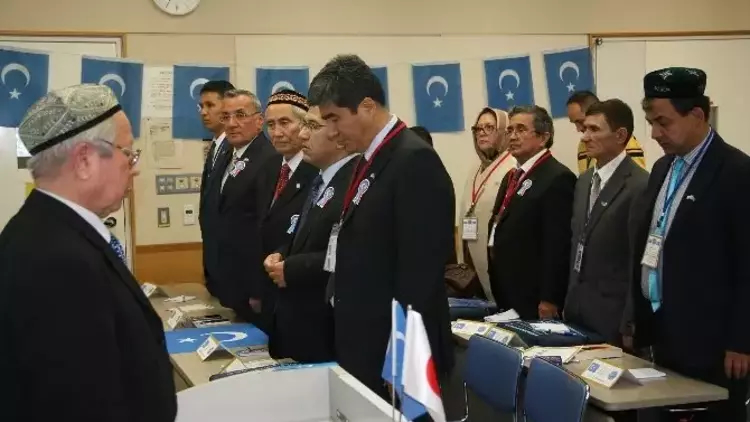
Throwing open the gates of China's only border crossing with Afghanistan might possibly hinder Beijing's attempts to ensure that the movement for an independent East Turkestan does not gain any momentum. Here the East Turkestan Government in Exile convenes for a general assembly (Credit: East Turkestan Government in Exile, cc-by-sa 4.0).
Umarova reflects: “From Beijing’s perspective, separatists could use the remote Wakhan Corridor as a launching point to attack and foment unrest in the XUAR [Xinjiang Uyghur Autonomous Region].
“However, such rhetoric has little correspondence with reality. According to a UN Security Council report, the ETIM force numbers no more than 500 and does not have the capabilities or weaponry to pose a significant threat to China.”
Wakhan, then, would present itself as a cure for multiple economic ills and inefficiencies if all the various interested parties could collaborate to make it work. But that’s a big if.
The economic planners nevertheless will dream on, fixated by the potential.
For instance, impoverished Tajikistan, as things stand separated from Pakistan by several inaccessible mountain passes that partially traverse Afghan territory, has, “a remarkable opportunity to become a pivotal link in the Central Asia–South Asia supply chain and compete for transit currently going though Uzbekistan”, says Umarova.
She adds: “Extending CPEC to Tajikistan has several advantages. First, cargo from China, Pakistan and Afghanistan will swiftly reach Tajikistan and further into Central Asia, resulting in substantial cost and time savings.
“Second, the emergence of a network of modern roads in the Pamirs will give impetus to the economic development of border areas: the Gorno-Badakhshan Autonomous Region of Tajikistan, the Wakhan district of Badakhshan province in Afghanistan, the Xinjiang Autonomous Region of China and the city of Chitrol in the Pakistani province of Khyber Pakhtunkhwa. As a result, the level of prosperity, literacy and mobility of the local population will increase.
“Third, improved infrastructure will contribute to greater stability and security in the region. At the same time, the implementation of the Wakhan initiative with the active participation of Tajikistan carries several risks. First, if the Wakhan trade route becomes operational, current transit options through Central Asia may lose significance for various stakeholders. For example, China will be able to transport goods from Kashgar to Afghanistan faster than through the territory of Kyrgyzstan and Uzbekistan, potentially undermining the prospects for the future China-Kyrgyzstan-Uzbekistan [CKU] railway, on which Tashkent has placed high hopes. Second, the launch of the Wakhan route will provide Iran with the opportunity to connect with China through Afghanistan, bypassing the rest of Central Asia.
“Considering the impressive volume of trade turnover between the two powers (US$13.37 billion in 2024), the region’s losses will be significant.”
Umarova advises the Central Asian states to carefully prepare for any scenarios that would bring the development of the Wakhan Initiative. It is advisable, she says, to consider options for benefitting from each of them, while simultaneously consolidating efforts to strengthen intraregional connectivity and positions in the global transport services market.
Against this backdrop, the analyst adds, it is crucial to accelerate the construction of the China-Kyrgyzstan-Uzbekistan and Uzbekistan-Afghanistan-Pakistan railway corridors and their subsequent connection, “which will turn the Central Asian region into a vital link in the international supply chain from East Asia to South Asia and vice versa. The Wakhan Corridor can potentially become part of these larger connectivity projects linking Central Asia and China.”
Unlock premium news, Start your free trial today.


