
US bombs Kharg Island, prepares for possible ground invasion


The US has bombed military installations on Iran’s critical Kharg island that is responsible for more than 90% of Iran’s oil exports and is moving thousands of troops into the Gulf in preparation for a possible ground invasion to take control of the Straits of Hormuz.
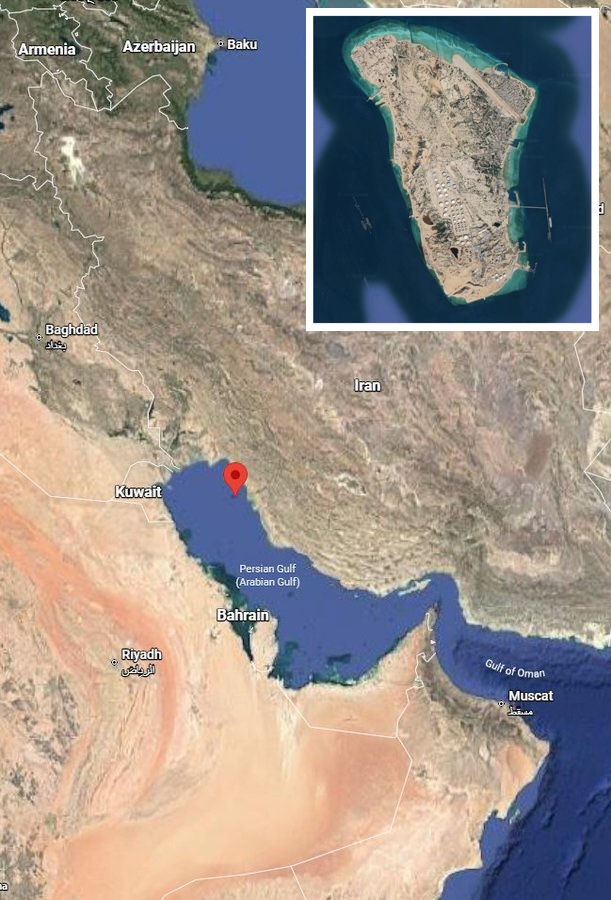
US bombers struck the limited military installations on the small island on March 13, located 25 km off Iran’s coast, from which it ships most of its oil.
US President Donald Trump said American forces had struck military targets on the island but stopped short of attacking critical oil export infrastructure.
Trump said on March 13 that US forces had “totally obliterated” all military targets on the island, describing the operation on social media as “one of the most powerful bombing raids in the History of the Middle East.”
The US president added that Washington had deliberately avoided targeting Iran’s oil facilities for now.
“However, should Iran, or anyone else, do anything to interfere with the Free and Safe Passage of Ships through the Strait of Hormuz, I will immediately reconsider this decision,” Trump said.
Tehran repeated warnings that any attack on Kharg’s oil infrastructure would trigger severe retaliation, suggesting it would hit oil production and distribution infrastructure across the entire region, which it has largely avoided until now. Iranian officials said US-linked oil facilities across the region could be reduced to “a pile of ashes” if the island’s export infrastructure were targeted.
Iran’s semi-official Fars news agency reported that more than 15 explosions were heard on Kharg Island during the US strikes. According to the report, the attacks targeted air defence systems, a naval base and airport facilities, while oil export infrastructure appeared to remain intact. Thick smoke was reportedly seen rising from parts of the island.
“The Iranians are keeping this, apparently, as a card to use,” he said. “They’ve been talking about restraint and the possibility of that restraint ending if the Iranian oil facilities are attacked, as the Americans are hinting and threatening,” said Mohamed Vall, reporting from Tehran for Al Jazeera.
Iran's Supreme Leader Mojtaba Khamenei made his first public statement on March 12 where he called for unicity amongst Iranians, but vowed revenge on the US and has ruled out peace talks for the meantime. Following the Kharg Island strikes, Trump also dismissed the prospect of negotiations with Tehran.
“Iran would be wise to lay down their arms, and save what’s left of their country,” Trump wrote on his Truth Social platform, adding separately that “the Fake News Media hates to report how well the United States Military has done against Iran, which is totally defeated and wants a deal – but not a deal that I would accept!”
Khamenei also appealed to his Gulf neighbours, suggesting they eject all US forces from their countries and suggesting if they ceased to back US forces then Iran would halt attacks on their countries.
Crucial to Iran’s oil exports
Iran’s coast is too shallow to accommodate the Very Large Crude Carrier (VLCC) tankers used to ship oil around the world, so Iran has built pipelines from its main oil fields that transport crude to the deeper waters around the island for loading.
The island is crucial to Iran's exports which have been continuing nonstop since Operation Epic Fury began on February 28. Iranian exports of oil have been uninterrupted by the outbreak of war, and it continues to export some 1.5mn barrels a day. The Straits of Hormuz has been closed to international traffic, but as bne IntelliNews reported, an informal permits-for-passage system has emerged in the last week that allow exports by “friendly countries” that are currently entirely going to Asia.
The attack by US bombers threatens the flow of Iranian oil onto the international markets and that runs the risk of causing major and lasting oil prices to spike if the US follows through on that threat.
US troops on their way
Several ships carrying thousands of US troops are now steaming towards the Gulf, supporting earlier speculation that the Pentagon was mulling a limited ground invasion. A US official told the Associated Press that an additional 2,500 Marines and the amphibious assault ship USS Tripoli are being deployed to the Middle East as part of a gradual increase in US military presence.
Units from the 31st Marine Expeditionary Unit — forces capable of amphibious operations and emergency evacuations — are among those being sent to the region.
With the Straits of Hormuz closed and naval escorts off the table for now, one of the few options that the US has is to invade, capture and control the coastline around the narrow waterway and prevent the use of drones and missiles launched from the shore. In particular, to take control of Qeshm Island in the straits.
Trump has repeatedly said that he will not put US boots on the ground, but with oil prices spiking and the prospects of a short war fading, the White House is being boxed into a corner. With key midterm elections looming in November, Trump faces a political deadline to end the war quickly and restore stability to the oil markets.
The US and Israel are also reportedly mulling special forces operations in Iran to secure the country’s stockpile of highly enriched uranium and end its nuclear missile ambitions.
Previous attacks
This is not the first time the island has been attacked. During the Iran Iraq war in the 80s Saddam Hussein repeatedly bombed the storage facilities on the islands in a brutal war. In addition to the jetties that can accommodate the largest oil tankers, the island is home to 20–30 large storage tanks that can hold up to 28mn barrels of oil, a day and half of the normal export volumes.
In that last war The US successfully escorted Kuwaiti tankers in pairs through the SOH however in this war Iran's advanced drones and missiles has made that impossible frustrating US this is to reopen the streets to international traffic. The US Navy said last week that it was refusing all requests to escort commercial shipping through the straits because it was “too dangerous to traverse.” That has caused the problem for president Donald Trump who has been adamant that oil flows will resume and that the US Navy has already destroyed Iran's ability to resist.
That comes as reports say The US is losing its key airplanes faster than they can be replaced and Iran has started to mine the SOHC. As the war goes into his third week it appears that Iran has the upper hands. This strategy is not to take on the US military head on but to fight a war of attrition and simply make the costs of the campaign more expensive than the White House is prepared to pay.
Iran warns over Kharg Island attacks
If the US followed through on the implicit threats of destroying the loading infrastructure on the islands then Iran is expected to significantly escalate attacks on oil production facilities throughout the gulf. Tehran's main leverage over the US is the threat of causing total chaos in the energy markets. The Iranian Revolutionary Guard Corps (IRGC) are not fighting a direct conflict, but have adopted Ukrainian tactics of using its drones to fight a war of attrition and the threat of causing chaos on energy markets.
Iran’s parliament speaker issued a stern warning to the United States against attacking Iranian islands in the Persian Gulf on March 12, amid speculation about a potential occupation of Kharg Island, which houses the country’s main oil export terminal@@@
“Any aggression against the soil of Iranian islands will shatter all restraint,” Mohammad-Bagher Ghalibaf wrote in English on X on March 12. “We will abandon all restraint and make the Persian Gulf run with the blood of invaders.”
Israel also threatened to bomb the island last week and has been a lot less reticent about destroying Iran’s oil production facilities. Israeli opposition MP Yair Lapid demanded that those should be destroyed last week.
"Israel must destroy all of Iran's oil fields and energy industry on Kharg Island; that is what will cripple Iran's economy and topple the regime. This war must end when the regime in Iran has fallen, the nuclear facilities have been destroyed, all of the ballistic missile industry has been destroyed, and Hezbollah has been destroyed in Lebanon," he posted on X@@@
A row between Tel Aviv and Washington broke out last week, after an Israeli bombing sortie against Iranian production facilities was much larger than the Pentagon expected, which publicly criticised Israel for the strike. “We were not expecting that,” a Pentagon spokesman said, despite the pre-strike warning by Israel.
The island is home to a population of more than 8,000 people who are now trapped on the island. According to Iran’s health ministry, at least 1,444 people have been killed and 18,551 injured by US-Israeli attacks since February 28.
Unlock premium news, Start your free trial today.


