
UPDATE: Iran and US begin nuclear talks in Oman amid military tensions


Negotiations between Iran and the United States got underway in Muscat on February 6, with Iranian Foreign Minister Abbas Araghchi and US Special Envoy Steve Witkoff leading their respective delegations.
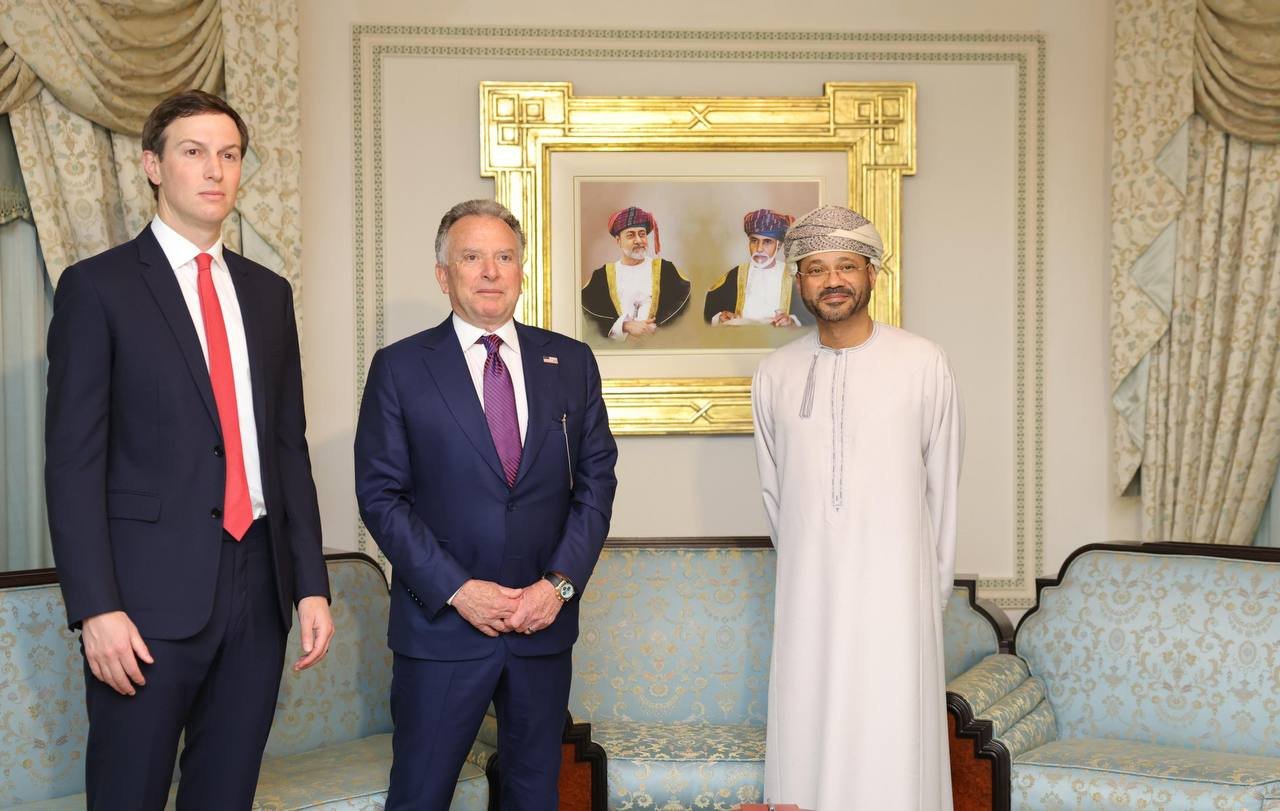
The talks, mediated by Oman, are the first between Washington and Tehran since the US joined Israel's 12-day bombing campaign against Iranian nuclear facilities in June 2025. US President Donald Trump's son-in-law and adviser, Jared Kushner, is also part of the American delegation.
Araghchi arrived in the Omani capital on February 5 aboard a flight that state media said departed from Tabas, the site of the failed 1980 US hostage rescue mission, in what Iranian outlets described as a symbolic gesture. Before the talks began, Araghchi met with Omani Foreign Minister Badr al-Busaidi.
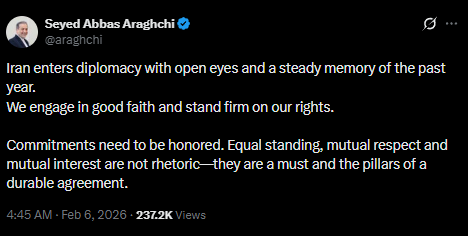
"Iran enters diplomacy with open eyes and a steady memory of the past year," Araghchi wrote on X ahead of the session. "Commitments need to be honoured. Equal standing, mutual respect and mutual interest are not rhetoric – they are a must and the pillars of a durable agreement," Araghchi wrote on his X account.
The two sides remain at odds over the scope of the negotiations. Tehran has insisted the discussions focus on its nuclear programme, while US Secretary of State Marco Rubio said on February 5 that Washington wanted the agenda to cover Iran's ballistic missiles, its support for armed groups in the region and domestic human rights issues.
Mediators from Qatar, Turkey and Egypt had earlier proposed a framework that included limits on Iranian uranium enrichment, restrictions on ballistic missile use and a halt to weapons transfers to non-state allies.
According to Eqtesad Online, news media outlets have claimed that CENTCOM Commander Brad Cooper is also present at the Muscat talks.
The talks come against the backdrop of a major US military build-up in the Arabian Sea, with an aircraft carrier group positioned off Iran's coast.
Hours before the session, Iranian state television reported the deployment of the Khorramshahr 4, described as one of the country's most advanced long-range ballistic missiles, to an Islamic Revolutionary Guard Corps underground base.
The White House warned on February 5 that Washington had "other options" should diplomacy fail, while Rubio stated the US "prefers dialogue" but was "not sure" a deal could be reached.
Unlock premium news, Start your free trial today.

