
Shipping begins moving through Strait of Hormuz


Shipping data from April 9 shows vessels beginning to transit the Strait of Hormuz, providing the first visual evidence that shipping is cautiously resuming through the waterway a day after the US-Iran ceasefire took effect.
Satellite tracking by MarineTraffic.com shows a mix of cargo ships, tankers and other vessels moving through and around the strait, with significant concentrations of shipping visible off Dubai, Fujairah and in the approaches to Bandar Abbas.
At least six individual vessels can be identified transiting or preparing to transit the strait. The Indian-flagged cargo vessel MSV Haji Ali departed Dubai on April 9 and was tracked at 5.5 knots heading east through the strait. The Comoros-flagged general cargo ship Seajaqur, which left Jebel Ali on March 15, was underway at 6.9 knots heading southwest near Khasab in Omani waters.
However, not all the ships appear to be foreign-flagged. Iranian-flagged container ship Flora departed Shahid Rajaee port on April 8 and was transiting eastward at 18.2 knots with a draught of 13.6m, suggesting a loaded vessel. A Somali-flagged LPG and chemical tanker, MAB 5, was tracked at 4 knots near Bandar Abbas, having departed Fujairah on March 7 with a reported destination of Shinas in Oman.
Two tankers were also visible in Iranian waters east of the strait. The Cameroon-flagged crude oil tanker Arhimeda, which departed China in June 2025 with a destination listed as "to order", was underway at 8.5 knots near Qeshm island with a draught of 11.5m.
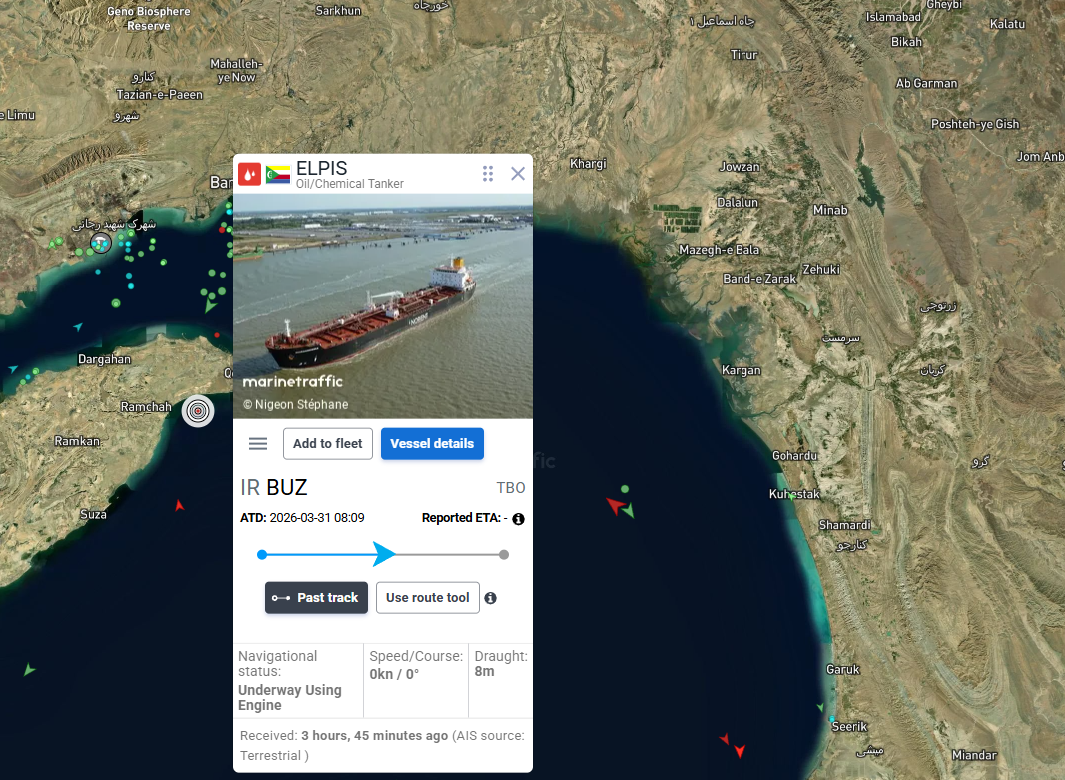
The Comoros-flagged oil and chemical tanker Elpis departed Iran's Bushehr port on March 31 and was stationary near Qeshm.
Iranian Foreign Minister Abbas Araghchi said on April 8 that "safe passage through the Strait of Hormuz will be possible via coordination with Iran's armed forces and with due consideration of technical limitations" for the two-week ceasefire period.
Oman's transport minister said no transit fees would be charged, pushing back against reports that the ceasefire deal allowed Iran and Oman to toll passing vessels.
The Strait handles roughly 20% of global oil and LNG in peacetime. Iran imposed a blockade in early March, allowing only vessels from countries it deemed "friendly" to pass. The closure sent Brent crude above $100 a barrel and triggered a global energy crisis.
The presence of vessels flying flags of convenience from Comoros, Cameroon, and Somalia alongside Iranian- and Indian-flagged ships suggests that early traffic is weighted toward countries and operators with existing Iranian relationships, rather than toward a broad reopening of Western-linked shipping.
Other containers and VLCCs appear to be anchored closer to the UAE's coastline and off the coast of Oman in as the situation continues to cause confusion over whether Iran is allowing ships through.
Iran's Revolutionary Guards want vessels to sail through Iranian waters, as shown above, around Larak Island to avoid the risk of naval mines in the usual lanes through the strait, Iran's semi-official Tasnim reported.
Vessels are to enter the strait north of Larak Island and exit just south of it until further notice in coordination with the IRGC's navy, Tasnim quoted the IRGC as saying.
"There is to be a realistic possibility of continued risk to unauthorised Strait of Hormuz transits as well as to Israel- and US-affiliated shipping attempting to transit," British maritime security company Ambrey said in an advisory.
Later on April 9, Iran's parliament is pursuing emergency legislation on the Strait of Hormuz, Deputy Speaker Hamidreza Hajibabaei said, in a move that could formalise Tehran's claim to control transit through the waterway.
"We are now pursuing the double-urgency Strait of Hormuz bill to turn it into law," Hajibabaei said, speaking at an administrative council meeting in Gilan province.
He gave no details on the bill's contents, but Iran's parliament had previously been working on legislation to collect tolls from vessels transiting the strait. The IRGC has reportedly already been operating a "toll booth" system to control traffic since imposing its blockade in early March.
Oman's transport minister pushed back on Tehran's plans to impose tolls, saying no fees would be charged and that Muscat had signed all international maritime agreements stipulating free transit.
Saudi Arabia said the strait must remain open "in accordance with the United Nations Convention on the Law of the Sea of 1982, without any restrictions."
The question of who controls the strait and on what terms is expected to be among the most contentious points at the Islamabad talks. Iran has demanded international recognition of its authority over the waterway as one of its conditions for a permanent settlement. Its 10-point proposal includes a "security protocol governing passage through the Strait of Hormuz under coordination with Iranian armed forces."
Any Iranian legislation asserting sovereign control over the strait would put Tehran on a collision course with international maritime law and the Gulf states, which depend on the waterway for the bulk of their oil and gas exports.
Hajibabaei said parliamentary committees were continuing to operate both virtually and in person during the war, and that the Hormuz bill would be processed through an emergency legislative network established during the conflict.
Unlock premium news, Start your free trial today.

.jpg)

