
Russia's manufacturing PMI edges up to 49.9 in October as downturn nears a halt


Russia's manufacturing downturn almost halted in October, as the S&P Global manufacturing PMI rose to 49.9 from 49.8 in September, the survey compiler said on November 2.
The reading sits fractionally below the 50 mark that separates growth from contraction and signalled "broadly unchanged operating conditions for firms", according to the release. Output and new orders both fell for a third consecutive month, but only marginally, as manufacturers reported competitive pressures, muted demand and weaker purchasing power among their customers.
October's figure is the highest since July, when the index hit an 18-month high of 50.7, but the sector has now been in contraction for 17 of the past 20 months, with June and July this year the only brief return to growth since May 2025. New export orders fell rapidly in October and at the steepest rate since May 2022, in the first months after the invasion of Ukraine, dragging on total new business.
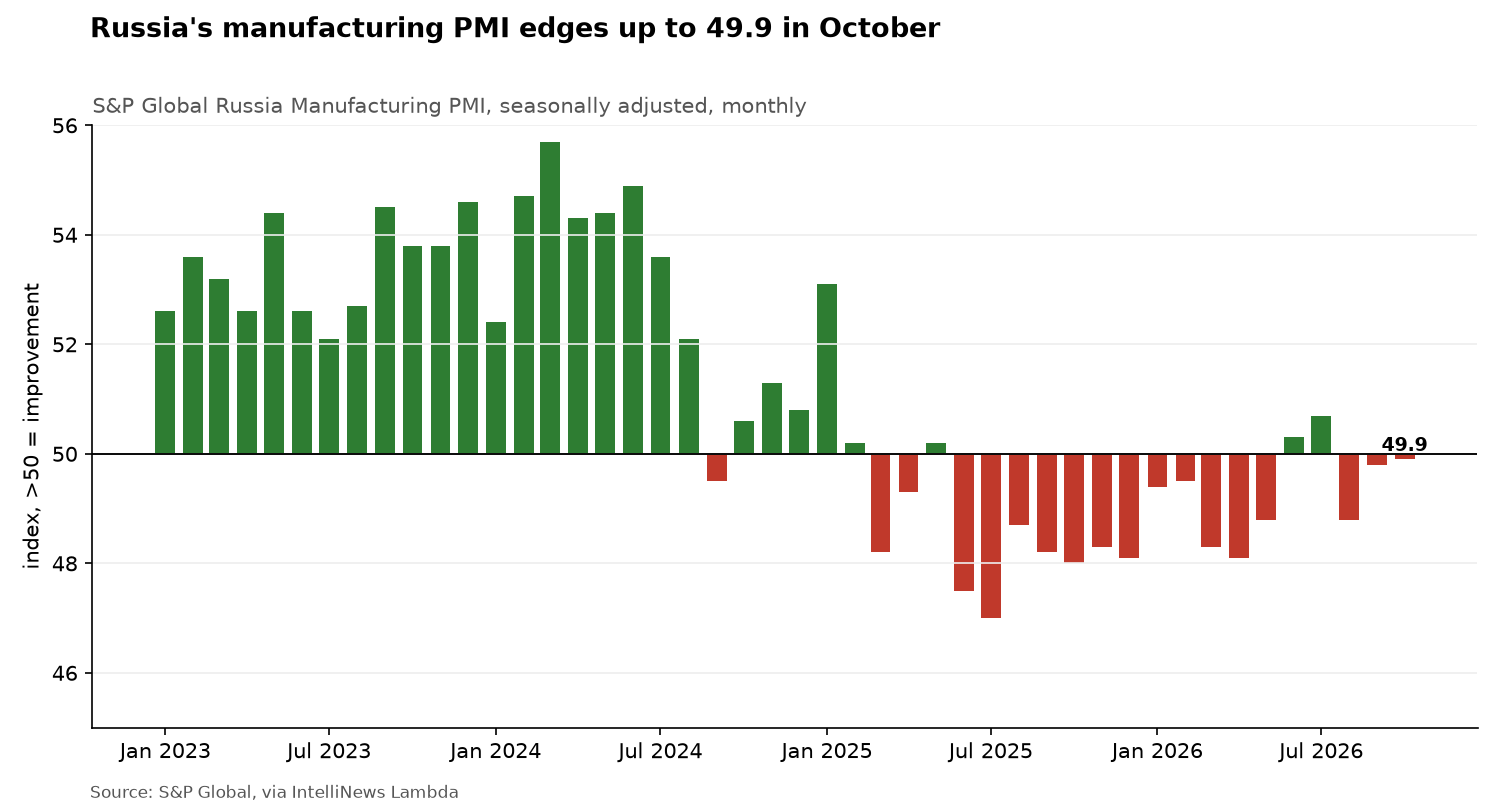
Russia's manufacturing PMI, January 2023 to October 2026. A reading above 50 signals improvement. Source: S&P Global, via IntelliNews Lambda
The PMI had risen to 49.8 in September from 48.8 in August, when it slipped back below 50 after the July peak. The latest survey of around 250 manufacturers was carried out on October 12-26.
Firms cut staff again, sometimes through voluntary resignations, but the decline in employment was the weakest so far this year. With few new orders arriving, factories worked through outstanding business for a 21st consecutive month, although backlogs fell by the least since February.
Input buying fell at the fastest pace since March as companies used existing stocks to keep production going instead of buying new materials, so stocks of purchases dropped sharply and by more than in September. Stocks of finished goods also fell as firms shipped products to customers and cut inventories to match lower orders.
Higher raw material costs and supplier charges pushed input prices up sharply again, but the rate of inflation slowed to a seven-month low. Competition limited pricing power, and output prices rose at the slowest pace since April.
Suppliers' delivery times lengthened again, as they have every month for the past year, with respondents blaming material shortages and logistics problems, although the delay was less marked than in September.
Business confidence remained muted but improved for a third month running to its highest since June. Just over a quarter of manufacturers expect output to rise over the coming year, pinning their hopes on a more stable market that would help them win new customers.
This article was produced with the help of IntelliNews Lambda analytical tool
Unlock premium news, Start your free trial today.


