
Russia calls US sanctions bill unfriendly as India defends energy purchases


Moscow called the US House’s approval of a Russia sanctions bill an "unfriendly action" and said further sanctions would hinder efforts to end the war in Ukraine.
Kremlin spokesman Dmitry Peskov said the government was watching the passage of the Lindsey O. Graham Sanctioning Russia and Iran Act of 2026 and that "additional US sanctions will certainly hinder efforts to peacefully settle the Ukrainian conflict", TASS reported on September 17.
The bill would also target Russia’s energy customers. A tariff of up to 500% on direct imports, would apply alongside existing import bans, while a separate provision would allow tariffs of up to 100% on countries buying Russian crude and gas.
The proposed tariffs would extend the economic war between Moscow and Washington to third countries. India said it would take "all necessary measures to protect its trade and economic interests", in a statement issued in New Delhi on September 17 that restated its commitment to "ensuring energy security for its 1.4 billion people" through "diversified sourcing and on the basis of evolving market dynamics".
China’s foreign ministry said the same day that Beijing "consistently opposed long-arm jurisdiction that lacks a basis in international law and has not been authorised by the UN Security Council". Neither government has signalled any change to its purchases.
A table attributed to the Senate Foreign Relations Committee and US Trade Representative lists the bill’s potential targets. China imported 100.7mn tonnes of Russian crude in 2025 and India 84.9mn tonnes; the other three countries in the top five - Slovakia, Hungary and Azerbaijan - took less than 11mn tonnes between them. On gas, four of the five largest buyers, France, Japan, Hungary and Belgium, are marked in the table as qualifying for a mandatory exemption written into the act’s Section 113 for purchasers below a 15% threshold that are cutting their Russian imports, which would leave China as the only non-exempt buyer on that list. The table’s provenance has not been independently confirmed.
The legislation "would impose no significant new sanctions on Russia" and would let Trump waive any of its measures by declaring that doing so is in the national interest, Thomas Wright, a Brookings Institution senior fellow who ran strategic planning at the National Security Council under Joe Biden, wrote in The Atlantic on September 15. Its most important provisions are about tariffs rather than sanctions, he argued, handing the president the kind of sweeping trade authority the Supreme Court took away from him in February.
Beijing saw off a threatened US tariff of more than 100% in April 2025 by threatening to throttle its rare-earth exports, a lever New Delhi does not have. India subsequently reversed a build-up of US Treasury holdings and began selling heavily after Trump doubled its tariffs in August 2025 over Russian oil purchases.
Russia still supplies more than 40% of India’s crude imports. Its Russian crude purchases ran at 2.1mn barrels a day in August, down from 2.6mn b/d in June and July. Replacing those barrels would mean paying up in a rising market: Urals averaged $69.90 a barrel in August, up 23% on July, and was quoted above $80/b at Baltic and Black Sea ports in the second week of September.
The act is not law. It cleared the Senate 86-11 in early August and the House passed it by 262 votes to 159 on September 16, short of a two-thirds majority. The Kyiv Post reported that analysts expected a presidential decision period to end on September 28. The constitutional period is ten days, excluding Sundays, from presentation; a pocket veto requires an adjournment that prevents return of the bill. The presentation date and the reported September 28 deadline need confirmation. A White House official has said the president plans to sign.
Higher crude prices could offset some of the revenue lost as Ukrainian drone strikes disrupt Russian refining. The net effect on Moscow’s energy earnings remains to be established.
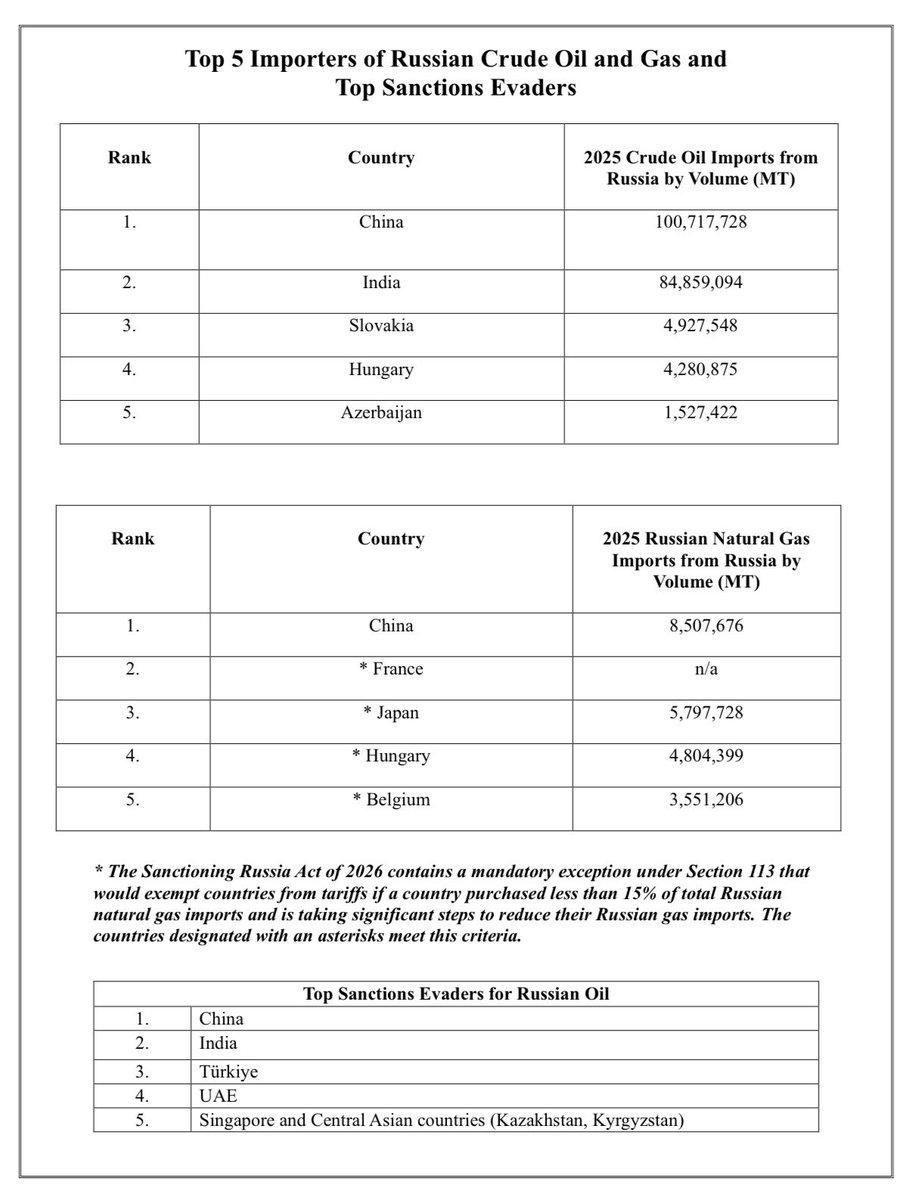
Supplied tariff-target table; source attribution and exemption claims await verification.
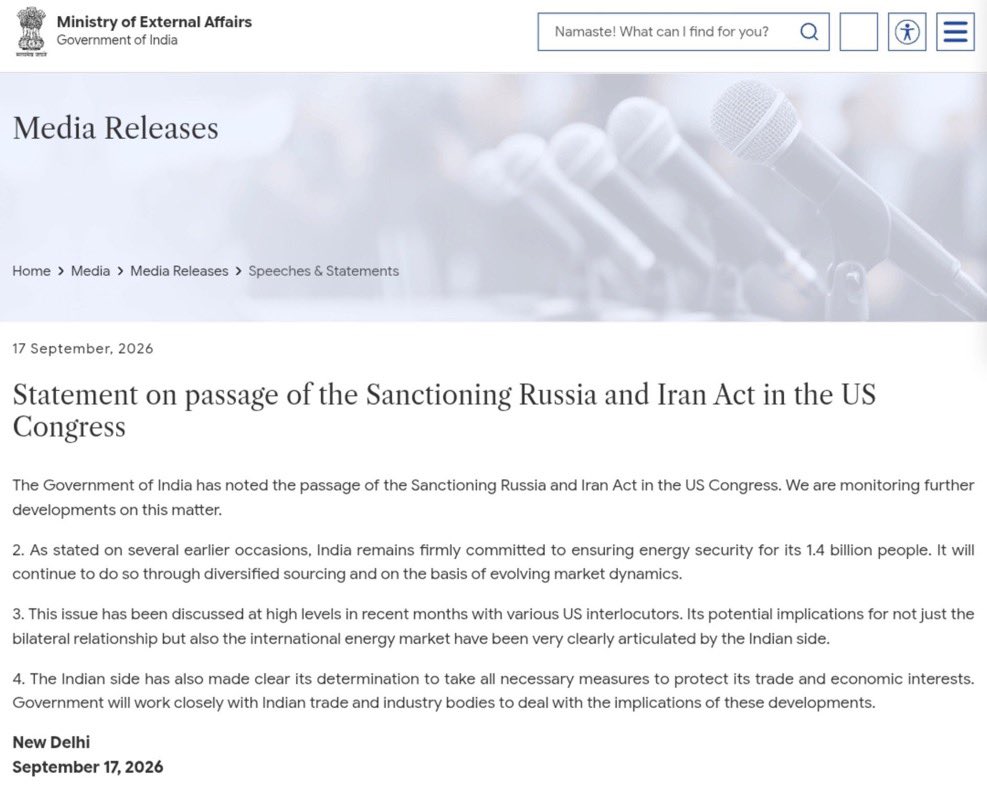
Supplied screenshot of the Indian Ministry of External Affairs statement dated September 17, 2026.
Unlock premium news, Start your free trial today.

.jpg)
