Romania’s current account deficit widens to 7.8% of GDP in 12 months to July


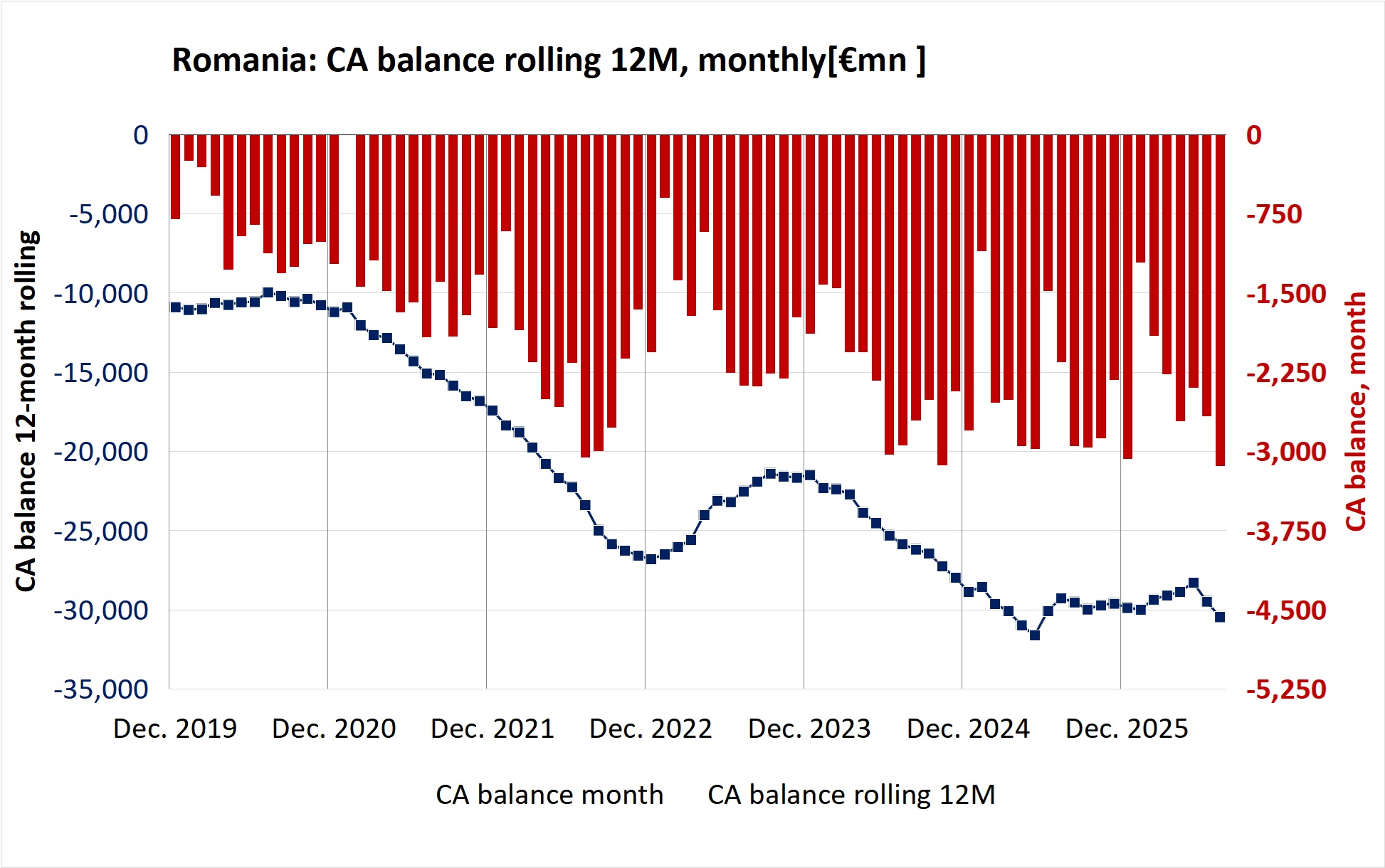
Romania’s rolling 12-month current account deficit (chart) widened to €30.5bn, or 7.8% of GDP, in July, reversing part of the improvement recorded over the previous year, according to data published by the National Bank of Romania (BNR).
The deficit increased from €28.3bn, or 7.3% of GDP, in May, but remained below the €31.6bn, or 8.7% of GDP, recorded in the 12 months to May 2025. Romania also posted a record monthly current account deficit of €3.135bn in July.
The current account had narrowed significantly between May 2025 and May 2026, both in nominal terms and as a share of GDP, alongside a moderation in domestic consumption. Higher petroleum product and commodity prices and also stronger outflows of dividends and interest subsequently reversed part of the improvement in June and July.
The deterioration over the 12 months to July was driven entirely by the primary and secondary income accounts, while the goods and services balance continued to improve compared with a year earlier. The goods and services deficit narrowed to €19.4bn from €22.1bn in the 12 months to July 2025, although the balance had improved even more pronouncedly by May before weakening somewhat in the following two months.
The primary income deficit, which includes dividend payments linked to foreign direct investment, interest on external debt and net wage remittances, widened by €2.75bn to €10.8bn in 12 months to July, compared to the previous 12-month period. The secondary income balance deteriorated by €1.16bn, turning into a €300mn deficit.
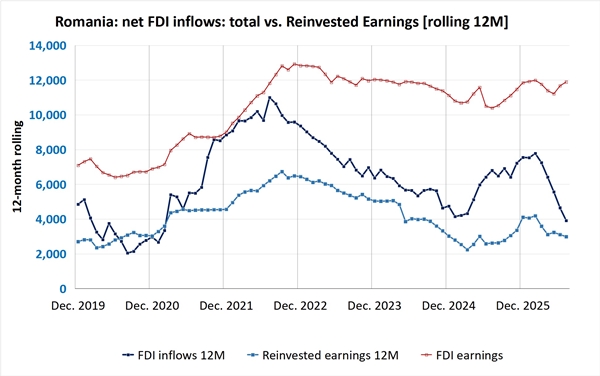
Foreign direct investment has also weakened sharply.
Rolling 12-month FDI (chart) halved to €3.9bn in July from €7.8bn in February, leaving FDI at about 1.1% of GDP.
The July level was the lowest since the COVID-19 pandemic and, over the past decade, was lower only during the pandemic crisis.
The renewed widening of the current account gap comes as Romania continues to run a substantial external deficit despite the improvement in its goods and services balance. The latest figures indicate that the net imports have been subdued thanks to lower domestic demand, while income outflows and weaker FDI have become increasingly important components of the external balance.
Unlock premium news, Start your free trial today.