
PANNIER: Central Asia on cusp of ending quest for independence in electricity provision


Since the early post-Soviet days that followed the independence achieved in 1991, Central Asia’s five states have been working toward becoming self-sufficient in meeting their energy needs. However, after 35 years, it is only Turkmenistan, with its massive natural gas and significant oil reserves, and the smallest population in Central Asia, that can claim to domestically meet all domestic power demand.
The sole success boasted by Turkmenistan somewhat sours when the regular outages, caused by neglect in properly maintaining electricity and gas networks, are considered, but the self-sufficiency has nevertheless become the envy of the neighbours.
But for how much longer? The governments of Kazakhstan, Kyrgyzstan, Tajikistan and Uzbekistan typically urge patience, but judging from recent comments made by officials in the four countries, the wait for self-reliance in electricity is coming to an end.
Kazakhstan nears finish line
On February 6, Kazakh Energy Minister Yerlan Akkenzhenov said that by the end of March 2027, domestic power sources would be able to fully meet Kazakhstan’s electricity needs. Akkenzhenov added that by 2029, Kazakhstan would become a regular net exporter of electricity.
The energy minister noted that coal continues to be the main source for generating power, accounting for 13,800 megawatts (MW) of the 26,700 MW of electricity Kazakhstan produced in 2025 (gas-fired power plants followed, producing some 6,800 MW). Kazakhstan’s proven coal reserves amount to some 29.4 billion tons.
Akkenzhenov highlighted the role of renewable energy resources, especially wind farms. He said renewable energy sources provided 3,600 MW in 2025. Of the 241 power stations currently operating in Kazakhstan, 162 use renewable resources.
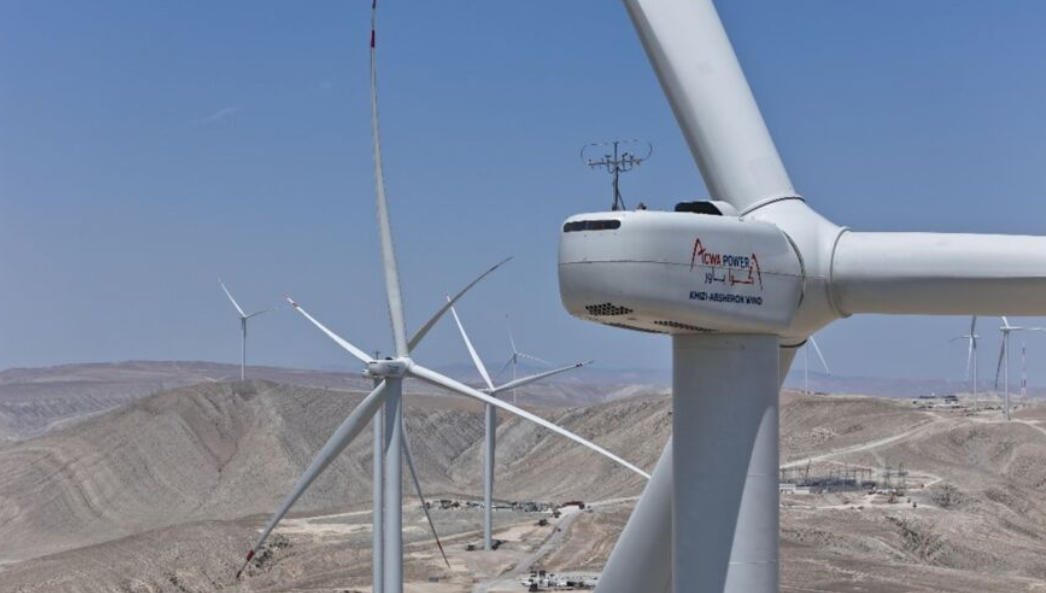
Still much-hooked on "dirty power" provided by coal-fired power stations, Kazakhstan is turning to wind, solar, gas and nuclear for "cleaner" and "clean" energy (Credit: Acwa Power).
Akkenzhenov added that the government has plans to add 26,000 MW of electricity output by 2035 and that wind would account for 8,400 MW of that power, more than three times the 2,400 MW the planned Russian-built nuclear power plant (NPP) will add when it is finished in 2035.
Kyrgyzstan bets on hydro, solar
Kyrgyz Energy Minister Altynbek Rysbekov said on July 8 that Kyrgyzstan would be self-sufficient in electricity by 2029.
“Given the construction of new solar and hydroelectric power plants… I believe that within the next three years we will be able to fully meet our own electricity needs,” Rysbekov said in an interview with a state radio station.
Rysbekov pointed to the ongoing construction of the Kambar-Ata-1 hydroelectric power plant (HPP), with a planned capacity of 1,860 MW, and the Kazarman hydro cascade (912 MW). The first unit of Kambar-Ata-1 is scheduled to launch in 2028. The Kazarman cascade project is expected to be finished in 2030.
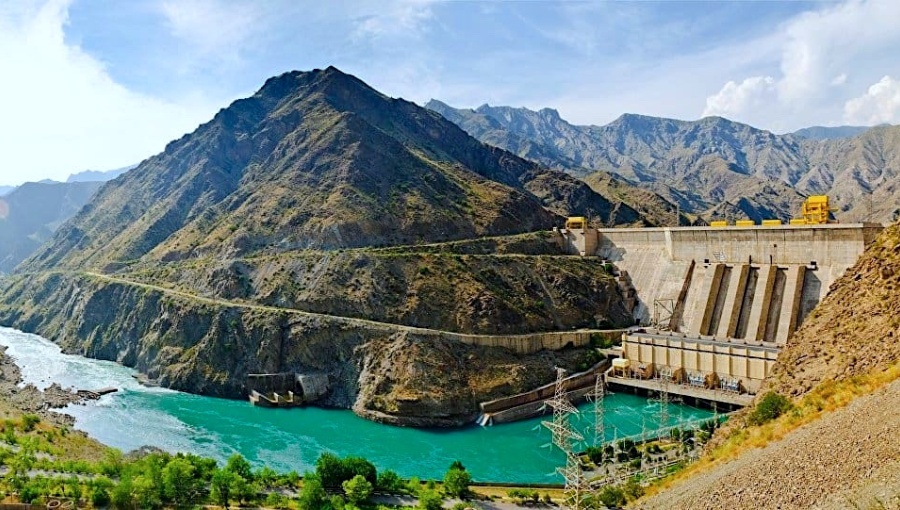
Kyrgyzstan, Tajikistan and to a lesser extent Uzbekistan see hydro expansions as the answer in fully meeting electricity demand from their own resources (Credit: Kyrgyz presidency).
Kyrgyz President Sadyr Japarov said in late October 2025 that Kyrgyzstan would achieve energy independence in about 2.5 years, mentioning that the country is also building 40 small and medium sized HPPs and a thermal power plant (TPP) near the Kara-Keche coal field.
Rysbekov also observed that several solar power stations are planned for, or are already, under construction, notably one at Issyk-Kul that will generate some 300 MW.
Kyrgyz officials are predicting that Kyrgyzstan will quickly move from being an electricity importer to an electricity exporter once all these projects are completed.
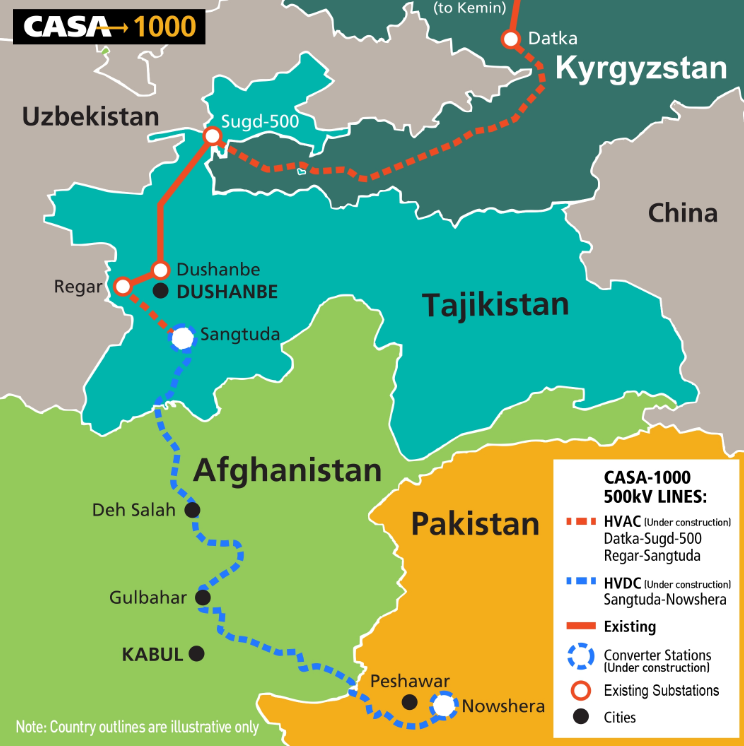
An extension of the power independence ambition is seen in the form of the CASA-1000 project that is to export surplus Tajik and Kyrgyz hydropower to Afghanistan and Pakistan (Credit: CASA-1000).
For now, Rysbekov reminded, Kyrgyzstan is still set to purchase almost 5bn kWh of imported electricity this year.
He did not mention the addition of small modular reactors (SMRs) for nuclear power, but Kyrgyz officials have been in talks with Russian atomic energy company Rosatom about possibly building a small or medium sized NPP in the small country.
Electricity self-sufficiency in 2029 would be an immense relief to Kyrgyzstan’s people. In 2023, Kyrgyz authorities declared an emergency situation in the power sector that would extend until the end of 2026. That emergency situation has already been extended.
More recently, Kyrgyz authorities in November 2025 ordered police and local officials to ensure the shutting down of businesses, with a few exceptions, at 22:00 and state bodies were told to turn off all electricity in their buildings from 18:00 to 06:00.
Last week, on July 16, there was a massive blackout that hit cities and towns in three northern provinces, including areas of the capital, Bishkek. Officials said it was caused by heightened use of electricity during a heatwave.
Tajikistan's big card remains Rogun
In an address to Tajikistan’s parliament on December 18, 2025, President Emomali Rahmon said that by October 2027 his country would be able to “forget about electricity restrictions.”
Tajik authorities stated in 2022 that electricity had reached 100% of the population.
That appears to be true, but omits mentioning that, especially during winter, many households, particularly in rural areas, often have only two to three hours of electricity per day. Power rationing has been part of life in Tajikistan since the country became independent.
In his address, Rahmon credited the contribution of solar power projects and the expected launch of the third unit at the Rogun HPP megaproject in 2027 as being key to Tajikistan’s electricity independence.
Rahmon did not mention that at the end of November, less than three weeks before his speech on an end to electricity rationing, state electricity company Barki Tojik was urging citizens to conserve power.
Barki Tojik said the water level in the reservoir at Nurek HPP was critically low, approaching the point where the HPP’s turbines would shut down. Nurek HPP supplies some 70% of Tajikistan’s domestically-produced electricity.
Nuclear to consolidate power self-sufficiency in Uzbekistan
On May 7, Uzbekistan’s Deputy Prime Minister Jamshid Hojayev said “in recent years” Uzbekistan had progressed from importing to exporting electricity.
During that same vague period, electricity generation in Uzbekistan jumped from 60bn to 85bn kWh, and Hojayev pointed out solar and wind power had contributed some 6,000 MW. He said from now on, “green” energy sources would provide an average of 4,000 MW of additional electricity every year.
Rosatom is also set to build a nuclear power facility in Uzbekistan. The plan is for it to have two VVER-1000 and two RITM-200 reactors to generate 2,100 MW. The first small reactor is due to be commissioned in 2029.
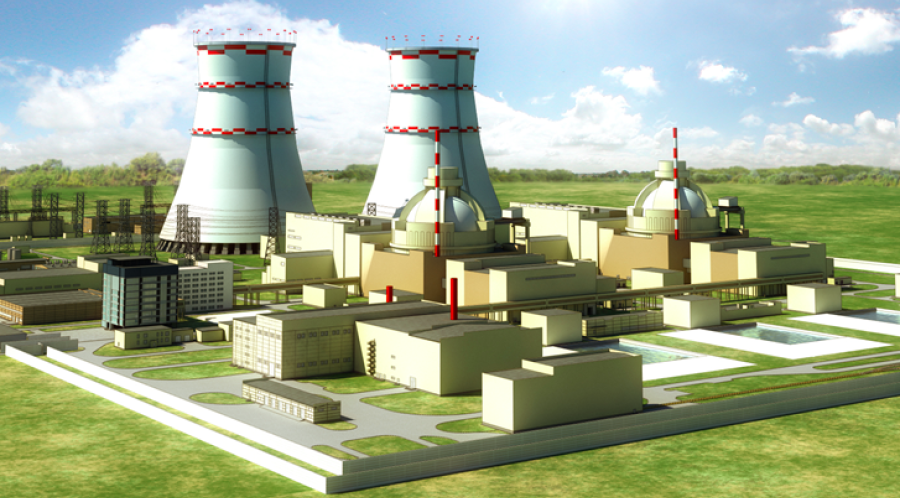
Uzbekistan is buying into the idea that nuclear power produced by small modular reactors (SMR) are important to a future of self-reliance in electricity generation (Credit: Rosatom).
Reports on the NPP say that it will provide about 15% of Uzbekistan’s power needs, though according to Hojayev the country already enjoys electricity self-sufficiency.
Uzbekistan will certainly need additional electricity to provide for a rapidly growing population and an expanding industrial sector.
There was a recorded example of the country’s increasing demand for power on July 13, when the previous daily record for summertime use of electricity – 272.6 million kWh consumed on July 18, 2025 – was broken with gauged consumption of 278.6 million kWh. That record actually lasted just one day. On July 14, usage climbed to 284mn kWh, a total that even beat the wintertime daily usage record of 283mn kWh, set on January 24 this year.
Threshold of a milestone
Since the early says of independence, Central Asian leaders have been talking about the importance of electricity independence. It was outlined as a clear goal, but as the decades passed, it sometimes seemed to fade into something like an unattainable dream.
Now, after three and a half decades, four Central Asian countries are on the threshold of achieving that dreamed-of self-sufficiency in electricity generation.
Even once the ambition is realised, there will still be much work to do since many of the power stations and transmission systems date back to Soviet times, some even from Stalin’s time, and they will need to be taken out of operation in the coming years.
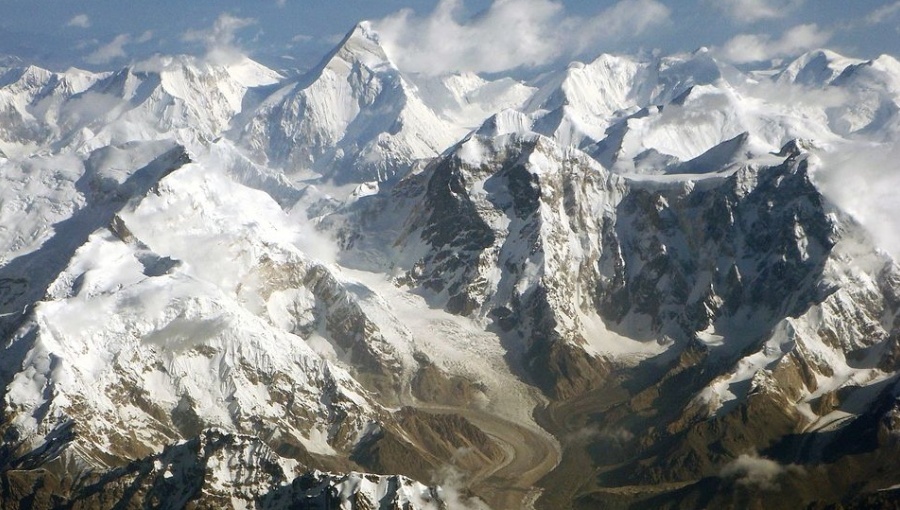
In the risks column, for Central Asia the glacier melt that is accelerating with climate change looms large, particularly for hydro planners (Credit: Chen Zhao, cc-by-sa 2.0).
Kyrgyzstan and Tajikistan, meanwhile, are relying on their hydropower potential to reach energy independence and HPPs are playing a huge role in increasing their electricity output. But Central Asia is one the regions of the world that is most affected by climate change. Reduced precipitation and melting glaciers are some stark indications of the climate dilemma and they raise real questions about the future of hydropower in Central Asia.
Still, electricity independence is a big step, long sought. It will be an achievement delivered by more than a generation of patient work.
Unlock premium news, Start your free trial today.


