
Latvia moves to deport journalist over Kremlin narrative claims


Latvia has initiated deportation proceedings against Russian-born journalist and IntelliNews columnist Leonid Ragozin accusing him of propagating a Kremlin narrative after he gave an outspoken interview to US blogger Anton Mate in a move widely condemned by the press corps covering Russia as an attack on the freedom of speech.
On October 6, Latvian Foreign Minister Baiba Braže announced he was launching proceedings to declare “another Russian citizen” persona non grata that would lead to his expulsion from Latvia if carried out after Ragozin has lived in exile in the country for more than decade. The minister cited findings from “competent authorities” as the legal basis, although he gave no specific details of Ragozin’s misdemeanours.
The announcement provoked widespread comment on social media with many colleagues decrying the decision as bullying of a journalist that has been critical of the EU policies to support Ukraine but defended Ragozin’s right to make those criticism as part of the regular journalistic holding the powers that be to account when they follow questionable policies.
“Huge thanks to everyone who offered support - it means a lot to me and I do need it. Unable to answer most messages and comment requests at the moment, but I’ll try over some time,” Ragozin said in a social media post after the first wave of reactions swept the net. “Shame on those who react to it with a sadistic glee.”
At the same time there was a vitriolic reaction from the social media public that follow the Russian/Ukraine story, abusing and insulting Ragozin, who is a controversial figure in some quarters as he has refused to toe the narrative “Ukraine is winning the war” and seen by many as a stooge promoting “Kremlin talking points.”
The scandal has highlighted the emotional nature of the coverage of the Ukraine conflict and how partisan it has become. May of those defending Ragozin claim the threat of being made PNG in Latvia is little more than a reaction to him saying “the wrong things.”
The nature of the attacks by activists from the online movement NAFO and aligned users—including politicians, journalists, and researchers—have labelled Ragozin pro-Russian, despite his long and distinguished career; formerly a reporter for the BBC, he has also worked for Russian Newsweek, Politico, Bloomberg and is a regular columnist for Al Jazeera and IntelliNews. In addition, he has been contributing to the Lonely Planet as a travel writer for years and has just returned from an assignment in Johannesburg.
Following the outbreak of the war, he has regularly published articles criticizing the European political establishment, pointing out parallels between the securitization of the public sphere in the EU and censorship in Russia. He is also an expert on the integration of the far-right elements into the Ukrainian military and regularly condemns the open glorification of Nazis amongst some Armed Forces of Ukraine (AFU) division, which is highly unpopular given the Kremlin demands for the “denazification” of the Ukrainian government. This reporting has been meticulous and objective and has been echoed in other respectable titles, such as the Financial Times, which has also featured stories on openly neo-fascist elements in divisions like the Avoz fighters.
“I don’t know what the Latvian authorities are alleging Leonid has done to deserve this but, as a former college at the BBC and more recently an occasional reader of his analysis, I cannot see any justification,” Gabriel Gatehouse said on social media, formerly the International Editor of BBC Newsnight and a co-host of BBC Sounds’ Ukrainecast. “He is an astute observer of the war. Alongside his well-documented opposition to the regime in Russia and its actions in Ukraine, he is also critical of the Ukrainian government and of western governments that support Kyiv. Disagree with his analysis by all means. But declaring someone persona non grata for the crime of criticism is the kind of thing you’d expect from Moscow, not an EU country.”
Ragozin has consistently advocated prioritizing the diplomatic track, arguing that the military course has not only reached a dead end but is also fostering dangerous transformations within European societies, which are militarising and swinging to the far-right end of the political spectrum as a result of the conflict.
As for the Pro-Russia claims, Ragozin left Russia following the annexation of the Crimea and remains in self-imposed exile. He participated in the anti-government demonstrations on Bolotnaya square in 2011, following a more blatant than usual fixing of the Duma elections that year and was arrested by Russian riot police for participating in what were the largest mass protests against the Putin regime in the president’s quarter of century in power.
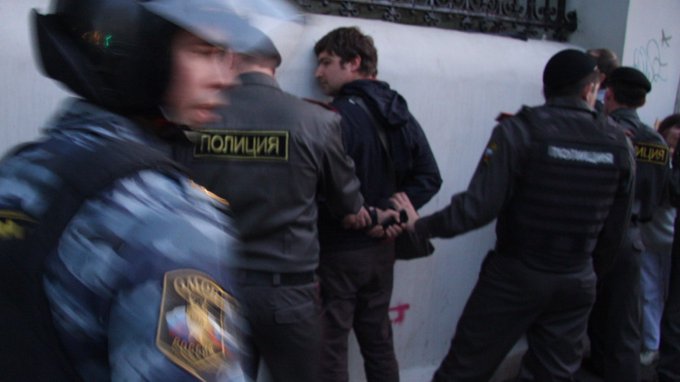
In 2011 Ragozin attended the anti-government demonstrations at the Bolotnaya park across the river from the Kremlin where he was arrested by police.
Should he return to Russia he would face censure and possible arrest due to uncompromising and critical stance on Russia’s war on Ukraine, where it is now illegal to even use the word “war” in articles about the conflict.
“What I am observing at the moment is a threat of very severe extrajudicial punishment for speaking my mind and providing original opinions and analysis,” Ragozin said, who told IntelliNews that he is now waiting to see how this plays out and if the authorities follow through on their threat to bar him from Latvia.
Ragozin pointed out the option of making him persona non grata status is, “the desire to deny me justice in the court system where the case - as senior politicians involved in attacking openly admit - won’t hold water. This is why I interpret the situation as an instance of political persecution.”
PNGing a foreign national is an administrative act, not a legal act that can be challenged in court, and leaves the subject of the ban helpless to defend themselves if they feel wrongly accused.
“The threat is accompanied with a character assassination campaign involving far right infowar and fake news outfits which deliberately distort my views on the conflict,” Ragozin said in his defence. “The goal of the attack is to destroy my life and to put a gag on me as a notable voice in public debate on the Russo-Ukrainian war.”
Attack on press freedoms
Many of Ragozin’s supporters made it plain that they don’t always agree with his analysis of the Ukraine, conflict, but passionately defended his right to offer his opinions as he is quietly clearly a profession, responsible and expert journalist.
“I have known Leonid for many years, and he is one of the most astute observers of Russia in the conflict with Ukraine,” Ben Aris, the editor of IntelliNews said in a social media post. “He is not a pro-Russian – a label that gets banded around too easily and slapped on anyone who says anything that the pro-Ukraine narrative drivers don’t want to hear.”
As an example of his willingness to buck the trend, a takedown of the recent “turning point” rhetorical hype in the run up to the Ankara Nato summit published in IntelliNews, was cutting, incisive and has been subsequently been entirely vindicated. “It’s exactly this sort of critical thinking that’s needed if an end to the conflict is to be found. Not PNGs if a journo you don’t like goes off message,” said Aris.
“This is bullying of accredited and certified profession journalist with a long standing and prestigious career. There are too many people who have no idea what they’re talking about when it comes to the conflict and Leonid does not belong to that camp,” Aris added.
Many members of the press corps and analysts have condemned the Latvian announcement, saying it will be a black stain on its democratic credentials and ironically plays into the Kremlin’s hands as it validates Putin’s arguments about western double standards and the proxy war Nato is waging against Russia when the West is supposed to stand for values, like freedom of speech, not lower itself to petty bullying of critical journalists.
“Latvia’s commitment to freedom of speech appears to be a joke,” said Volodymyr Ishchenko in a post supporting Ragozin, a Ukrainian sociologist and political analyst based in Berlin, specialising in protest movements, revolutions, nationalism, the Ukrainian left and right, Euromaidan, and the Russia-Ukraine war. “All Leonid did was write balanced takes on Ukraine and Russia — usually far more thoughtful than those of the average, even credentialed, commentator on the war.”
Unlock premium news, Start your free trial today.


