
Israel saw a Red Sea security dividend in recognising Somaliland. Then the Houthis captured Perim.


Israel’s recognition in December 2025 of the breakaway republic of Somaliland raised the prospect of a strategic dividend: access to the port city of Berbera for intelligence-gathering and operations against Yemen’s Houthis. The Iran-backed rebels’ capture of Perim and other strategic Red Sea islands in September provides an occasion to examine whether any intelligence, logistical or military capability arising from Israel’s relationship with Somaliland had become publicly observable at Berbera.
The two governments have signed a Strategic Cooperation Declaration, and Israeli Defence Minister Israel Katz has acknowledged years of undisclosed cooperation.
The United Arab Emirates (UAE) maintains an expansive commercial and military presence in Berbera, the site of the reported Israeli activity. Did Israel already have a military foothold at the port city when the Houthis captured Perim? If so, what operational capability did it have there?
“Those who know do not speak. Those who speak do not know,” attributed to the ancient Chinese philosopher Lao Tzu, is a common intelligence-world aphorism. Some in a position to know are speaking. Conflicting claims continue to circulate.
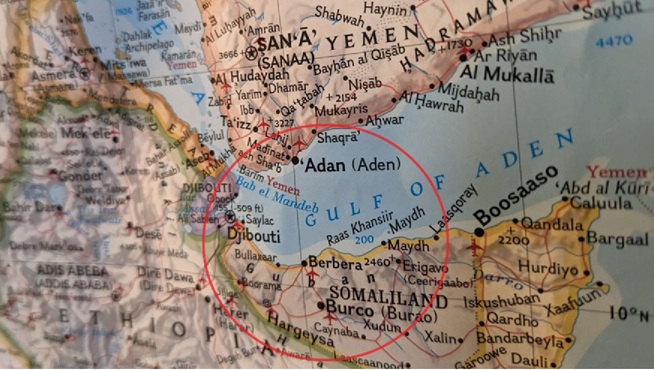
Berbera lies about 300km in a straight line from Perim, which sits inside the Bab el-Mandeb Strait – a key shipping chokepoint. Its position on the Gulf of Aden gives the port, and the roughly 4km runway at its airport, potential value for Israeli surveillance, logistics and long-range military operations. Israeli interests aside, whether the relationship has left Somaliland more secure or more exposed is an open question.
The strategic logic predates the latest Houthi advance. The Critical Threats Project (CTP) at the American Enterprise Institute has assessed that Israel’s recognition of Somaliland was partly aimed at boosting Israeli strategic depth against the Houthis, as IntelliNews reported in March. The CTP has also assessed that the UAE helped facilitate Israel’s recognition of the territory.
Ties deepen beyond recognition
Israel remains the only UN member state to have recognised the territory of Somaliland since it declared independence from Somalia in 1991. Ties have since deepened beyond the controversial act of recognition – condemned by Somalia as a violation of its sovereignty and territorial integrity – with Somaliland President Abdirahman Mohamed Abdullahi Irro’s state visit to Israel in June, when Somaliland opened an embassy in Jerusalem.
Somaliland’s presidency subsequently announced that Irro and Israeli Prime Minister Benjamin Netanyahu had signed a Strategic Cooperation Declaration aimed at deepening the partnership. The breakaway republic’s foreign ministry said the wider visit covered security cooperation alongside diplomacy, trade, investment, technology, agriculture and development.
On June 17, during the visit, Katz publicly acknowledged a less visible dimension to the relationship. “For many years we have cooperated under the radar in a series of activities that will remain secret,” the Israeli defence minister said, adding that his country intended to take security cooperation to “new heights”.
On the Somaliland side, Liban Yusuf Osman, a former deputy foreign minister, told IntelliNews in an interview that ties with Israel predated recognition and in fact went back to 1991, with successive administrations maintaining informal engagement.
Claims of a Berbera foothold, and denials
AFP reported in March that Israeli forces might already be present at the Berbera military base. In May, retired Brigadier General Amir Avivi, told the Israel Defense and Security Forum, which he founded, that his country’s navy had been operating in the area, the French news agency reported. “Israel is building capabilities in Somaliland... we have a base now,” Avivi said, without providing any public evidence to support the claim.
Subsequent reporting has pointed the same way. Drop Site News reported in June that Israel had established an intelligence presence at Berbera International Airport, citing Somali officials, a Somaliland official and a European Union security official. Separately that same month, CNN reported, citing a source familiar with the matter, that Somaliland had provided Israel with an additional military position potentially usable as a stopover for aircraft flying towards Iran.
None of these accounts established that Berbera was being used for operations against the Houthis, and Avivi’s claim of an existing Israeli base has not been confirmed by his government.
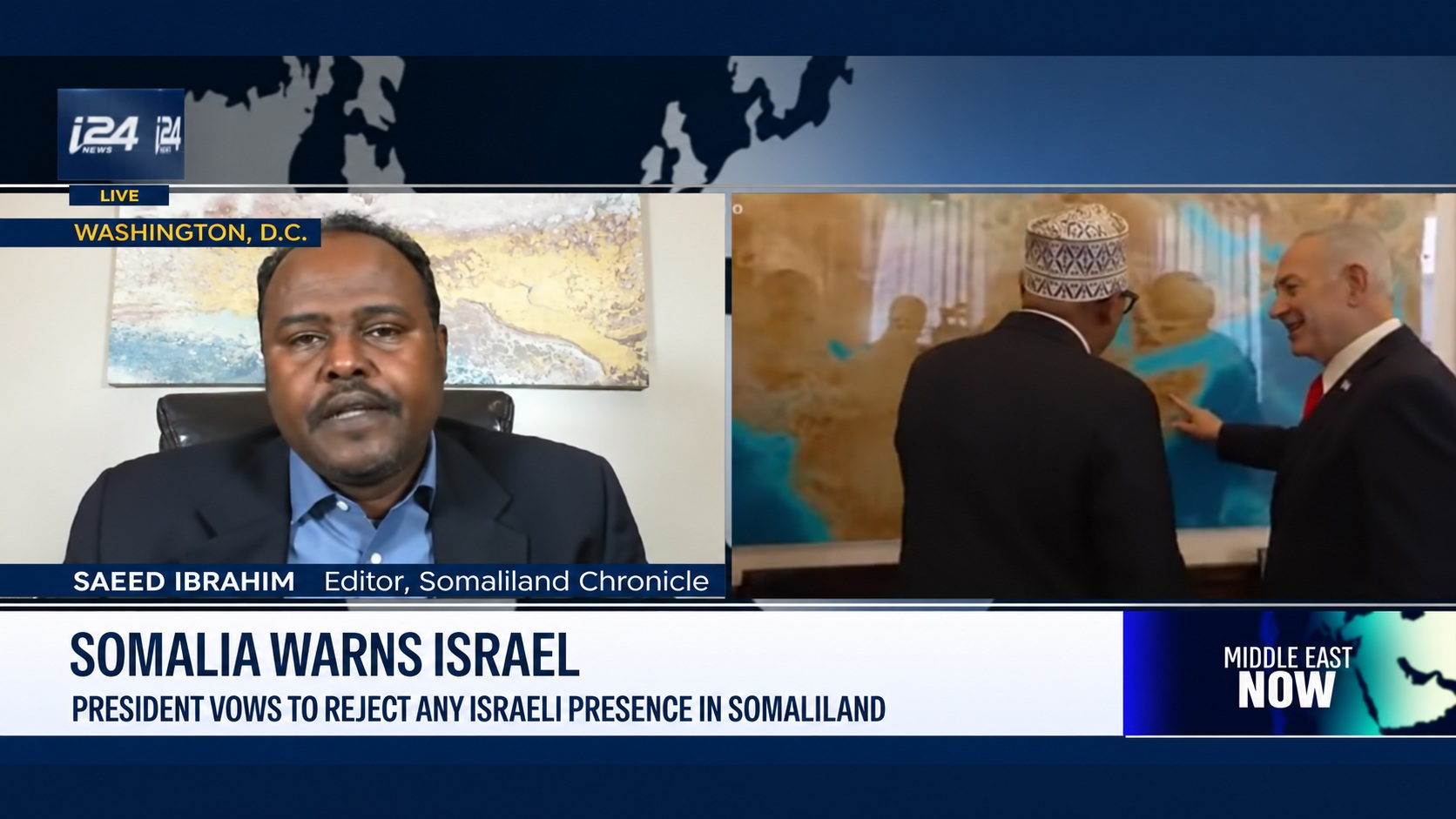
On the record, Somaliland has consistently denied hosting an existing Israeli base, although its account of security cooperation is disputed. On June 17, Reuters quoted Defence Minister Mohamed Yusuf Ali as saying that Israel was helping train Somaliland’s police and armed forces. But he insisted that there was no Israeli military presence and no negotiations over establishing a base, dismissing such reports as “rumours”. Later the same day, Somaliland’s defence ministry said Ali had not given any interview, statement or comment to Reuters or any other media outlet regarding Somaliland-Israel cooperation, as Al Arabiya English reported.
Somaliland President Irro has also denied any existing presence – while leaving the door open to a future one. In an August interview with The Economist, he said there was no Israeli or American presence at that point but that Hargeisa would be prepared to offer both countries access to bases at the port of Berbera if they were interested, as reported by Israel Hayom.
Whether Somaliland would allow operations against the Houthis is a separate question. In March, two Somaliland officials speaking on condition of anonymity told Bloomberg that the territory would allow Israel to gather intelligence on and conduct operations against the Houthis.
In September, however, Irro denied in an interview with The Jerusalem Post that Somaliland had discussed allowing Israel to use its territory or airspace for operations against the Houthis. “As a country, Somaliland, we don’t have any conflict with the Houthis at the moment,” he said. “We haven’t discussed possible Israeli operations against them.”
A future base is a third matter, and here officials have been more open. In January, foreign ministry official Deqa Qasim told Israel’s Channel 12 that an Israeli base was “on the table and being discussed”.
In the same Jerusalem Post interview, Irro said he expected a foreign presence “maybe in the near future”, and he told Yedioth Ahronoth that an Israeli presence would provide deterrence and that he did not rule out Israel or the United States establishing one.
Berbera build-out adds to uncertainty
The infrastructure at Berbera offers no clearer answer.
Le Monde reported in April, in an investigation published in English in July, that satellite imagery showed extensive construction at Berbera airport, including at least 18 trenches that an unnamed European security source assessed as possible ammunition stores or fuel tanks.
The French newspaper said the work was being carried out by the UAE under its longstanding defence relationship with Somaliland. An airport employee told Le Monde that the facilities were intended for Israeli and US partners, but the paper said it could not determine which armed forces would eventually use them. Citing an East Africa-based security source, Le Monde also reported that Israeli military personnel were already visiting the base and could use it as a launch point for operations against Yemen.
Mogadishu draws the line at Israel
Somalia, which claims the territory, draws a distinction between the United States and Israel. In March 2025, President Hassan Sheikh Mohamud offered Washington exclusive operational control of strategic air bases and ports, including those at Berbera, according to a letter seen by Reuters. Two senior Somali officials told the Somali Report in July that Somalia had no objection to military cooperation with Washington – but would never accept the use of its territory by Israel.
Mogadishu rejects the wider relationship, maintaining that Somaliland remains part of its sovereign territory and rejecting agreements concluded by Hargeisa without the federal government’s approval. Prime Minister Hamza Abdi Barre said in an interview aired on September 26 that Mogadishu would not accept an Israeli base in Somaliland. “We will not allow them to set foot there,” he said, as reported by Dawan Media.
Mohamud went further on October 3, telling Al Jazeera that Israel planned to establish a naval base at Berbera and use the city’s airport, and that Somalia would not accept an Israeli presence “under any circumstances”.
Somaliland’s foreign ministry rejected the remarks the same day, saying “the Somalian Government has no authority to determine Somaliland’s foreign relations or speak on behalf of its people”, and that claims Berbera could be used as a platform for attacks on other countries were unfounded, Hiiraan Online reported. The ministry said its relations with Israel “reflect the sovereign decisions of two states” and were intended to advance peaceful cooperation, development and regional stability.
(c) Deutsche Welle
What the Houthi advance reveals – and leaves unresolved
There has been no public disclosure of any Israeli mission to defend the Yemeni government-held islands, or of any authorisation to launch anti-Houthi operations from Somaliland.
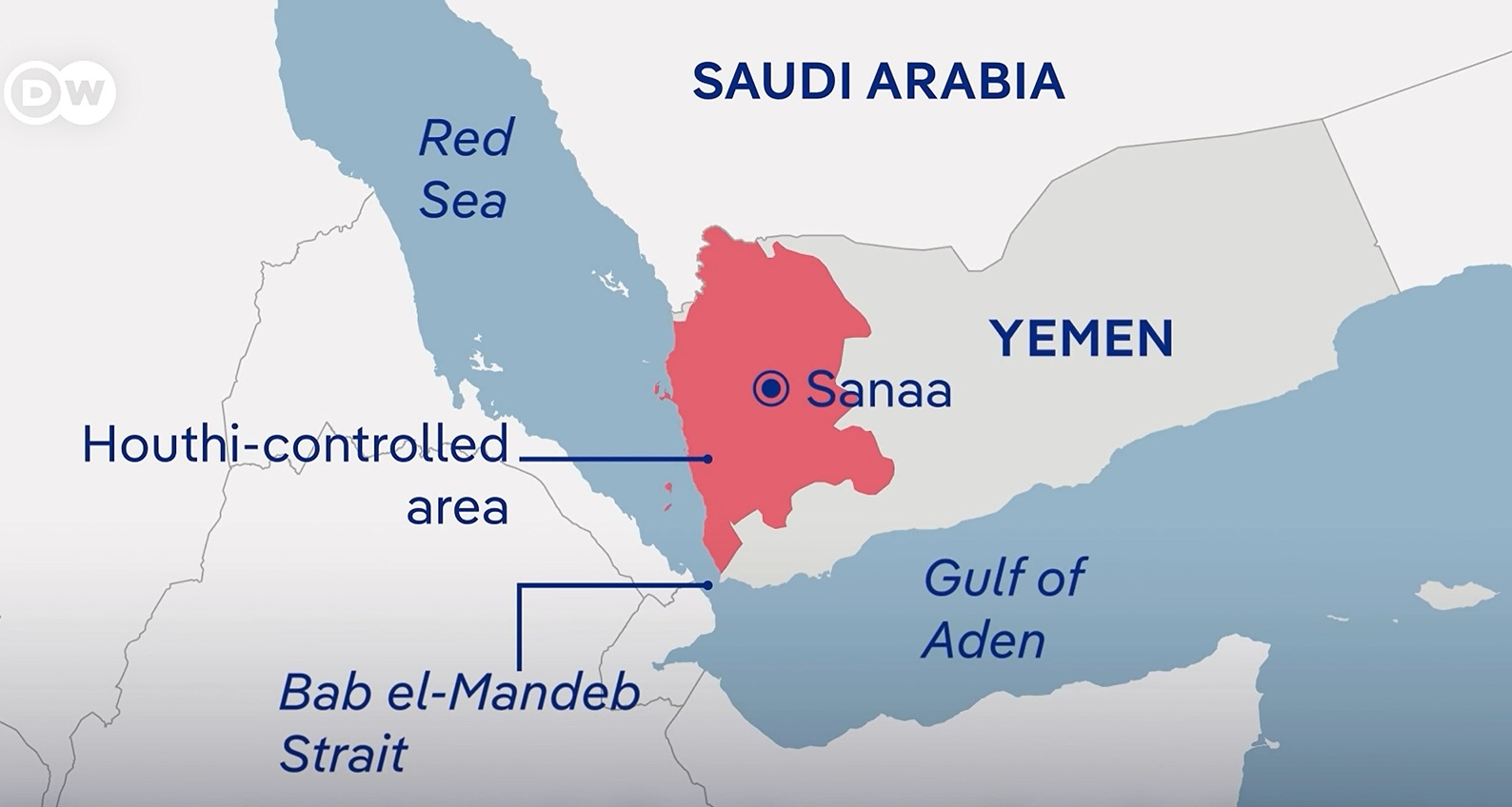
The ground offensive last month came after a summer of mounting pressure on Saudi interests in the Red Sea, including Houthi attacks on Saudi tankers and the blockade declared in July. The Houthis captured the Red Sea port of Mokha on September 10 and reached Perim the following day after Yemeni government forces withdrew. They also seized the Greater and Lesser Hanish islands farther north.
Former Royal Navy commander Tom Sharpe argued in commentary republished by the Australian Naval Institute on September 20 that Perim’s capture did not fundamentally change shipping’s exposure to Houthi missiles and drones launched from the mainland. He argued that holding the island nevertheless improved the rebels’ observation, command and intelligence capabilities and removed a position from which Yemeni government forces could interfere.
Even if Israel had some form of intelligence or logistical foothold at Berbera, the circumstances of the offensive suggest that proximity alone would not necessarily have changed the outcome. Camp Lemonnier, the US base in Djibouti, lies less than 160km (100 miles) from the Yemeni coast and supports approximately 4,000 US, joint and allied military and civilian personnel and contractors, according to the US Navy. Its location, without any publicly assigned role in defending Yemeni government positions, illustrates the distinction between proximity and a defensive mission. Any assessment of an Israeli foothold at Berbera likewise requires evidence of its capabilities, authorisation and assigned role.
A diplomat cited by Reuters said the Houthis had quietly assembled about 100,000 fighters, vastly outnumbering the forces facing them, and that “everyone, including the Saudis, missed this build-up”. A spokesman for the government-aligned National Resistance put the Houthi force at about 75,000, the Associated Press reported.
Citing senior Western, regional and Yemeni officials, Reuters reported that the breakthrough reflected splits among the Yemeni factions opposing the Houthis, a Saudi-led command structure that had taken over from Emirati oversight and had not been tested, thin Saudi air cover and a failure to gauge the scale of Houthi preparations. Chatham House fellow Neil Quilliam described the offensive as a glaring intelligence failure.
The Associated Press subsequently reported that advisers from Iran’s Islamic Revolutionary Guard Corps had assisted the operation, including with tactical planning, command and control, communications analysis and satellite intelligence.
Those factors point to failures of force balance, command cohesion and intelligence across the Yemeni theatre rather than a simple absence of a nearby foreign base.
Israel’s response: naval alert and a reported channel through Washington
Israel’s publicly reported military response was naval. Ynet reported on September 13 that navy commander Vice-Admiral Eyal Harel had increased readiness and reinforced naval forces as the security establishment assessed the implications of the Houthi advance, while Israel was not expected to intervene unless directly attacked.
Saudi Crown Prince Mohammed bin Salman approached Israel indirectly through US Central Command (CENTCOM), seeking intelligence and other assistance to stop the Houthis blocking Bab el-Mandeb, Israel Hayom reported on September 13, citing diplomatic officials in the region. Regional diplomatic and security officials later told the newspaper that contacts were taking place through CENTCOM and concerned possible intelligence assistance against Houthi attacks. The reporting identifies CENTCOM as the intermediary but does not establish whether any of the assistance involved facilities or personnel in Somaliland.
Offensive raises the stakes around Bab el-Mandeb
After Mokha and Perim fell, the Houthis said Saudi warplanes had carried out 58 strikes across six provinces in the 24 hours to September 13, a claim Riyadh did not confirm, as IntelliNews reported.
A planned Saudi-backed offensive against the Houthis could draw on more than 100,000 Yemeni troops, Reuters reported on October 2, with the size of the force depending on whether Riyadh opted for a limited coastal attack or a wider multi-front campaign. One Western diplomat told the news agency that Washington was providing military advisers and intelligence to support Saudi air operations. At the time, Saudi and Yemeni officials, the Houthis and the US military had not commented publicly on the reported plans.
Ali Shihabi, a Saudi political analyst close to government thinking, told Reuters that the success of any operation would depend greatly on the performance of local Yemeni forces, whose divisions contributed to September’s collapse.
Rashad al-Alimi, the Saudi-backed head of Yemen’s Presidential Leadership Council, announced on October 4 the start of military operations to retake the remaining territory held by the Houthis and restore state authority across the country, Reuters reported. The Saudi-led coalition pledged its full support for the operation the same day, CNN reported. Military sources told Reuters the same day that the Houthis had made further gains near Taiz and were advancing towards the last route linking the city with Aden. AFP cited four security sources as saying the road had already been cut, with three Yemeni military sources confirming that the Houthis now surrounded the city, and the Houthis claimed the same day to have taken the highway, CNN reported.
The commercial stakes around the strait are already substantial. Saudi Arabia shifted much of its crude exports to the Red Sea port of Yanbu earlier this year because of disruption around the Strait of Hormuz caused by the Iran war. Yanbu exported about 4.1mn barrels per day (bpd) in June, according to Kpler data.
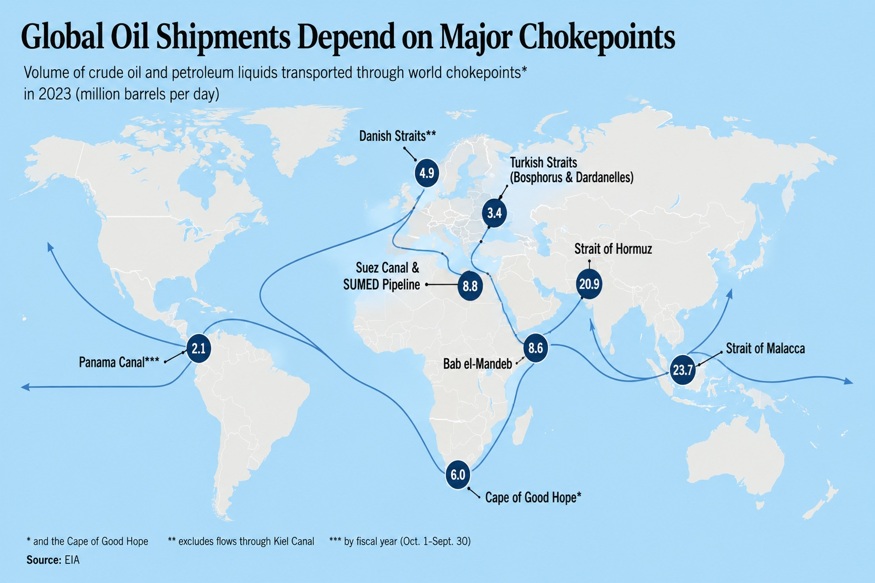
For Yanbu cargoes heading to Asia, Bab el-Mandeb remains the direct route south, but the Houthis declared a blockade of Saudi-linked shipping there in July. Tanker operators avoiding the strait have sent some Asia-bound cargoes north through the Suez Canal and around the Cape of Good Hope, S&P Global said. Kpler estimated in March that a Bab el-Mandeb disruption could lengthen a Yanbu–South Korea voyage from 24 to 54 days through rerouting via Suez and the Cape of Good Hope.
Crude and condensate flows through Bab el-Mandeb fell to 1.5mn bpd in August from 3.14mn bpd in July, according to S&P Global Commodities at Sea data.
The Yanbu route was itself then disrupted: an attack on the East-West Pipeline on September 10 halted Yanbu loadings until late September, according to Kpler, and confirmed Saudi crude crossing Hormuz nearly quadrupled to 2.8mn bpd in the first 28 days of September from 0.7mn bpd in August.
Somaliland’s strategic value also brings risk
The Houthi offensive of September gives fresh relevance to the question of an Israeli foothold in Somaliland – whether already existing or planned – because closer ties with Israel may have exposed the territory to threats. The Horn of Africa and the Red Sea corridor “share a dense web of military, political and economic interactions that enable crises on one shore to quickly affect the other”, political scientist Federico Donelli of the University of Trieste wrote earlier this year in The Conversation.
Houthi leader Abdul Malik al-Houthi warned on December 28, two days after Israel recognised Somaliland, that any Israeli presence there would be regarded as a “military target”.
The risk was acknowledged in Somaliland at the time. “Recognition brings visibility, and with it visibility brings vulnerability,” Osman, the former deputy foreign minister, wrote in a January commentary for IntelliNews, warning that closer ties could make the territory a target for regional actors hostile to Israel. He argued that Somaliland’s position near Bab el-Mandeb was central to the partnership’s logic, offering Israel improved maritime awareness and a wider regional footprint.
Liam Karr of the CTP wrote in March that the Houthis could target Emirati or Israeli military positions in Somaliland as part of a Red Sea attack campaign.
What the public record shows is an Israeli naval response and reported discussions about intelligence assistance through CENTCOM; no Berbera-based response has been publicly documented. The absence of a publicly documented response does not establish that no intelligence or logistical support was provided. Two questions remain open: what Israeli military and intelligence capabilities, if any, are already present at Berbera, and whether closer ties with Israel are making Somaliland more secure, more exposed to Houthi attack, or both.
Unlock premium news, Start your free trial today.


