
Iran's internet shutdown hits 182 hours following massive protests


Iran's ongoing internet blackout has exceeded 182 hours of continuous disruption, surpassing the core duration of the 2019 shutdown, according to NetBlocks' monitoring data.
Most Iranian government websites still exist and function over the "National Information Network" or local intranet, but foreign networks, users will only reliably see stubs or gated front pages for a handful of top‑level portals and state media mirrors, with the bulk of .ir government content effectively dark to the outside world at present.
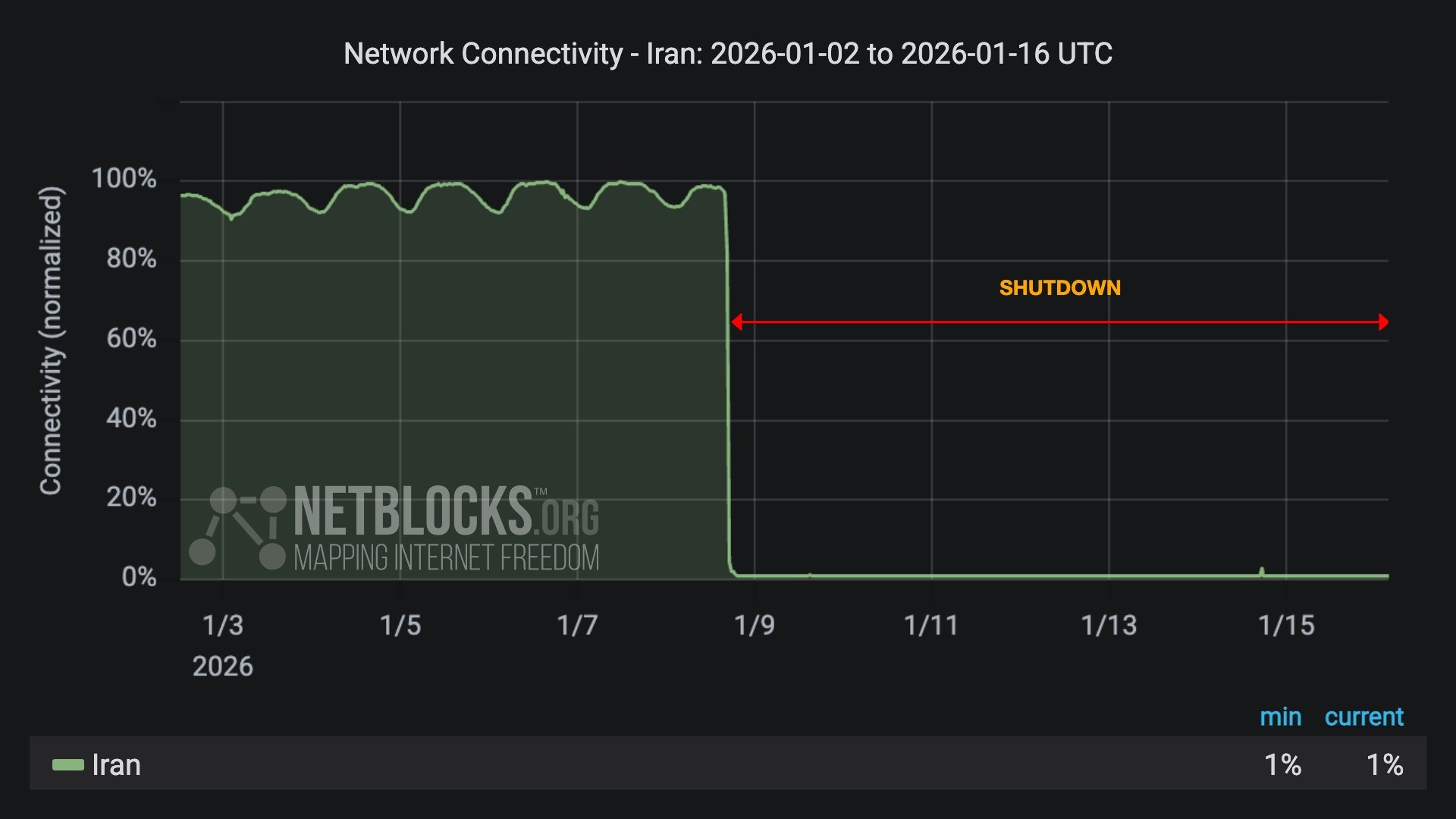
The nationwide connectivity cut commenced on January 8, following twelve days of nationwide protests. Following the government’s internet crackdown, protests continued to swell across major cities, including Astara, Shiraz, Ketar, Isfahan, and the capital of Tehran.
On January 12, Iranian security forces reportedly escalated their crackdown by conducting house-to-house searches to confiscate satellite dishes and Starlink internet equipment, targeting the limited technological resources available to citizens for accessing external communications.
This prolonged blackout showcases the Iranian state's willingness to impose comprehensive digital isolation to suppress domestic unrest, even as it risks further alienating the population and attracting international condemnation.
According to calls attempted by bne IntelliNews on January 14, Iranian residents were entirely unreachable, though several reports indicate one-way calls to foreign telephone numbers remained possible.
Social messaging applications have been completely disabled, while Iranian newspapers face mixed outcomes: some remain entirely disconnected, while others have maintained a limited online presence through government-controlled internet networks.
The US Agency for Global Media has responded by expanding its broadcasting capabilities into Iran through a partnership with Radio Free Europe/Radio Liberty, complementing private sector efforts like Starlink to maintain information flows into the country.
According to reliable sources who recently left Iran, the Iranian government, using Russian scrambling technology imported from Belarus earlier in December have succesfully managed to scramble internet signals via geo-stationary satellites over Iranian cities.
One Iranian website that has managed to stay online is the state-owned Press TV, which, citing the President of Iran’s National Centre for Cyberspace, Mohammad Amin Aghamiri, said the internet blackout will continue for the "time being."
He added that the exact timeline for lifting the restrictions will be announced once authorities have completed their security assessments.
“The time to return to normal conditions will be announced in the future, and authorities must certainly brief us on security considerations,” Aqamiri said, as quoted by the IRNA news agency.
The Iranian government has kept only a few websites online, including the President of Iran's website, Masoud Pezeshkian, and government news websites, including their Arabic and English-language services.
English-language newspapers in Tehran continue to publish content, including the Tehran Times and Iran Daily, both owned by different sections of the Iranian state. However, due to the disconnection from the outside world, according to analytical data seen by IntelliNews, only a handful of readers inside Iran are seeing their content.
Unlock premium news, Start your free trial today.


