Log In

Try PRO

AD
Ben Aris in Berlin

Iran causes widespread destruction with a weekend of attacks

Iran launched a barrage of missile strikes and drone attacks on US military and high value assets across the Gulf region over the weekend, scoring many successes, as the war goes into its fourth week.
Iran causes widespread destruction with a weekend of attacks
Iran struck US military assets across the Gulf region, doing extensive damage to a number of key faciliites and weapons systems.
March 29, 2026

Iran launched a barrage of missile strikes and drone attacks on US military and high value assets across the Gulf region over the weekend, scoring many successes. As the war goes into its fourth week Iran is not backing down despite the Trump administration's efforts to kick start ceasefire negotiations.

Strikes on US military infrastructure across the Gulf since February 28 have focused on systems critical to US air defence in a deliberate effort to degrade the operational backbone of US air power.

“Look at what Iran has been hitting since February 28: radar systems, SATCOM terminals, tankers, and now an AWACS. That’s not random,” said Kelly Grieco, a senior fellow at the Stimson Center, in a post on March 28. “It’s a systematic attack on the infrastructure that makes US air power function. Iran’s running an asymmetric counter-air campaign.”

Since the start of the war, there have been 84 reported waves of attacks that have largely destroyed the 13 US bases in the region. After an initial barrage designed to deplete US and Israel’s stockpile of expensive interceptor missiles, the Iranian Revolutionary Guard Corps (IRGC) has changed tactics and is firing less, but more sophisticated, missiles that are targeting radar and other support infrastructure for the US air force in an effort to attrit its superior power.

As IntelliNews reported, it comes as the conflict in Iran has transformed from disruption to destruction that is increasingly affecting the global economy. Tehran brought the point home by sending missiles against several cities in its neighbours and there were numerous unconfirmed reports of successful missile strikes on some key US military targets, including the destruction of a US landing craft, and strategically important aircraft sitting in US Gulf bases. Kuwait, the UEA and Saudi Arabia all took the brunt of the attacks.

In addition to the attacks, Iran hit two major aluminium smelters in the UAE and Bahrain and has threatened to retaliate this week on six steel plants in the Gulf region for an Israeli strike on Iran’s biggest steel mills, Mobarakeh, Esfahan and Khuzestan, the biggest revenue earners for the country outside of the oil and gas sector.

UAE: Iran claimed it destroyed a “Ukraine-related drone warehouse” in Dubai. Khatam al-Anbiya, Iran’s highest command unit coordinating the armed force has said that “21 Ukrainians” were on site and they are “believed to have likely been killed”.

Ukrainian President Volodymyr Zelenskiy has been touring the Middle East in the last days and signed cooperation and security deals with both the Kingdom of Saudi Arabia (KSA) and Qatar, who are interested in acquiring Ukraine’s advanced drone technology.

Ukraine’s foreign ministry denied that Iran has targeted a “Ukraine-related drone warehouse” in Dubai and has labelled the claim as a “disinformation” campaign.

Bankova said last week that Ukrainian drone specialists are already working in the region and have brought down "hundreds of Iranian Shahed drones." Ukraine has deployed 201 to 228 military drone specialists to five Gulf and Middle Eastern countries: the UAE, Qatar, Saudi Arabia, Kuwait, and Jordan. Ukraine developed FPV interceptor drones that account for roughly 70% of all Shahed and the Russian-made version, Geran-2, shootdowns in Ukraine.

KSA: A US airbase in Saudi Arabia was struck, leaving American personnel wounded and damaging key military aircraft.

The Iranian attack on Prince Sultan Air Base (PSAB) in Saudi Arabia was larger than expected. Planet Labs satellite imagery from February 21 showed 43 aircraft on the PSAB tarmac, including 13 KC-135 mid-air refuelling tankers and six E-3 Sentry AWACS aircraft.

Iran struck with six ballistic missiles and 29 drones, targeting the aviation logistical support for US fighter jets. Multiple refuelling aircraft and an E-3 Sentry Airborne Warning and Control System (AWACS) surveillance aircraft that cost $270mn each were destroyed.
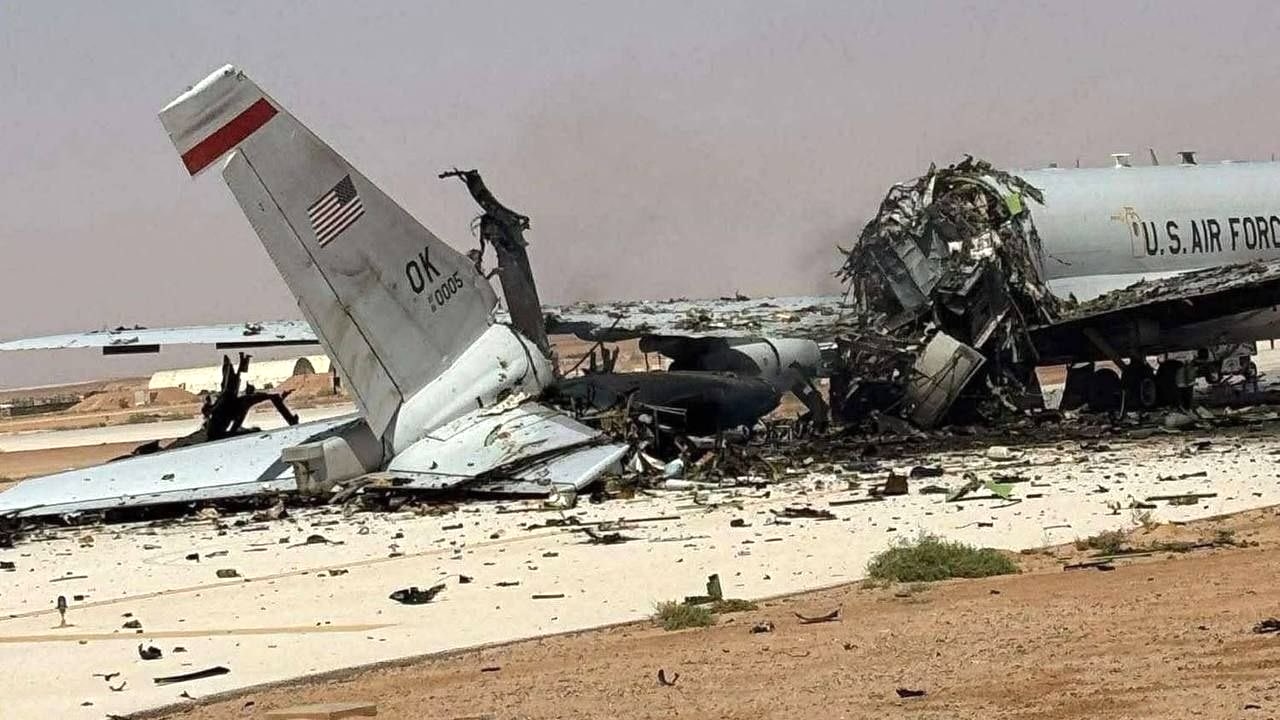
Iranian missiles destroy a E-3 Sentry Airborne Warning and Control  System (AWACS) surveillance aircraft at the Prince Sultan Air Base in Saudi Arabia, a key command and surveillance plane.

Two aerial refuelling tanker were reportedly among the planes damaged in the strike. At least 15 US troops were wounded, including five who were seriously injured.

AWACS are central to US force projection and regional monitoring capabilities, but their numbers are dwindling. The air force only has 16 left, down from 30, as multiple planes have been retired and the rest are old and largely irreplaceable. Six E-3 planes have been deployed to the Middle East, or two fifths of the US' entire inventory.

Targeting the AWACS is illustrative of the emerging Iranian tactics. These planes carry no weapons, but they are key for gathering intelligence, picking targets and coordinating strikes by multiple jet fighters. Without the AWACS, the fighter force is blinded. The IRGC took out all four of the US $1bn THAAD radar stations in the region in the first days of the war for the same reason.

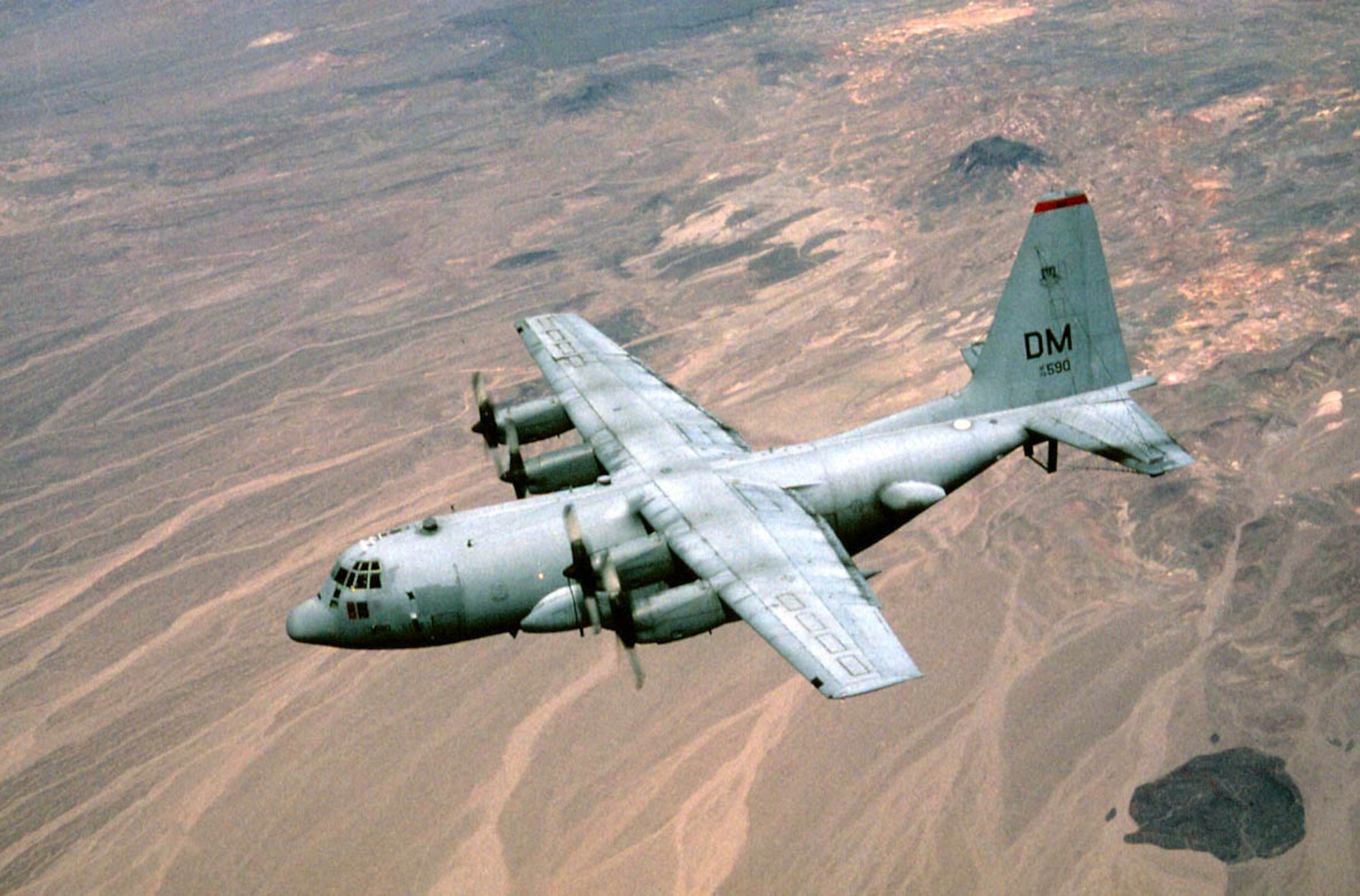
Two of the world’s last operational EC-130H Compass Call aircraft, deployed at the base were also damaged. The EC-130H is a specialised US Air Force aircraft designed for electronic warfare, specifically to disrupt and disable enemy communications and radar systems. Both aircraft require repairs to return to service, with one sustaining heavy damage.

Two US EC-130H Compass Call planes were badly damaged by IRGC strikes, a specialised US Air Force aircraft designed for electronic warfare

This strike has already destroyed three KC-135R Stratotankers, aerial refuelling planes, and damaged at least four others at Prince Sultan Air Base.

The extent of the damage and the number of casualties has not been officially confirmed by the Pentagon. Saudi Arabia hosts several US military installations that support operations across the Middle East, including air defence, intelligence gathering and logistics.

Kuwait: US forces stationed on Bubiyan Island in Kuwait, including elements of the 82nd Airborne Division, were also targeted in strikes on March 28 that left hospitals operating in emergency mode, according to reports.

Kuwait's International Airport was targeted by multiple drone attacks, causing significant damage to its radar system but no casualties, KUNA reported, citing the country’s Civil Aviation Authority.

A spokesperson for the authority said the attacks were carried out by Iran, its proxies and armed factions it supports.

Kuwait’s fire department said a separate fire that broke out in fuel tanks at the airport last week, following an earlier drone attack, had been extinguished after 58 consecutive hours of operations, KUNA reported.

The reported targeting of both refuelling and surveillance aircraft suggests a deliberate attempt to degrade operational capabilities rather than inflict solely symbolic damage.

Bahrain: Unconfirmed reports say the IRGC finished off Bahrain’s main oil refinery, Bahrain Petroleum Company (BAPCO), the kingdom’s state-owned energy group and the oldest in the region.

The facility had been “completely burned out”, according to reports, leaving little scope to immediately assess the full extent of the damage or affect repairs in the nearterm. BAPCO was previously hit on March 9 in an attack that did extensive damage.

The refinery has a processing capacity of approximately 267,000 barrels per day and plays a central role in Bahrain’s economy. Its output supports both domestic energy needs and exports, making it a key component of the country’s fiscal base.

Israel: Iran hit the Ashalim solar power station in Israel’s Negev desert, according to reports, marking a potential expansion of attacks on energy infrastructure beyond fossil fuel assets.

The Ashalim facility is one of Israel’s main renewable energy sites, combining concentrated solar power and photovoltaic generation. Located in the Negev, it plays a role in the country’s efforts to diversify its energy mix and reduce reliance on imported fuels.

Details of the extent of damage remain unclear, and there has been no immediate official confirmation from Israeli authorities or plant operators. The incident, if confirmed, would represent the first major strike on renewable generation infrastructure in the current conflict and will increase Israel’s dependence on imported gas.

US navy: Iran launched several attacks targeting US naval assets to stymie the Trump administration proposal and preparations for a possible land invasion around the coast of the Strait of Hormuz.

Six US Landing Craft Utility vessels were destroyed by Iran near Kuwait on March 28, according to initial reports, in an incident that marks a potential escalation in maritime tensions in the Gulf and raises concerns over the vulnerability of US naval logistics assets.

The vessels, identified as LCU ships used for amphibious operations, form part of a broader fleet of 32 operated by the US military. These vessels are typically deployed to transport equipment, vehicles and personnel from ship to shore, playing a key role in expeditionary operations.

Neither the Pentagon nor US Central Command has formally confirmed the destruction of the vessels. Iranian authorities have also not issued any statement.

The waters near Kuwait are strategically significant, serving as a gateway to the northern Gulf. The US Fifth Fleet is headquartered in Bahrain, tasked with safeguarding maritime security and ensuring freedom of navigation.

Iran’s Islamic Revolutionary Guard Corps also said it had captured “at least 50+ Delta Force or CENTCOM US soldiers” in the Strait of Hormuz for a second time over the weekend, according to statements circulated by Iranian state-affiliated media. The claim has not been confirmed by US officials.

The Revolutionary Guard said the personnel were detained along with “high-tech weapons”, but did not provide verifiable evidence, details of the alleged operation or the exact timing of the incident.

A spokesperson for the US Department of Defence said the Pentagon was aware of the reports but did not confirm any capture of US forces. “We are monitoring the situation and reviewing the claims,” the spokesperson said, without further elabouration.

Coalition moral falling?

There have been various reports that the morale amongst the elite troops is falling. Videos posted online show US servicemen who are unhappy with serving in the operation. According to reports some troops in the 31st MEU and on warships headed to the Middle East are filing emergency Conscientious Objector claims to stop their deployment.

Last week reports surfaced that Israeli soldiers were also close to “breaking point” as they pressed ahead in the invasion of southern Lebanon. On March 27 various unconfirmed reports posted online claimed that an entire battalion of Israeli soldiers surrendered to the Lebanese Radwan Force after getting into a serious firefight.

Unlock premium news, Start your free trial today.
Already have a PRO account?
About Us
Contact Us
Advertising
Cookie Policy
Privacy Policy

INTELLINEWS

global Emerging Market business news
