Log In

Try PRO

AD
Ben Aris in Berlin

China’s electrostate powers its grip on global metals


China’s emergence as a dominant force in industrial metals is increasingly being driven not only by its access to raw materials, but by the scale and structure of its electricity system.
China’s electrostate powers its grip on global metals
Metals and electricity are joined at the hip. And China's vast and rapidly growing generating capacity as the world's leading electrostate has given it a lead in not only metallurgy, but also manufacturing as metals are the conductors needs to transmit power.
March 30, 2026

China’s emergence as a dominant force in industrial metals is increasingly being driven not only by its access to raw materials, but by the scale and structure of its electricity system as it emerges as the world’s leading “electrostate”.

A report by Rhodium Group argues that China’s ability to generate vast quantities of cheap and reliable power has become the decisive factor underpinning its leadership in aluminium, steel and processed critical minerals. The country produces roughly one-third of the world’s electricity, a scale that allows it to sustain energy-intensive industries that would be uneconomic elsewhere.

“Electricity, rather than raw material access, is the critical input underpinning China’s metals ecosystem,” the report states, highlighting how power availability shapes the geography and competitiveness of industrial production.

The model rests on a dual-track energy system. Coal continues to provide the backbone of China’s grid, ensuring stability and predictable pricing for heavy industry, while rapid expansion in renewables — including wind, solar and hydropower — adds incremental to the supply of cheap renewable energy that is almost infinitely scalable. This combination has enabled Beijing to expand capacity without sacrificing reliability, a balance that many advanced economies have struggled to achieve.

Energy-intensive processes such as aluminium smelting and steelmaking are closely tied to this system. Aluminium production in particular is effectively a form of “solidified electricity”, and China’s power surplus has allowed it to become the world’s largest producer. The same dynamic extends to the refining of lithium, cobalt and rare earth elements, where processing — rather than extraction — accounts for the majority of value creation.

“The country’s power system and metals sector are deeply intertwined, with electricity pricing and availability directly shaping global competitiveness,” the report notes.

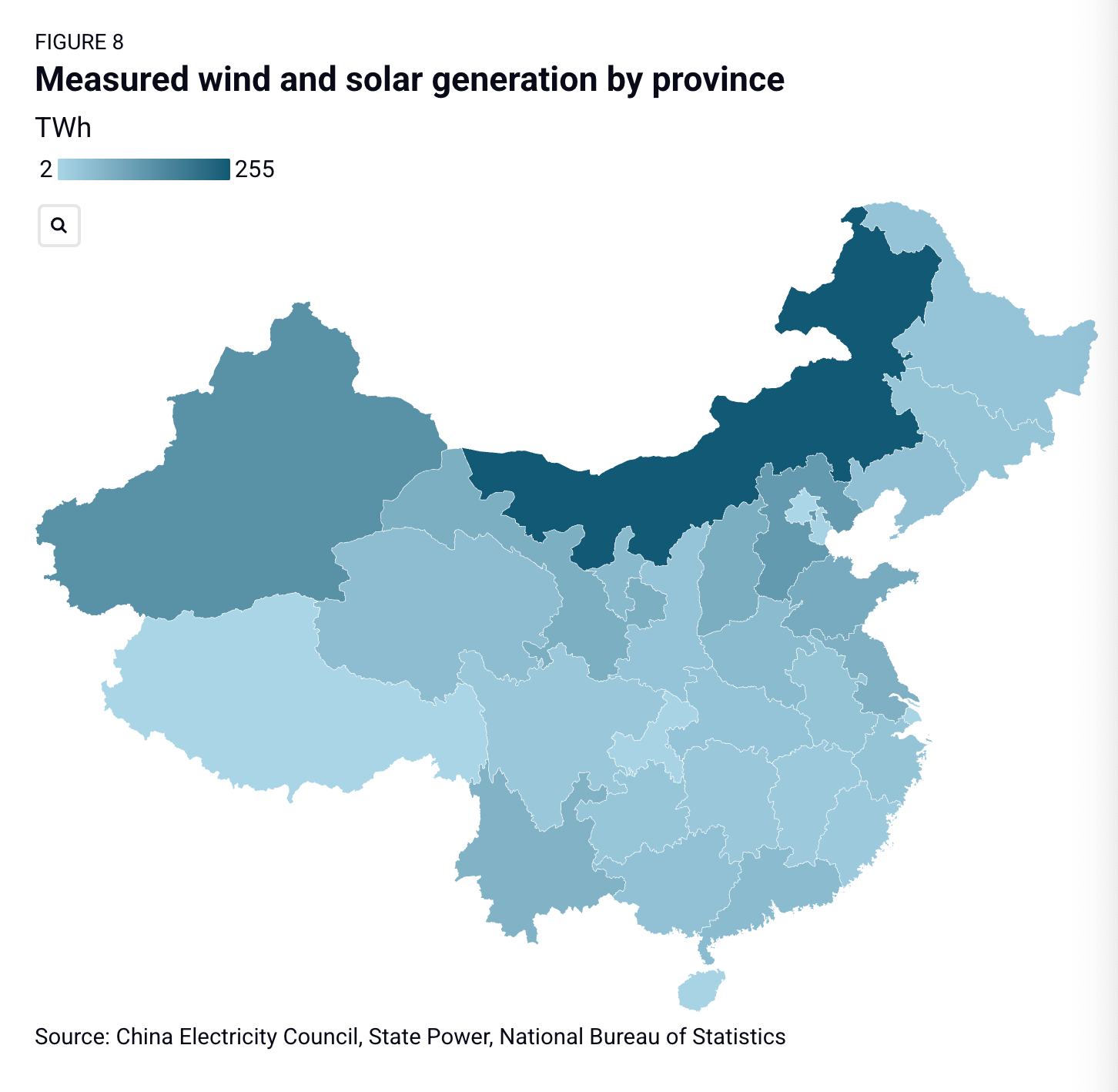
Regional industrial policy reinforces this integration. Provinces rich in coal or renewable resources host clusters of metals production, reducing transmission costs and aligning local economic incentives with national supply chain objectives. This has enabled China to build an ecosystem in which mining, refining and manufacturing operate in close proximity to abundant power.

The implications extend beyond cost advantages. Replicating China’s position would require competing economies to match not only its resource base but also its electricity infrastructure and policy coordination. In liberalised power markets, where prices are often higher and more volatile, such alignment remains difficult.

At the same time, the model introduces structural tensions. Continued reliance on coal complicates China’s decarbonisation commitments, while overcapacity in both power generation and metals production raises concerns about inefficiency and financial risk.

Yet the central dynamic remains unchanged. As the report concludes, “future competitiveness in industrial materials is likely to depend as much on energy strategy as on mineral resources,” reinforcing China’s position as the world’s foremost electrostate, where control over electrons increasingly translates into control over metals.

Coal is the backbone, renewables is the future 

Renewable power and electrified transport have become central to China’s electrification push, measured by the share of final energy consumption sourced from electricity, as rapid capacity expansion begins to alter the structure of the country’s power system.

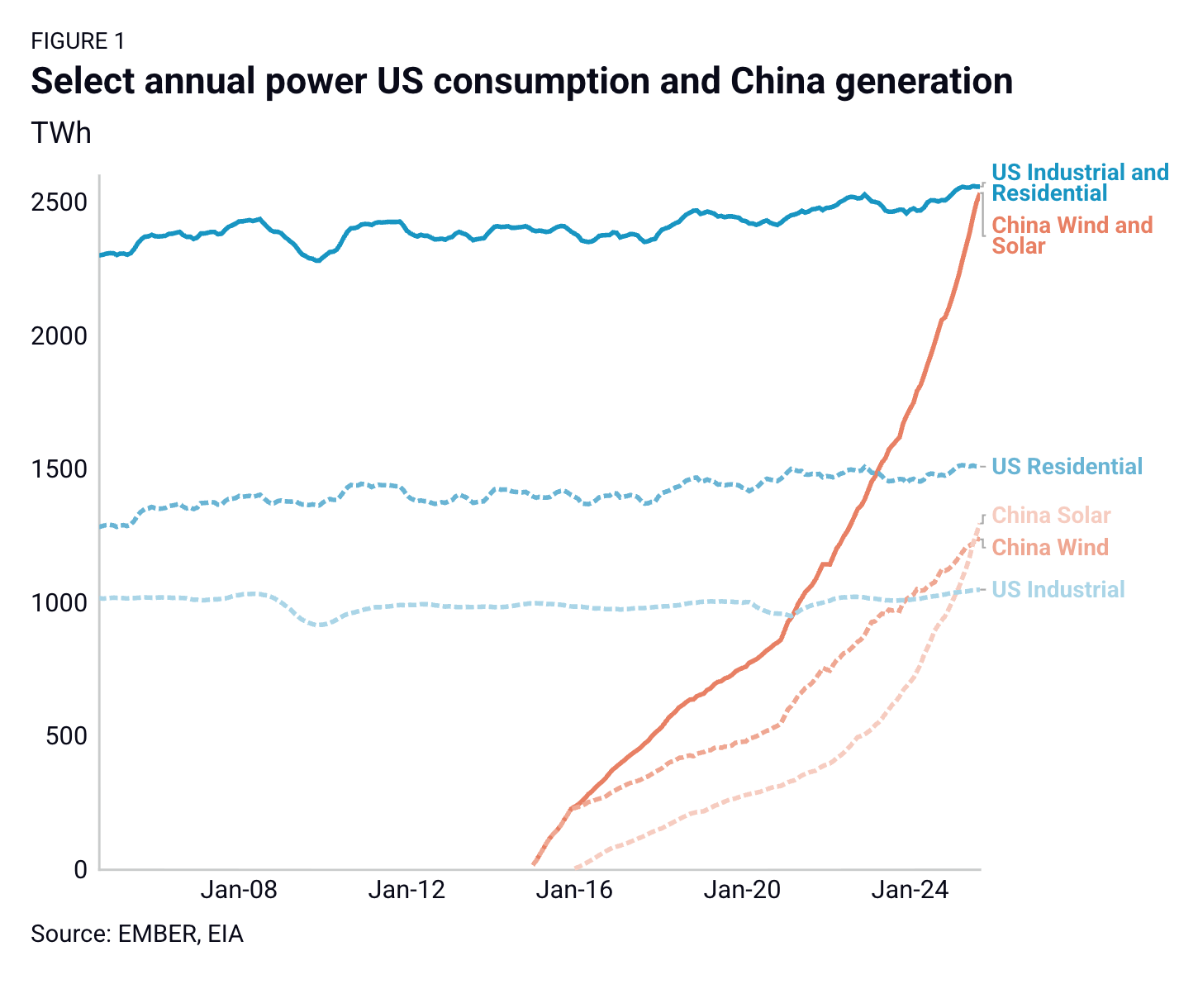
China’s solar and wind generation in 2025 surpassed total industrial power consumption in the United States, with combined output expected to exceed US household and industrial demand in 2026. At the same time, China’s electric vehicle fleet is consuming energy equivalent to 1.76mn barrels of crude oil per day, rising from 1mn previously, reflecting accelerating electrification in transport.

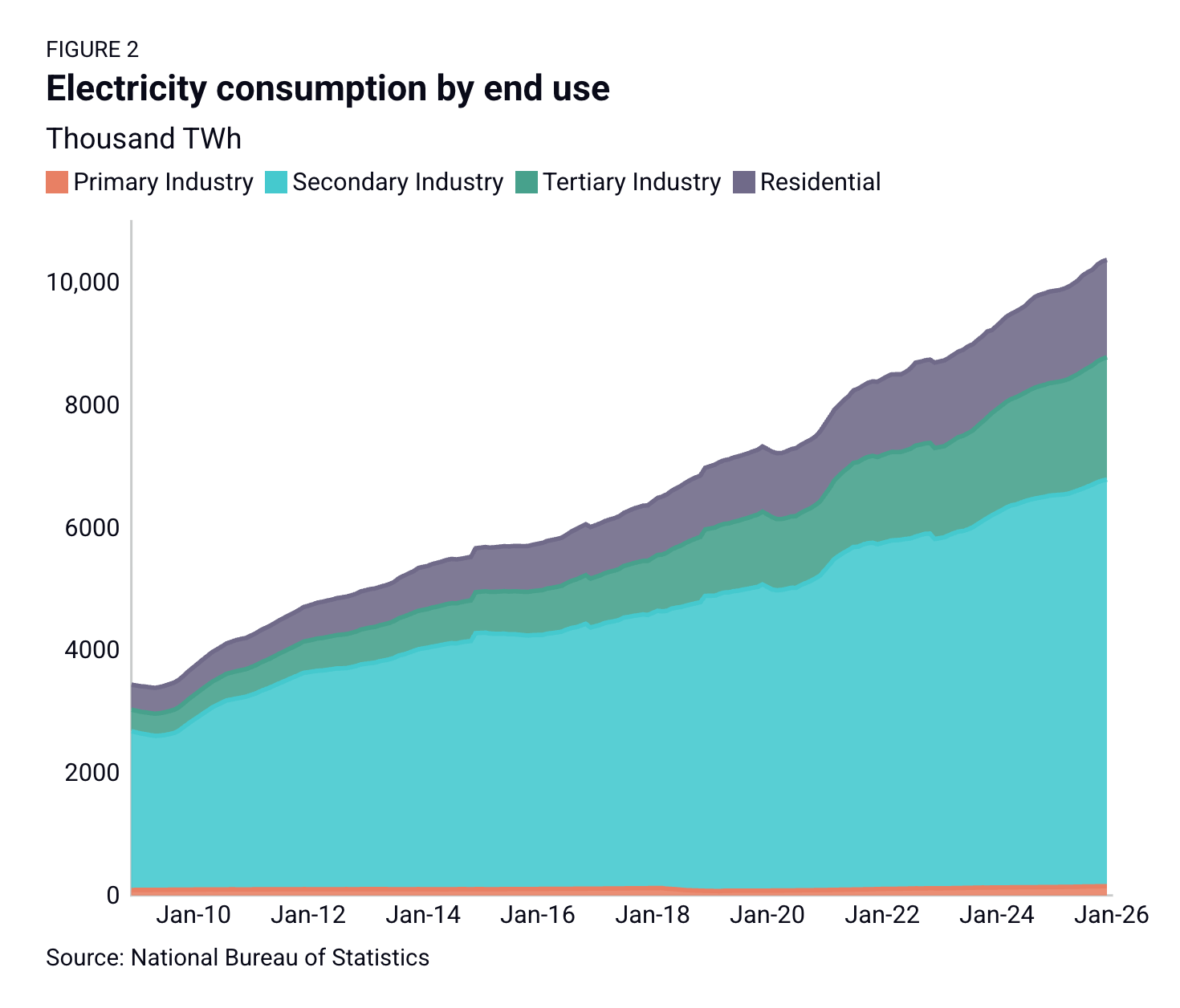
Despite these gains, China’s power system remains anchored in thermal generation, designed primarily to support industrial demand, particularly energy-intensive metals and materials processing. Industrial enterprises still account for roughly two-thirds of total electricity consumption, highlighting the structural weight of manufacturing in the economy.

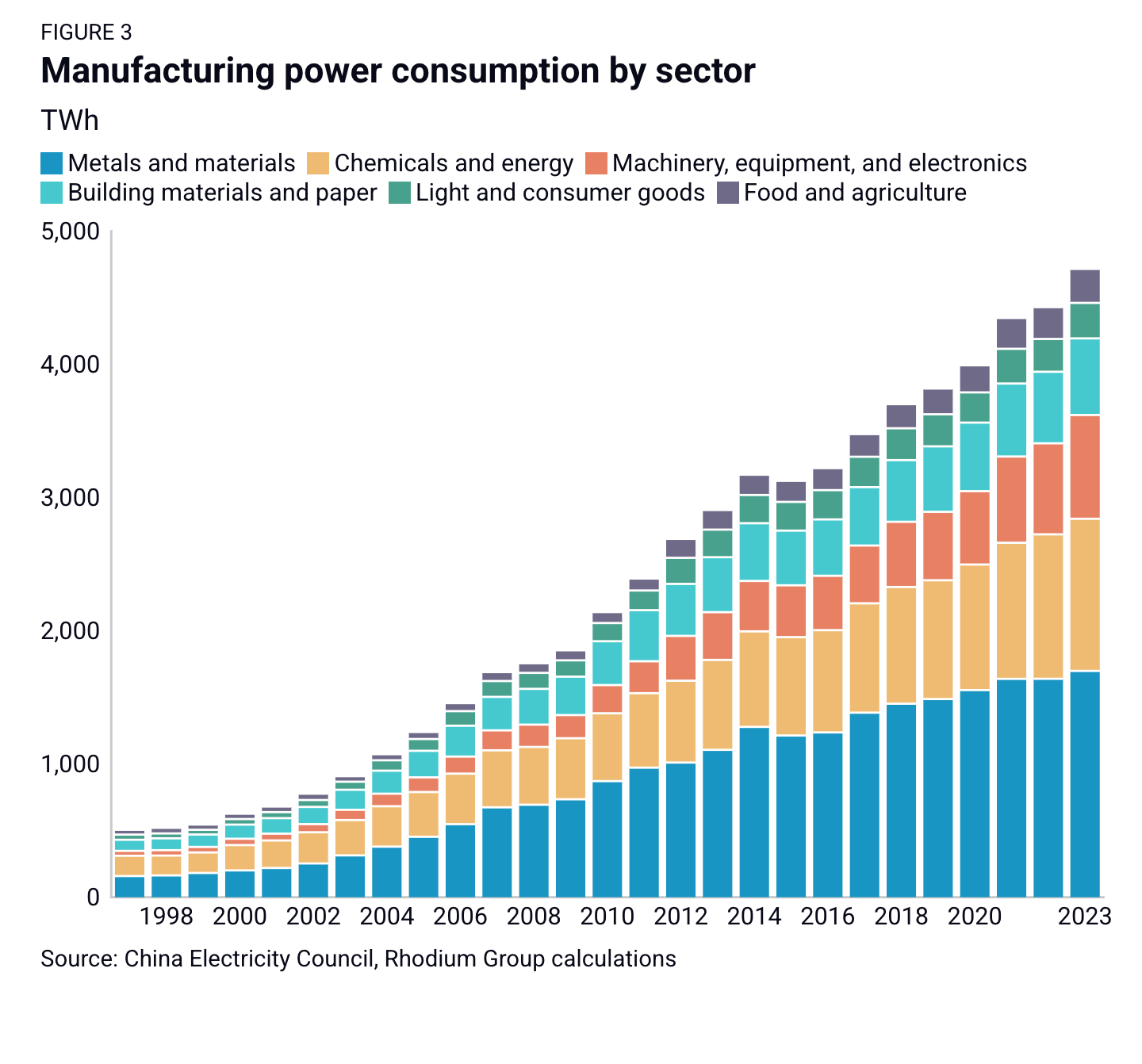
Within the manufacturing sector, which consumed 4,709 TWh of electricity in 2023, more than 35% was used for metals and materials production. Aluminium alone accounts for around 40% of that segment, underlining its role in construction, infrastructure and electrification supply chains.

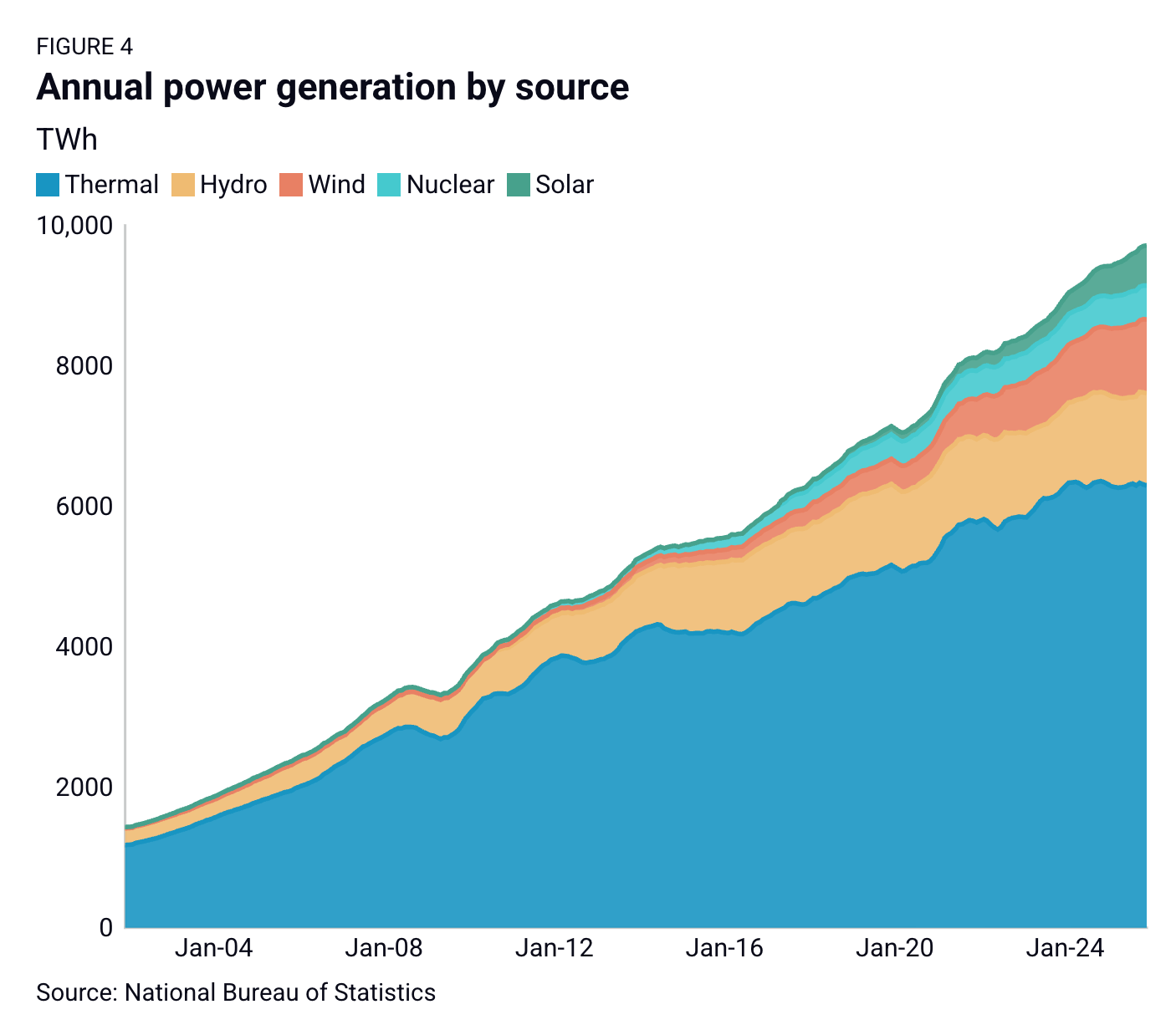
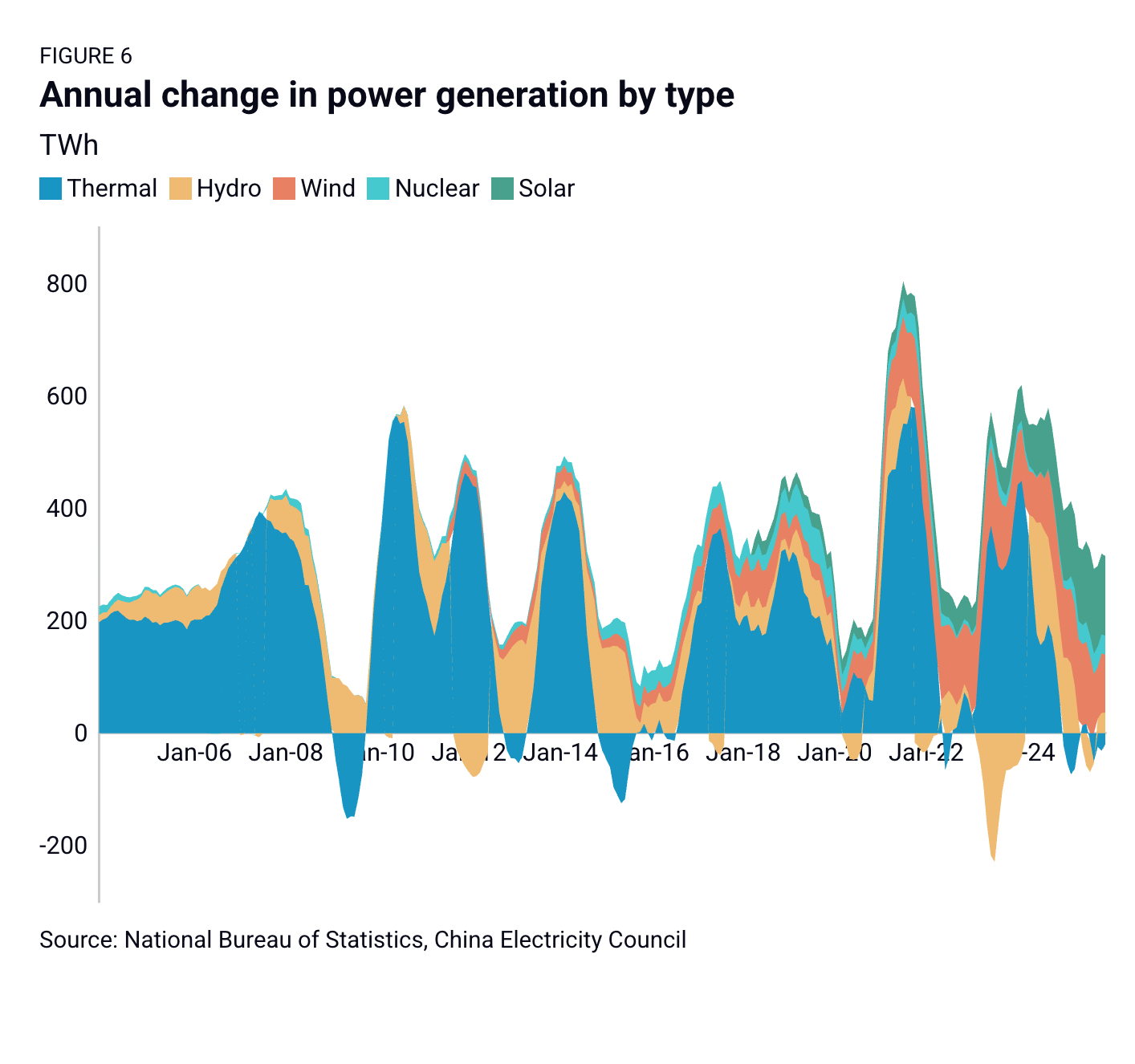
Globally, China has been the dominant driver of electricity demand growth. Since 2000, it has accounted for about 60% of global power consumption increases, while more than 60% of its own generation growth over the same period has come from thermal sources. This has made China responsible for over half of the world’s additional thermal power generation. More recently, data from Ember shows that more than 50% of global electricity demand growth last year originated in China.

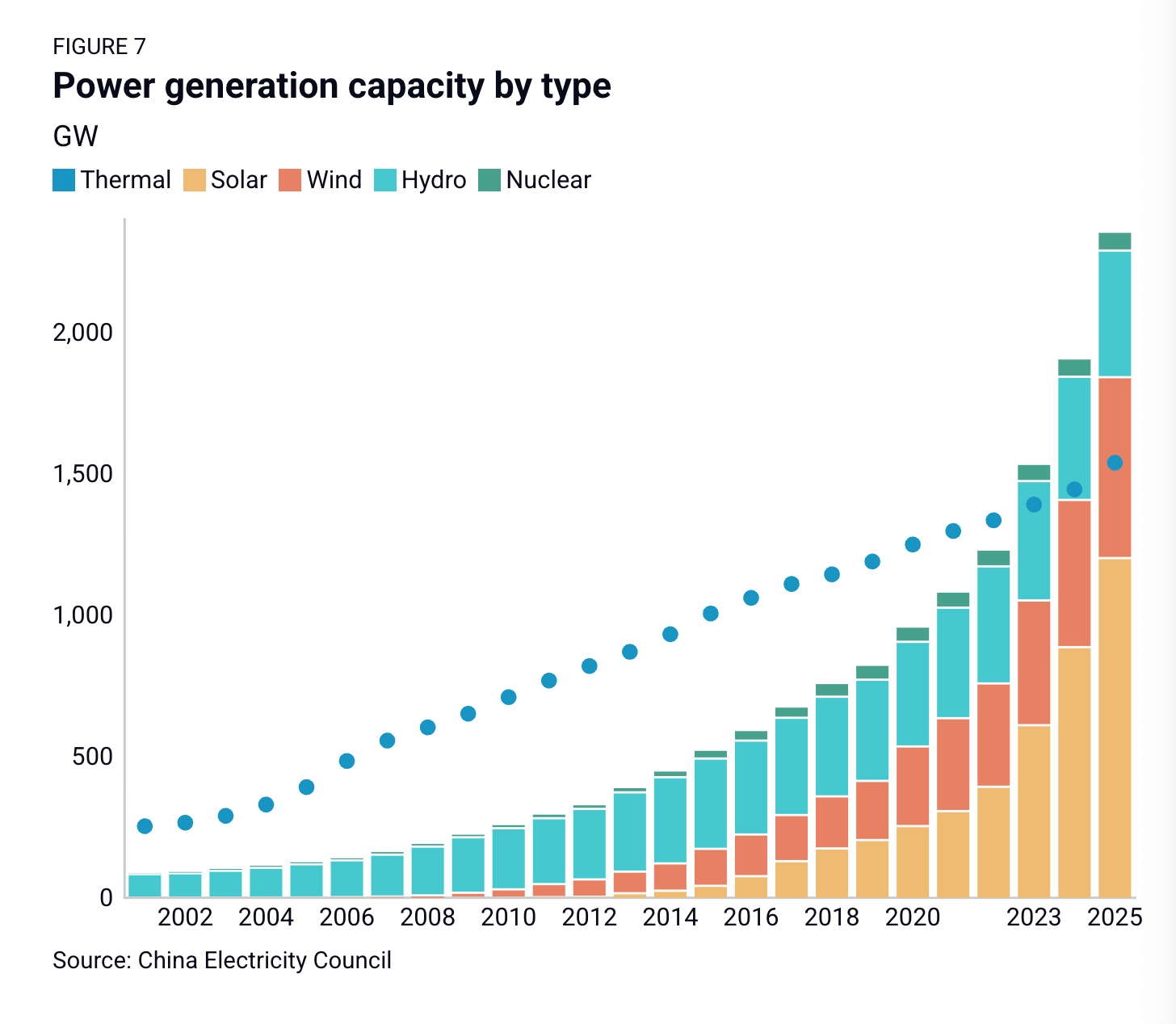
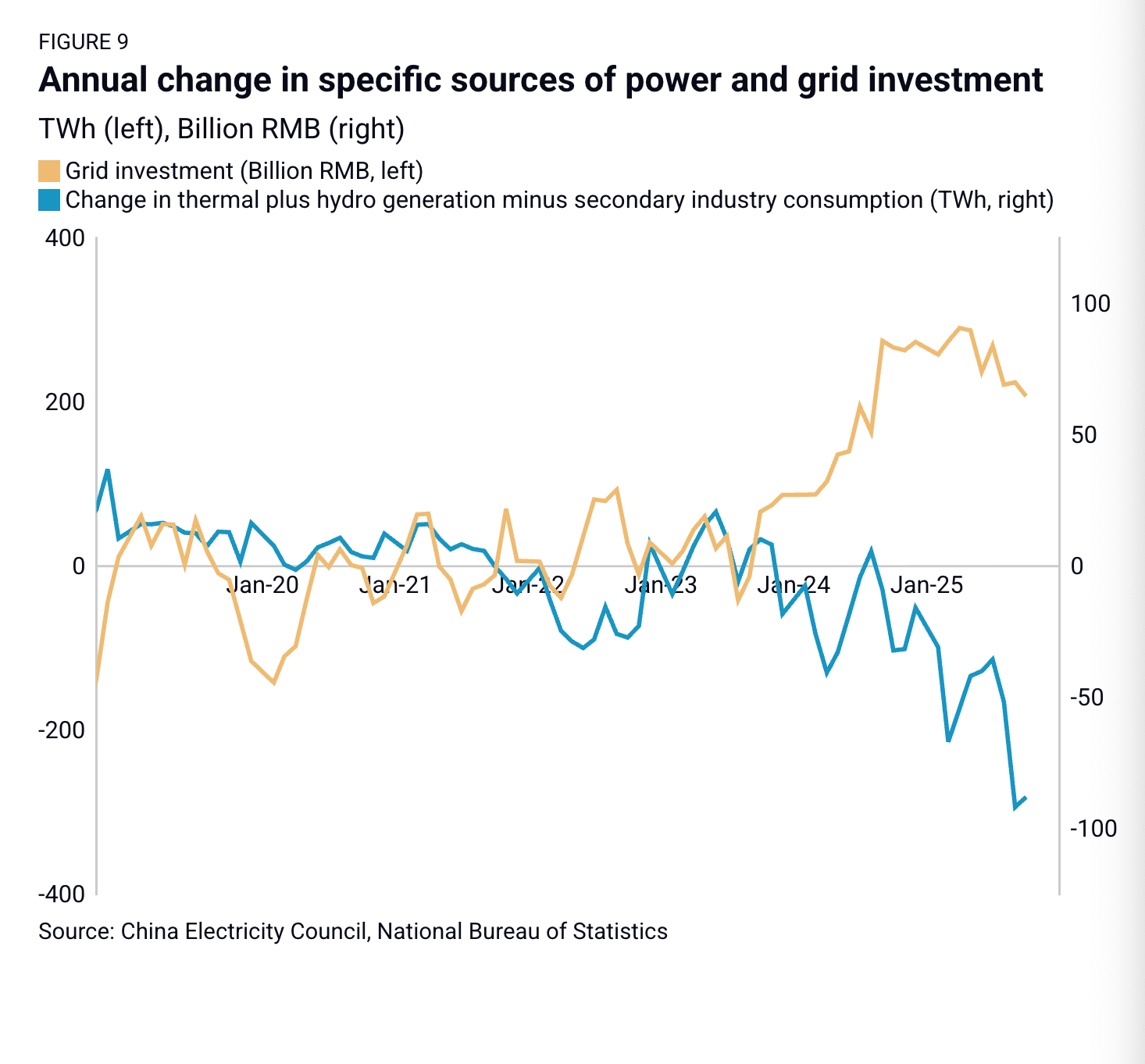
By 2024, renewables began to take a larger role, with most incremental electricity generation coming from carbon-free sources, led by wind and solar. Carbon-free capacity now exceeds thermal capacity, supported by extensive investment in long-distance transmission and advanced grid systems.

However, rising demand continues to require firm power supply, with 88 GW of new coal capacity added over the past year, reflecting the scale of industrial expansion even as reliance on coal gradually declines.

Metals are the conductors

Electrification relies fundamentally on mining and metals processing, as electrical infrastructure depends on conductive materials, placing China at the centre of global supply chains for critical industrial inputs.

Metals supply chains broadly consist of four stages: mining, purification, synthesis or fabrication, and manufacturing assembly. China has consolidated capacity across nearly all downstream stages, particularly in refining, processing and manufacturing, creating an industrial ecosystem that has expanded significantly over the past five years and now carries geopolitical weight.

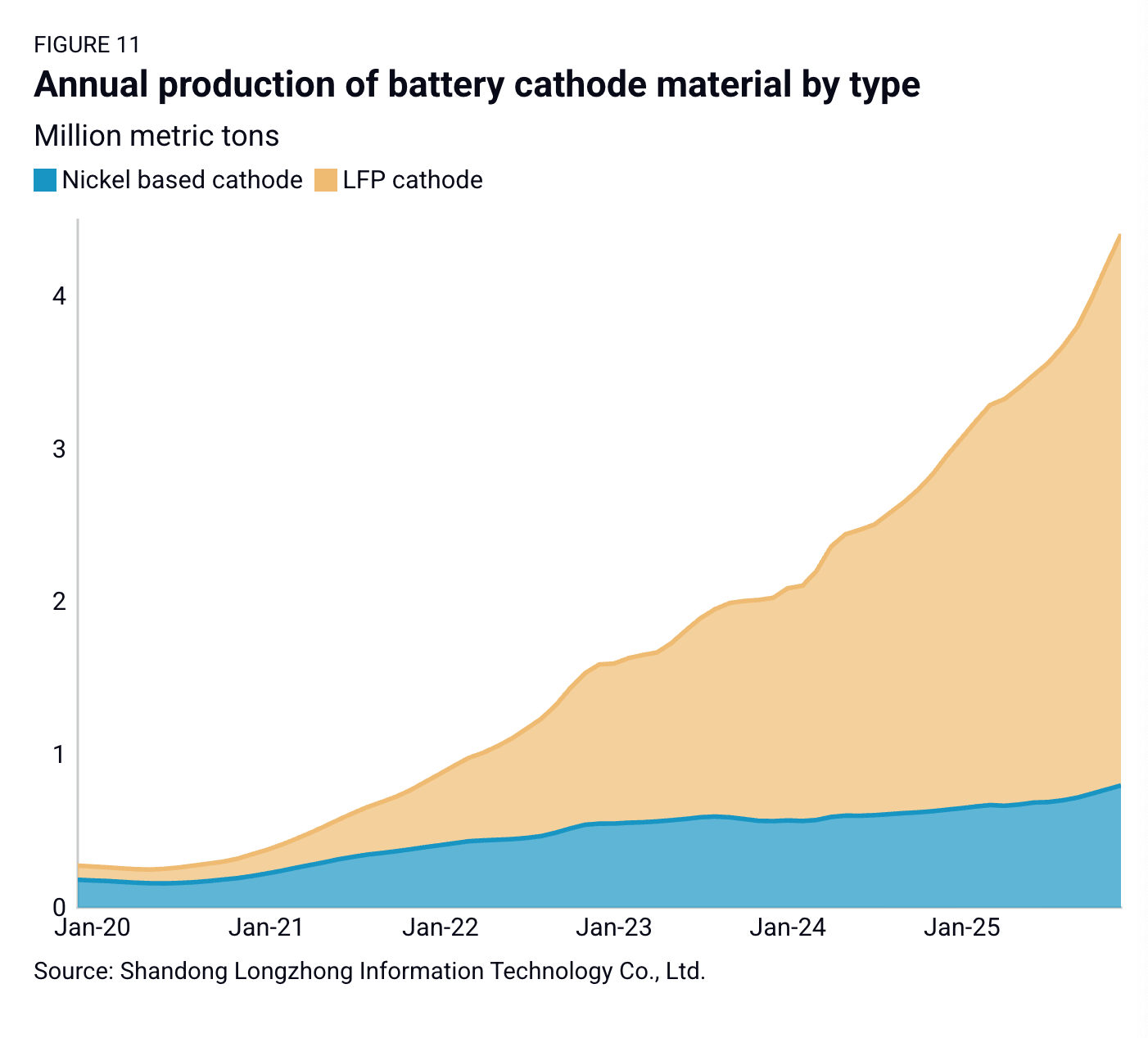
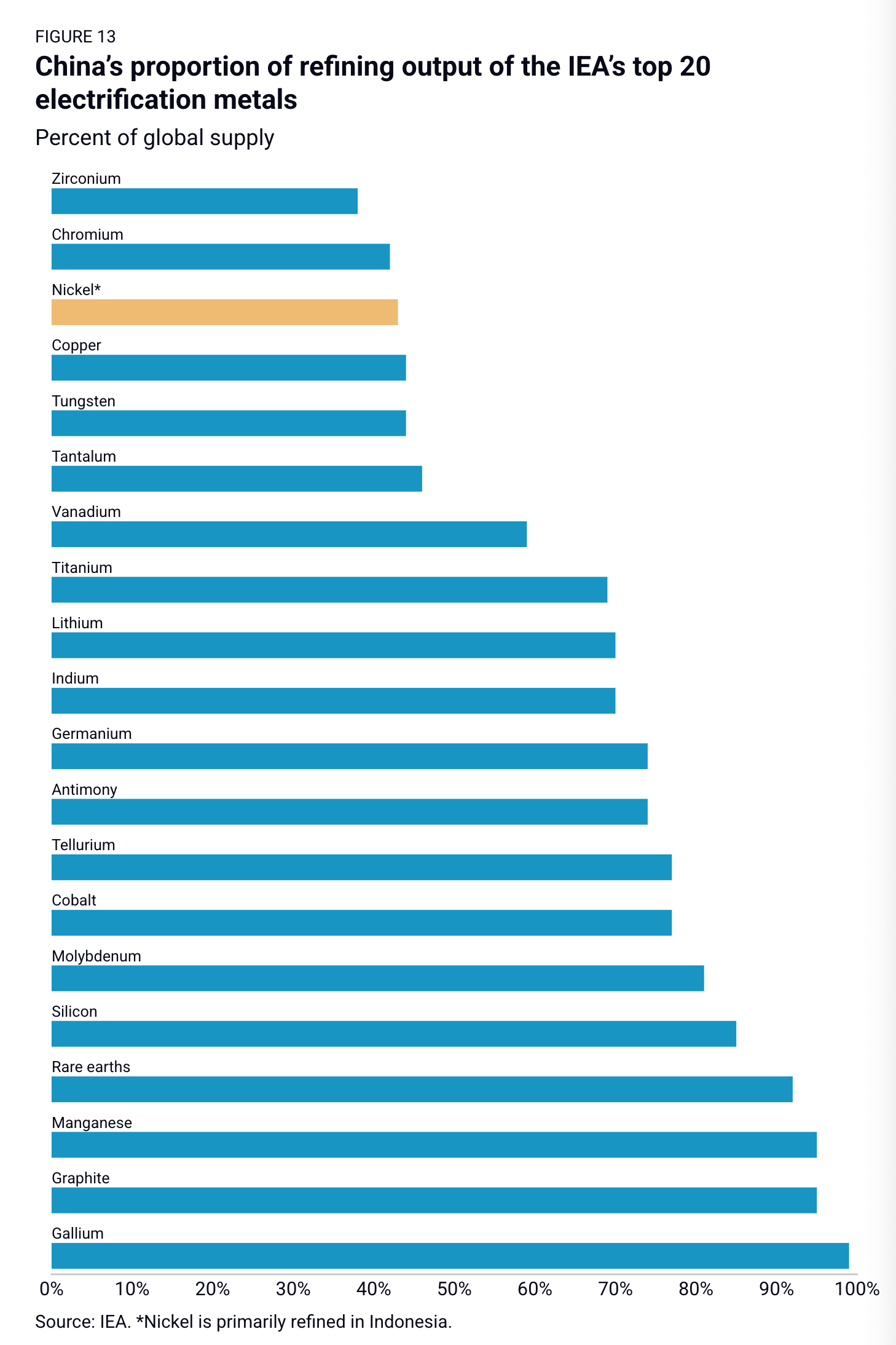
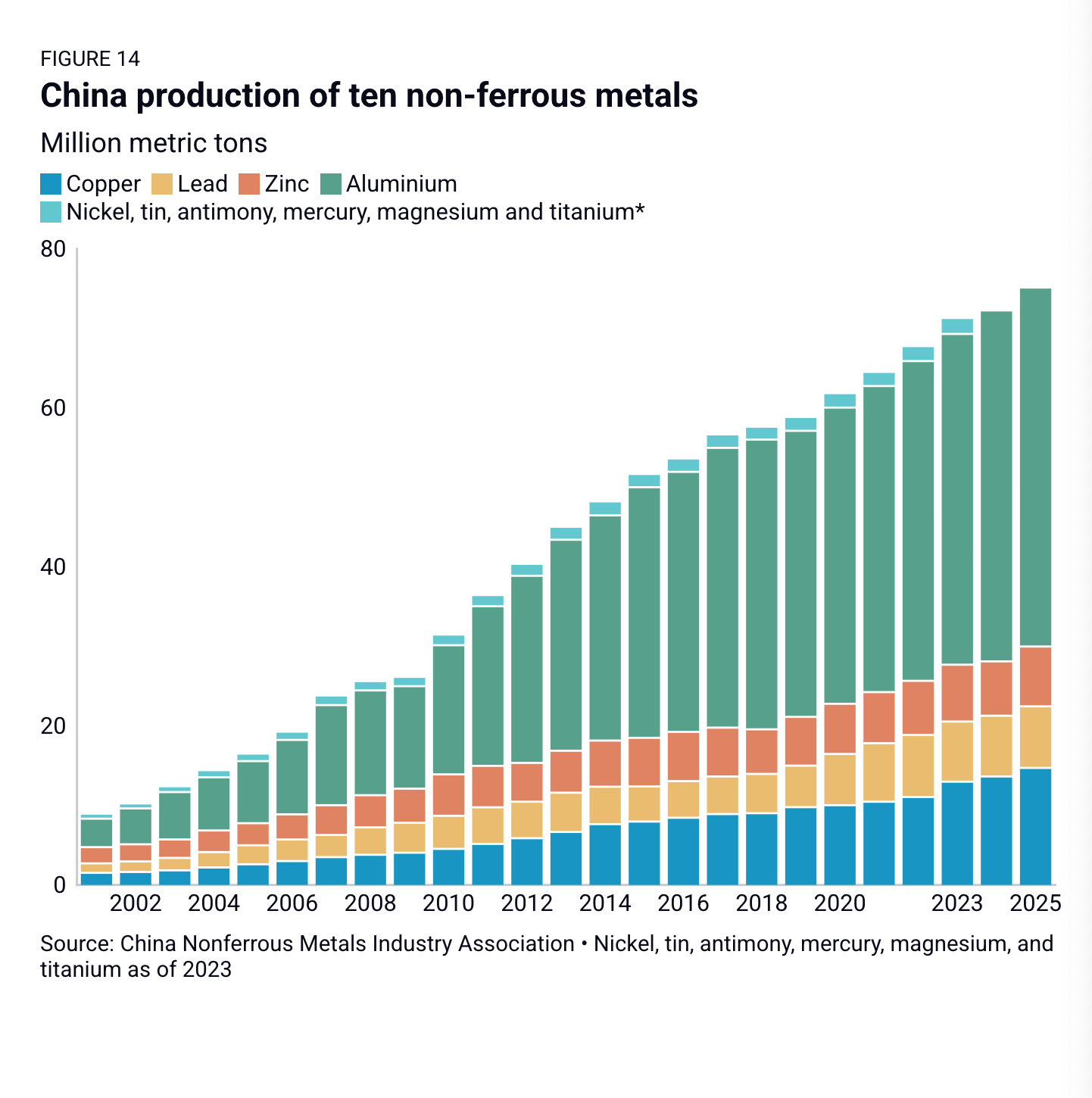
China is the world’s largest refiner of major metals, producing around half of global steel and aluminium output, alongside significant volumes of tin, zinc and lead. It is also the leading producer of 19 of the 20 most critical metals required for electrification. The remaining metal, nickel, is concentrated in Indonesia, although much of its processing capacity has been developed and is operated by Chinese firms using Chinese technology.

The country’s dominance extends beyond major and rare earth metals to include smaller but strategically important materials such as scandium, tungsten and antimony, which are used in aerospace and semiconductor applications. China also accounts for the entirety of global gallium production, a key input in advanced electronics.

Chinese state-owned mining companies have expanded overseas to secure upstream resources. In the Democratic Republic of Congo, a major source of cobalt, 15 of the 19 producing mines are owned or partly owned by Chinese entities, reflecting the role of battery supply chains in shaping investment flows.

Barriers to entry in metals processing remain higher than in mining, reinforcing China’s position in converting raw materials into usable industrial inputs. The country’s advantage is supported by a large skilled workforce, abundant power supply and close integration with downstream manufacturing.

China’s industrial scale also enables economically viable recovery of byproduct metals that would otherwise be discarded. Materials such as gallium, cobalt, gold and silver are often extracted during processing of host metals, but require stable downstream demand to justify recovery. China’s manufacturing base, which produces around 200mn televisions and 1.5bn smartphones annually, provides that demand, supporting long-term supply agreements and sustained processing capacity.


China’s manufacturing base of appliances, electronics, and robots


1990

1995

2000

2005

2010

2015

2020

2025

Televisions

10

20

42

88

119

145

196

206

Washing machines

7

9

14

30

62

73

80

125

Air conditioners

0

5

18

75

112

142

211

272

Refrigerators

5

9

13

31

73

80

90

107

Freezers


3

4

7

17

22

30

27

Portable electric tools


59

193

248

246

222

204

Mobile handsets


52

323

1,004.00

1,813.00

1,472.00

1,581.00

Computers


0.01

0.06

255

360

405

359

Industrial robots


0.02

0.24

0.69

Service robots


17.38

Source: National Bureau of Statistics


Unlock premium news, Start your free trial today.
Already have a PRO account?
About Us
Contact Us
Advertising
Cookie Policy
Privacy Policy

INTELLINEWS

global Emerging Market business news