
PANNIER: Kyrgyzstan sounds alarm over teenagers’ exposure to terrorist “screen time”


Extremist groups are using online forums to try to radicalise young people in Kyrgyzstan. There’s perhaps nothing so new about that. The difficulty is, the practice has been stepped up and they are apparently having some success.
Kyrgyzstan’s State Committee for National Security (GKNB) has warned about the growing number of teenagers accessing extremist and terrorist social network channels and websites.
The GKNB went as far as releasing a public appeal to parents to keep a watch on their children’s internet use and look for changes in their behaviour at home.
Recent uptick
According to the GKNB’s February 19 appeal to parents, in the last six months, the security service uncovered several cases of teenagers who became involved with extremist or terrorist groups.
The GKNB did not provide any specific numbers or name any particular extremist or terrorist group. However, there was a reported incident in the southern province Jalal-Abad at the end of January.
An eighth-grader was taken into custody for planning attacks on kindergartens and schools in his area. The suspect had posted about his intentions on Facebook.
The investigation found that he had “fallen under the influence of internet terrorists.”
The GKNB said in its appeal that “in some cases,” it detained minors who were learning how to make homemade explosives or actually already producing such bombs.”
Kyrgyz media outlets have posted screenshots from pages of some of the websites trying to recruit young people. Some were crude drawings of how to make Molotov cocktails or more powerful explosives – but others were better presented and detailed how to set charges on explosives or plan attacks on police.
One notebook featured a hand drawing of a yurt, like the one on Kyrgyzstan’s flag, with a swastika nearby and the Russian words “Ненависть к миру” (“Hatred for the world” or possibly “Hatred for peace”).
Just over two years ago, there was another planned attack in Jalal-Abad involving minors. At the end of 2023, two 16-year-olds were detained for planning to put homemade bombs under the New Year’s tree on a city central square and at a local church.
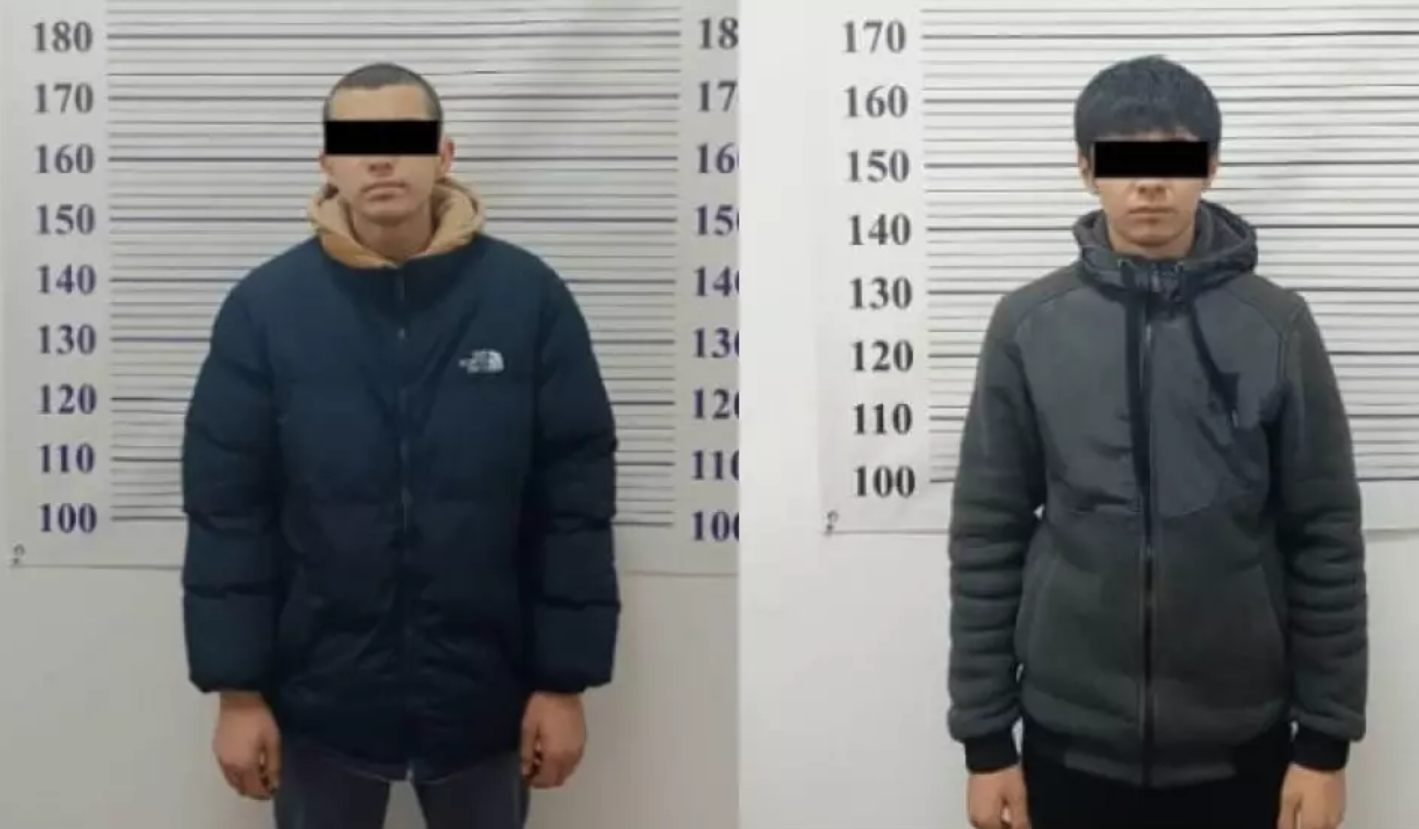
Two 16-year-olds, above, were detained accused of planning to place homemade bombs under a New Year’s tree on a city central square and at a local church (Credit: GKNB).
For many years now, Kyrgyz law enforcement has been detaining adults from banned organisations. Most are from local Islamic groups such as Hezb ut-Tahrir or Yakyn Inkar, but occasionally they are from more violent groups, such as Katiba Tawhid val-Jihad.
In June 2024, the GKNB detained 15 people suspected of being ISKP members.
Warning signs
The GKNB provided a list of changes that parents were advised to watch for in their children.
These included an obsession with computer games, secret contacts with unknown people on the internet, sudden changes in behaviour, isolation from friends and family, the appearance of aggressive or radical religious views and other sudden deviations of character.
The GKNB warned that radicalisation on these sites “often happens unnoticed – through friendly communication, manipulation, psychological pressure or false promises”.
One problem with these identifying features is that most parents are not as familiar with the internet as their children are, and changes of behaviour during teenage years are not uncommon.
Additionally, there are segments of society, not only in Kyrgyzstan but throughout Central Asia, that are becoming more religious and placing heightened value on conservative Islamic behaviour.
Signs of piety and adherence to Islam in young people, even if it is accompanied by intolerance for non-Islamic culture, are likely to be welcome in many communities, making it more difficult to see when an individual is perhaps going too far.
The GKNB recommended that parents with suspicions about the activities of their children first try talking with them, and, if new antisocial or extreme religious behaviour continued, contact the local GKNB office.
Obviously, most teenagers will be resentful and consider it a huge violation of trust for their parents to call the national security service to come and speak with their child.
A regional problem
Radicalisation via the internet is a problem in many countries, and certainly in other Central Asian countries.
Uzbekistan’s security service raided an ISKP cell in the eastern Uzbek city of Namangan in June 2025.
The leader was a 19-year-old woman who had been radicalised three years earlier while studying in Turkey. Her Telegram groups reportedly had more than 120 members.
Kyrgyzstan’s GKNB says the problem of radicalisation has become noticeably worse in recent months and that it is a warning sign for all of Central Asia.
Teenagers in the region today have grown up watching as hundreds of thousands of their work-age fellow citizens, unable to find good work locally, depart their homelands to find work abroad.
For some of these teenagers, it is their father or mother, or both, who make these seasonal, and sometimes longer, journeys, leaving them at home with one parent, or with grandparents.
It would be understandable if some see little opportunity awaiting them in the future and, looking at the world through the screen of a computer, latch onto something seemingly attractive without realising the danger.
Unlock premium news, Start your free trial today.


