
Belarus posts record GDP of $88.6bn in 2025 amid export boom and investment surge


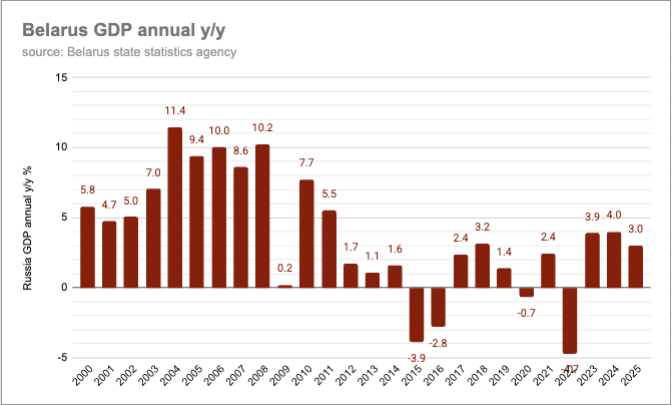
Belarus’s economy grew to an all-time high of $88.6bn in 2025, the country’s Minister of Economy Yuri Chebotar announced, marking a strong end to a five-year period shaped by sanctions, global economic turbulence and lingering pandemic disruptions.
Speaking to state news agency TASS, Chebotar said the government had successfully steered the economy through a “number of challenges,” including “unprecedented sanctions pressure” and “disrupted supply chains”, to deliver growth, improve living standards and boost export performance.
“The main outcome is economic growth, as well as improved well-being and quality of life for citizens,” Chebotar said.
In addition to the record GDP figure, Belarus’s exports of goods and services rose by an estimated 35% over the five-year period. In 2025 alone, export volumes are expected to hit a 10-year high of more than $50bn, supported by stronger trade ties with Russia, China, and markets in Central Asia, following the redirection of exports away from the European Union after Western sanctions were imposed.
The Minister highlighted a surge in fixed capital investment, which for the third consecutive year grew at a rate “many times higher than GDP growth.” He said the increase in investment is helping to “boost competitiveness, bring new products to market, and lay the groundwork for future growth.”
According to official estimates, industrial output expanded by 15.2% over the five-year period, while labour productivity increased by 13.7% of GDP — gains that Chebotar said reflected “the strengthening of the state’s economic potential.”
The government also reported a rise in real disposable incomes, with growth of 23.4%, outpacing the initial plan of 20.2%. Chebotar attributed this to strict inflation control measures, although Belarus’s official statistics remain heavily scrutinised by external analysts due to limited transparency.
Belarus’s economic resilience comes despite its partial international isolation and close alignment with Russia, which has resulted in sanctions on major export sectors including potash, petroleum products and machinery. However, Minsk has deepened trade and financial cooperation with Moscow and expanded its export reach to non-Western markets, cushioning the impact.
The record GDP figure and export performance will likely be presented by authorities in Minsk as validation of the state-led economic model, which has prioritised industrial output, state ownership, and subsidies for strategic sectors. However, long-term challenges remain, including a growing reliance on Russia, limited access to global capital markets, and sluggish innovation outside traditional heavy industries.
Unlock premium news, Start your free trial today.


